Parrot Diet: The Complete and Comprehensive Guide to Feeding Your Parrot (2026)
Parrot Nutrition Guide: The Complete Path to Avian Longevity in 2026 If you really want to understand what the best food for a parrot is, first get rid of that old image of a parrot happily scratching and eating sunflower seeds. This scene may look cute, but in reality, this is the misconception that is…
Parrot Nutrition Guide: The Complete Path to Avian Longevity in 2026
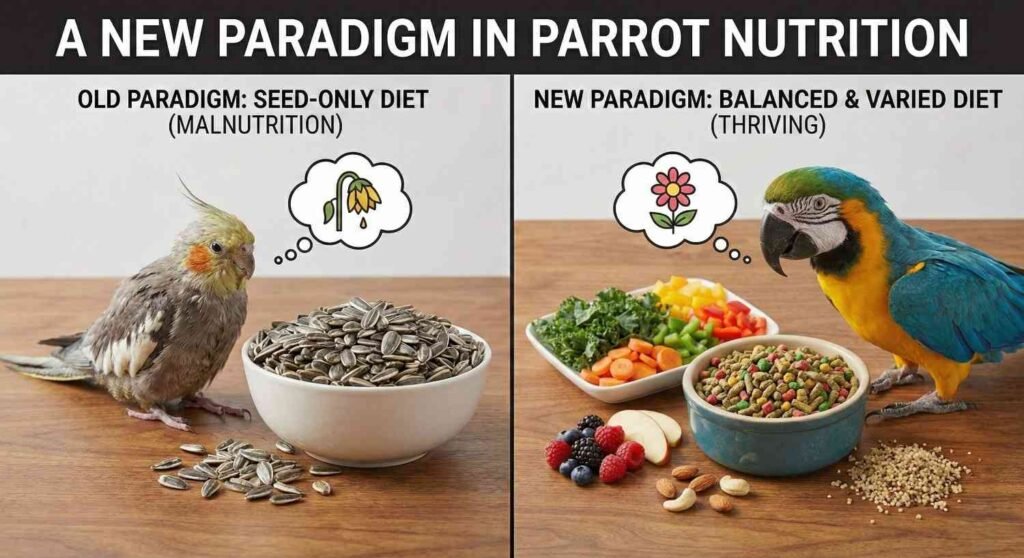
If you really want to understand what the best food for a parrot is, first get rid of that old image of a parrot happily scratching and eating sunflower seeds. This scene may look cute, but in reality, this is the misconception that is hollowing out our pet birds from the inside.
The simple fact is that feeding a parrot seeds all the time is like feeding a dog only chocolate in the morning and evening—sweet poison. Although birds living in the wild eat seeds, the secret to their health is not hidden in the box of ‘seed mix’ you get from the store. The matter is much more serious than that.
In the wild, a common parrot flies up to 30 miles a day. It fights strong winds and avoids enemies. In this run, he spends so much strength and energy that he easily digests the fat seeds. But when the same parrot is sitting in our drawing room cage, the same fatty food makes him a patient of obesity, fatty liver disease and severe vitamin deficiency.
The real requirement of care is that we change our old thinking. We have to stop feeding parrots like chickens. These are intelligent birds, they need the best diet like an athlete. In this guide, we will tell you according to the principles of science and nature, which food is best for your parrot so that it can live a long and healthy life.
I. The French Fry Effect: Why the Seed Bowl is a Trap
The single biggest debate in the bird world is Pellets vs. Seeds. The authentic answer lies in the middle, but the science leans heavily away from the traditional bowl of seeds.
The Illusion of Variety
The colorful seeds that are labeled “rich in vitamins” are actually a marketing ploy. The reality is different.
Parrots are master sorters when it comes to food. When you give them a mix of seeds, they pick out their favorite fatty foods—like sunflower and safflower seeds—and eat them. These seeds are to them like we humans eat French fries.
The result is that the seeds that contain the real vitamins (like millet or corn) end up at the bottom of the bowl. This way, the parrot looks like a “full crop,” but inside, it is suffering from malnutrition because it is not getting energy, but only fat.
Bridging the Gap with Pellets
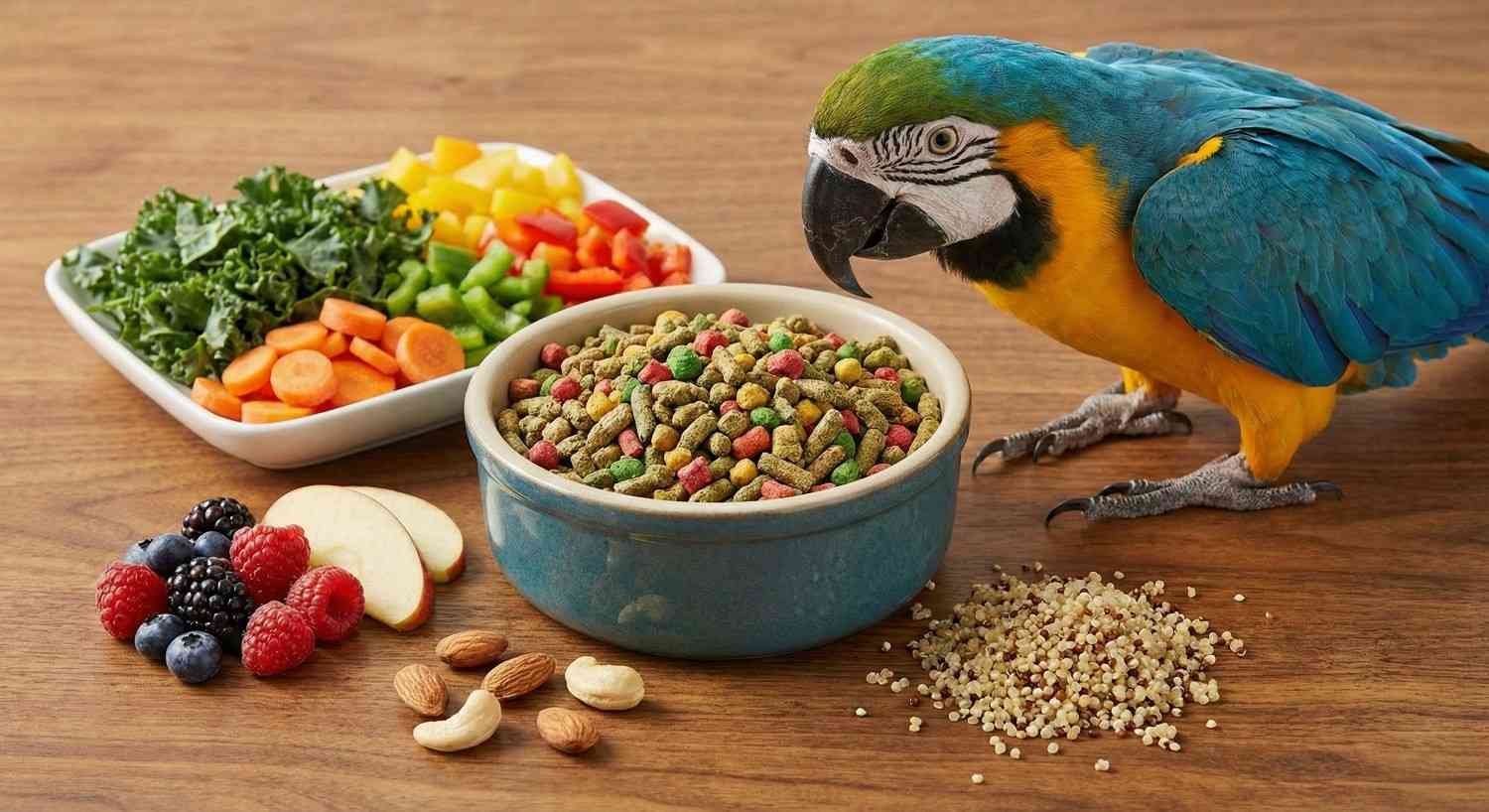
It’s true that pellets are not a natural product that grows on trees, but they are the “backbone” for the health of caged birds. Their biggest advantage is that the parrot can’t pick them—that is, they can’t chew. Whatever pellets they eat, they will get the same amount of strength and nutrition.
- The Golden Ratio: For most parrots (such as Amazons, Conures, and African Greys), 50 to 60 percent of their diet should be good quality organic pellets.
- Avoid Colors: Never buy colored pellets. They contain chemicals that mask the true color of your parrot’s droppings, making it difficult to detect disease.
- Cold-Pressed: Try to get pellets that are “cold-pressed.” Common cheap pellets are made at high heat, which burns vitamins, while the cold-pressed method preserves nutrients.
II. Beyond the Salad: The Architecture of the Perfect Chop
If pellets are a multivitamin pill for parrots, fresh vegetables are the ‘soul’ of their diet. But just throwing a whole carrot or a piece of apple into the cage won’t do.
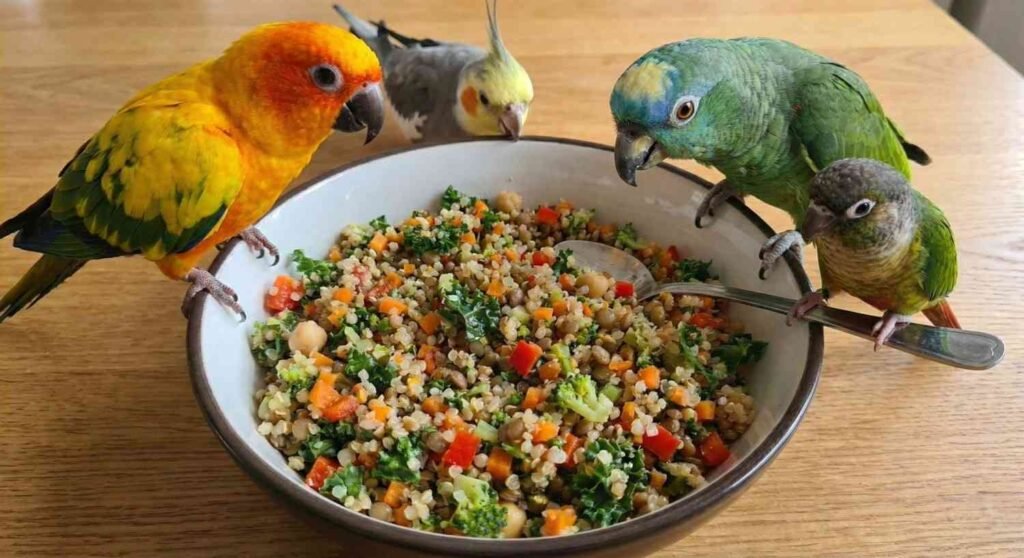
Old and experienced hobbyists use a special method called “Chop”.
Chop means a fine mix of vegetables, pulses and grains. The real secret here is in the ‘size of the pieces’. When you grind everything finely in a machine (just like a vegetable mince), the parrot can’t pick out the coarse grains (like corn or peas) it wants.
The Anatomy of a Perfect Chop
A nutritionally dense chop should follow a specific ratio to ensure it isn’t just “watery greens.” It requires structure:
| Category | Goal % | Preferred Sources | Biological Function |
| Beta-Carotene Powerhouse | 32% | Sweet potatoes, heirloom carrots, butternut squash | Protects the mucosal linings of the lungs and boosts immune response. |
| Mineral-Rich Foliage | 21% | Dandelion greens, Swiss chard, lacinato kale | High-bioavailability calcium for skeletal density and feather strength. |
| Cruciferous Superfoods | 17% | Broccoli crowns/stalks, Brussels sprouts | Delivers sulforaphane, a potent natural compound for cellular repair. |
| Plant-Based Proteins | 16% | Sprouted lentils, chickpeas, tri-color quinoa | Essential amino acids for muscle maintenance and fiber for gut health. |
| Metabolic Enhancers | 11% | Raw ginger, Ceylon cinnamon, hot chilies, chia | Natural anti-inflammatories; chilies provide sensory enrichment without the “heat” sting. |
| Enzymatic Fruits | 12% | Fresh pomegranate, papaya, wild berries | Rich in antioxidants; used sparingly to prevent sugar-induced hyperactivity. |
Pro Tip: Make chop in large batches and freeze it in daily portions (ice cube trays work well). This ensures your bird gets a gourmet meal every morning without you having to chop vegetables at 6:00 AM.
III. Bio-Hacking by Beak: Tailoring the Menu to the Species
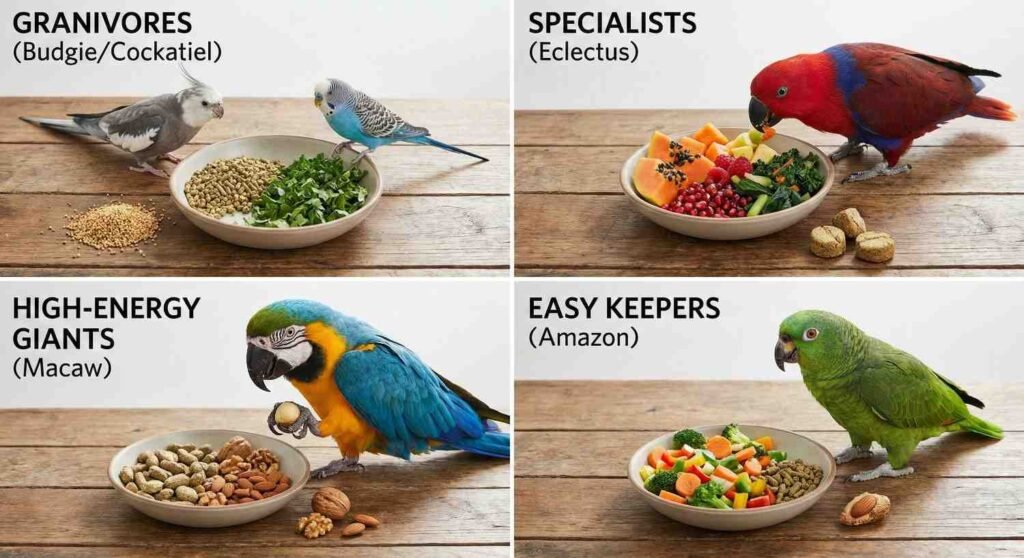
This is where generic articles fail. A Budgie and a Macaw have as much in common nutritionally as a wolf and a Chihuahua. Authenticity means respecting the biological niche of your specific bird.
1. The Granivores: Budgies, Cockatiels, and Grass Parakeets
These birds are naturally adapted to eat more seeds than larger parrots. However, dry commercial seed is still too fatty.
- The Fix: Their daily diet should be something like this:
- 50 percent (half): Good quality mini-pellets.
- 25 percent (fourth): Fresh vegetables. They love leafy greens and the florets on broccoli.
- 25 percent (remaining): You can give a good quality seed mix, but the trick is that they are flighty and active birds. If they spend all day sitting in their cage, reduce the amount of seed as well.
2. The Specialists: Eclectus Parrots
- Important Warning: Danger from Artificial Ingredients
Eclectus parrots are extremely sensitive to artificial colors, chemicals, and excess vitamins. - Problem: If they are given pellets that contain artificial vitamins, they can develop nervous spasms.
- Symptoms: This is commonly called “Toe-tapping” (continuous shaking of the paws) or “Wing-flipping” (restless flapping of the wings). This is their body’s reaction to the artificial ingredients.
3. The High-Energy Giants: Macaws and Golden Conures
Large Macaws (especially Hyacinths) require fat levels that would kill an Amazon parrot.
While vegetables and pellets have their own importance, large macaws need extra fat which can be met with these specific nuts:
- Macadamia nuts: These have the highest fat content which is best for macaws.
- Walnuts: These provide essential fatty acids.
- Almonds: These help maintain the energy of their heavy body structure.
4. The Easy Keepers: Amazons, Galahs, and Quakers
These birds look at food and gain weight. They are extremely efficient at storing fat.
- The Fix: Strictly limit seeds and nuts. Their “treats” should be veggies. Fruit intake must be low due to sugar content. Pellets should be restricted to maintenance portions, not free-fed bowls.
IV. The Resurrection Act: Turning Dormant Seeds into Living Superfoods
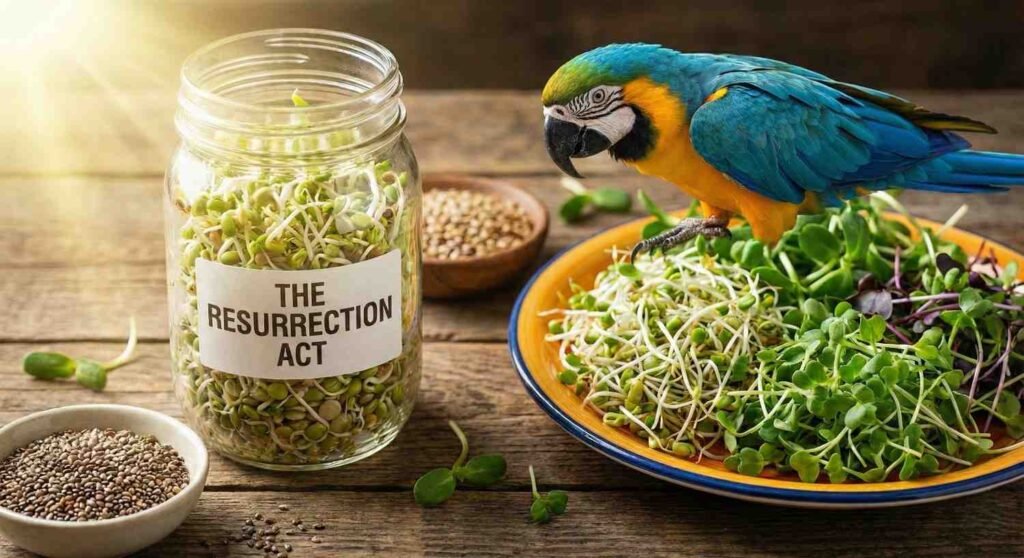
If you want to offer the most authentic nutrition possible, you must sprout.
A dry seed is a dormant fat storage unit. When you soak and sprout that same seed, the fat is converted into energy for the plant’s growth, and the vitamin content explodes.
- The Magic of Nutrition: A dry seed is actually a dormant fat reservoir. When you soak the same seed and sprout it, that fat is converted into energy for the plant to grow, and the amount of vitamins in it increases enormously.
- Nutritional Alchemy: Sprouted sunflower seeds have only a fraction of the fat content of dry seeds, while their amount of vitamins A, B, and E increases significantly.
- Bioavailability: The nutrients in the sprouts are “bioavailable.” This means that the bird’s body absorbs these natural ingredients much faster than synthetic vitamins.
V. Dining with Difficulty: Why Free Food Creates Bad Birds
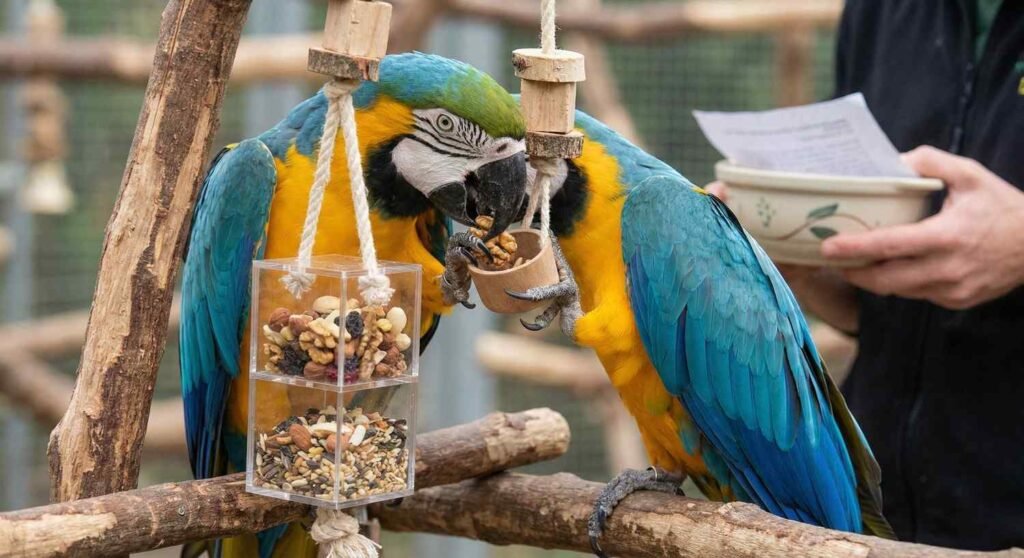
In the wild, a parrot spends 60–80% of its waking hours searching for food. In captivity, we put a bowl in front of them, and they finish eating in 15 minutes. This leaves them with 10 hours of boredom, leading to screaming, plucking, and aggression.
Food must be earned to be satisfying.
- The Cover-Up
Never leave a bird feeder uncovered. Cover it with paper, cardboard, or lettuce leaves so that the bird has to physically dig or work to get to the food. - Using Skewers
Hang fruits and vegetables on stainless steel skewers. This forces the bird to balance and work on the food, just as if they were sitting on a flexible stick. - Foraging Toys
Stuff bird pellets and nuts inside natural wooden balls, cardboard tubes, or complex puzzle toys.
ere are specific compounds that avian biology cannot process. Feeding these can be fatal.
- Avocado: Avocado skin and pit contain a substance called Persin, which causes heart problems and heart failure in birds. It is highly toxic to them.
- Chocolate and Caffeine: The methylxanthines in these foods cause hyperactivity, seizures, and ultimately death in birds.
- Onions and Garlic: Continuous consumption of these can cause hemolytic anemia, in which red blood cells begin to rupture.
- Fruit Pits: Apple seeds and pitted fruits (such as cherries, peaches, apricots) contain some amount of cyanide. Although a seed may not kill you right away, its accumulation in the body is dangerous.
- Salt and Sugar: Birds’ kidneys are not designed to filter out excess salt. Therefore, chips, biscuits, crackers, and papad are very dangerous for them.