
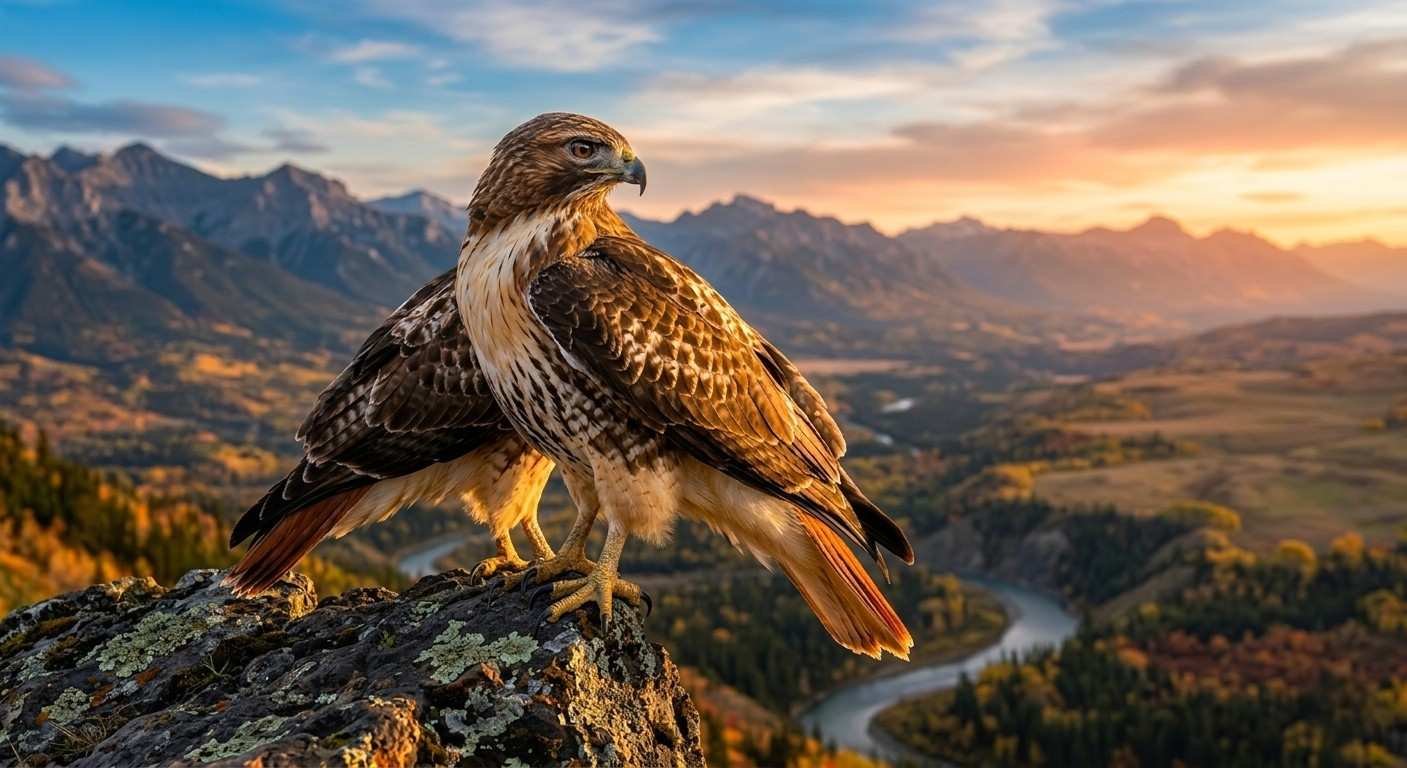
Hawks: The Magnificent Birds of Prey (2026 Guide)
Hawks: The Complete Guide to Nature’s Fearless Sky Predators (2026) Few birds on the vast canvas of nature command the same awe, majesty, and majesty as hawks. With their keen eyesight, powerful wingspan, and unrivaled hunting instincts, hawks are among the world’s most skilled apex predators. Belonging to the vast family of Accipitridae, these birds…
Hawks: The Complete Guide to Nature’s Fearless Sky Predators (2026)
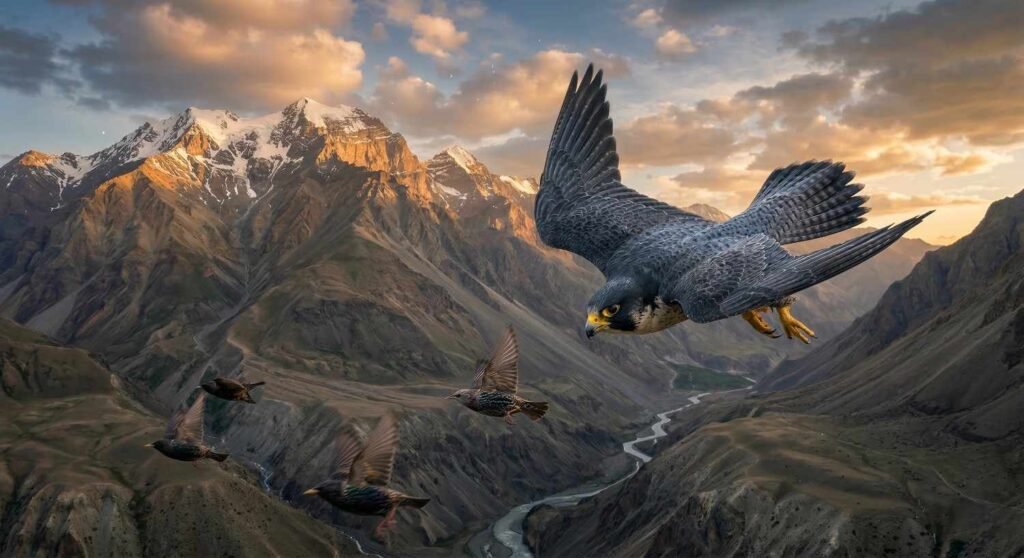
Few birds on the vast canvas of nature command the same awe, majesty, and majesty as hawks. With their keen eyesight, powerful wingspan, and unrivaled hunting instincts, hawks are among the world’s most skilled apex predators. Belonging to the vast family of Accipitridae, these birds of prey are found on nearly every continent in the world (except Antarctica).
Whether soaring over open plains, diving high into the mountains, or speeding through dense forests, hawks have always been considered symbols of precision, power, and freedom. This guide provides an in-depth look at the complex world of hawks, their amazing body shapes, hunting skills, and the invaluable role they play in ecosystems.
The hawk’s amazing body structure and senses
The secret to the hawk’s survival and hunting skills lies in the perfect coordination of its body parts. Evolution has made it a complete hunting machine.
- Extraordinary and complex vision: The hawk’s eyes are very large in relation to its body size. Their ‘binocular vision’ helps them accurately judge depth and distance. The number of light-sensing cells (photoreceptors) in the retina of the hawk’s eye is many times greater than that of humans, due to which their vision is eight times sharper than that of humans. In addition, they are also capable of seeing ultraviolet (UV) light, which allows them to see the urine marks of mice as glowing trails and reach their burrows.
- Fearsome Talons: The hawk’s most deadly weapon is not its beak but its talons. Their talons have a grip so strong that they can exert a pressure of 200 pounds per square inch (psi), enough to break the bones of their prey in seconds.
- Sharp and curved beak: After capturing prey, hawks use their sharp, hook-like beak to tear open the flesh with ease. The structure of their beak enables them to digest their prey quickly.
Scientific Classification of Hawks and Major Species
The Hawk family includes over 270 species. Based on their flight patterns and habitat, they are mainly divided into two major subgroups:
| Feature | Accipiters | Buteos |
| Body Structure | Short, rounded wings and a long tail. | Large, broad wings and a short, broad tail. |
| Habitat | Dense forests and clusters of trees. | Open fields, deserts, and mountainous areas. |
| Flight Style | Rapid flapping, agile maneuvering through trees. | Soaring high in the sky, gliding on air currents. |
| Hunting Method | Perch-and-wait, followed by a sudden ambush. | Watching from high altitudes and diving rapidly. |
| Common Species | Northern Goshawk, Cooper’s Hawk. | Red-tailed Hawk, Swainson’s Hawk. |
In addition to these two major groups, there are also Parabuteos, which include the famous ‘Harris’s Hawk’.
Behavior, Intelligence, and Hunting Strategies
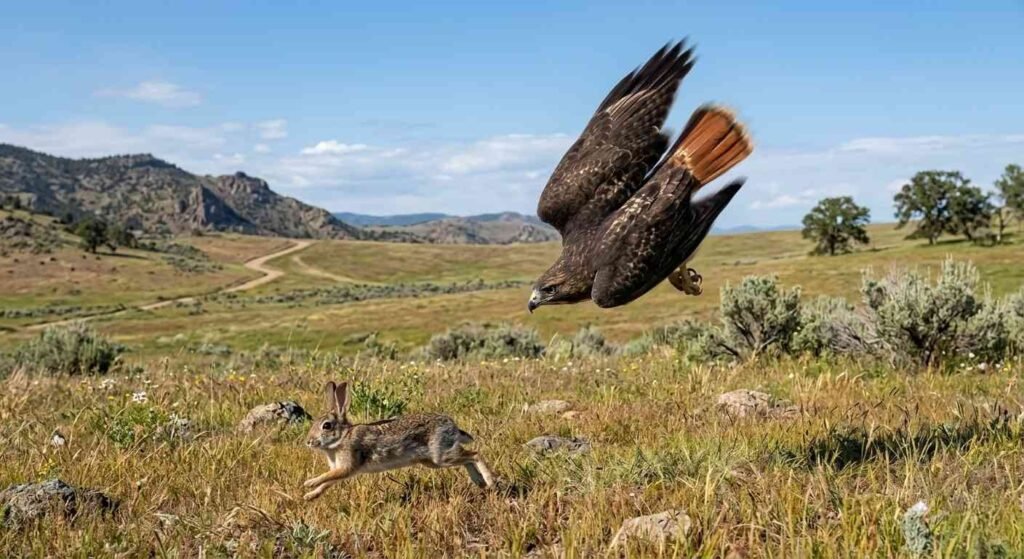
Hawks are generally solitary birds, but their hunting strategies are a testament to their remarkable intelligence.
- The High-Dive Attack:
Broad-winged hawks (such as the red-tailed hawk) circle very high in the sky. When they spot a rabbit, mouse, or snake below, they fold their wings and come down like a missile. This dive can reach speeds of up to 150 miles per hour (240 kilometers per hour). - The Ambush Hunters:
- Accipiters sit perfectly still on the branches of dense trees. As soon as a pigeon, squirrel or songbird passes nearby, they emerge from the branches with amazing agility and grab the prey without giving it a chance to catch up.
- Air Wolves – Cooperative Hunting:The Harris Hawk is a unique example in the world of predatory birds. These birds hunt together like wolves. There can be 2 to 6 birds in a group. One bird tries to drive the prey out of the bushes, while the rest of the birds block the way and wait for it to emerge. They also take down larger prey (such as large rabbits) together.
Breeding and Family Life
The breeding season for hawks begins in early spring. Their courtship and courtship display is very attractive. The male and female fly together high in the sky, circling each other, and sometimes come down with their talons interlocked in the air. This action shows the strength of their bond.
- Nest building: The hawks build a large nest (Eyrie) from thick twigs in the high branches of trees or on steep cliffs. Most pairs stay with the same partner for life and return to the same nest every year.
- Eggs and young: The female usually lays 1 to 5 eggs. The incubation process lasts 30 to 35 days. During this time, the male fulfills the responsibility of bringing food. Chicks grow quickly and are able to fly in 6 to 7 weeks, but they remain under the protection of their parents until they learn full hunting skills.
Migration: Traveling Thousands of Miles on the Wind
With the arrival of winter, food shortages force hawks to migrate. Their migration journey is one of nature’s great wonders.
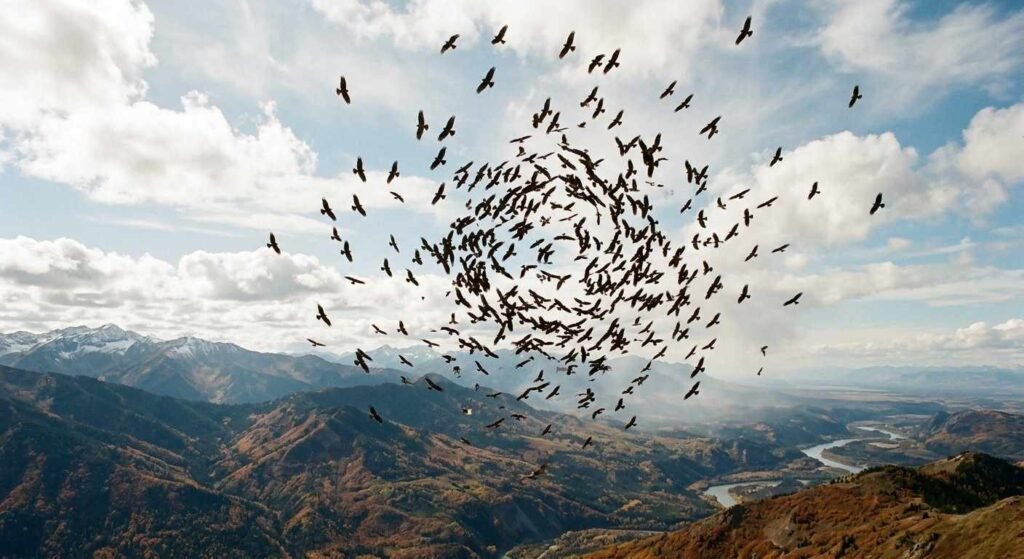
To conserve energy, hawks use thermals. When the ground is warmed by sunlight, warm air rises. The hawks soar into these thermals without flapping their wings and then glide to the next thermal. During migration, flocks of hundreds of hawks, called “kettles,” can be seen in the sky.
The svenson’s hawk makes a long and arduous journey of about 6,000 miles (9,600 kilometers) each year from Canada to Argentina.
The importance of hawks in the ecosystem
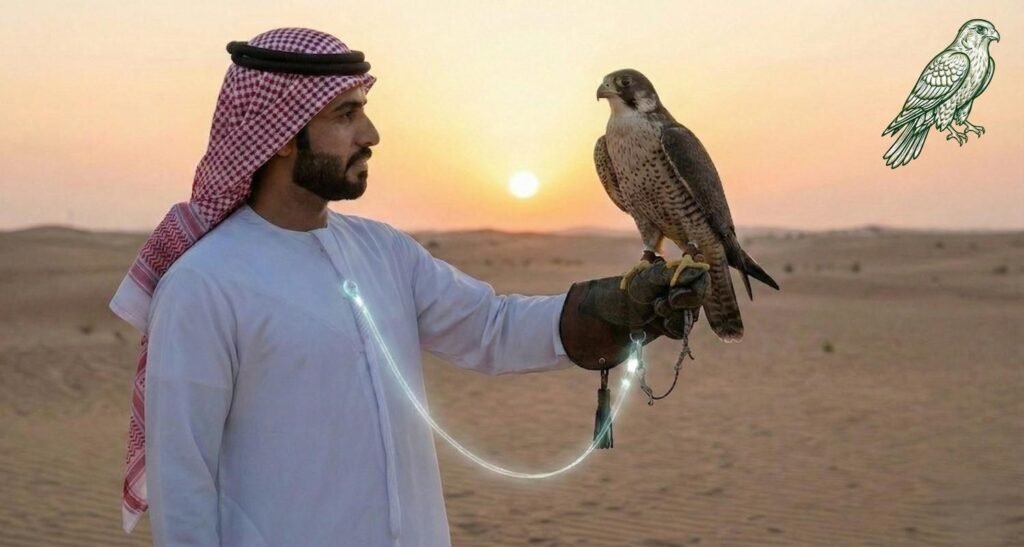
In the ecosystem, hawks have the status of “keystone species”. Their presence indicates a healthy environment.
Natural pest control:A hawk hunts hundreds of flies and various other insects annually. If it were not for some, the crops would be infested with insects and rats in large numbers, and their number would increase, and the fertile soil system would also be disrupted and diseases would spread rapidly.
Environmental indicators (Bioindicators): Hawks are at the top of the food chain. If toxic substances are present in the environment, they gradually accumulate in the bodies of hawks. A decrease in the population of hawks is the first and most obvious indicator of environmental pollution.
Modern Threats to Falcons and Their Conservation
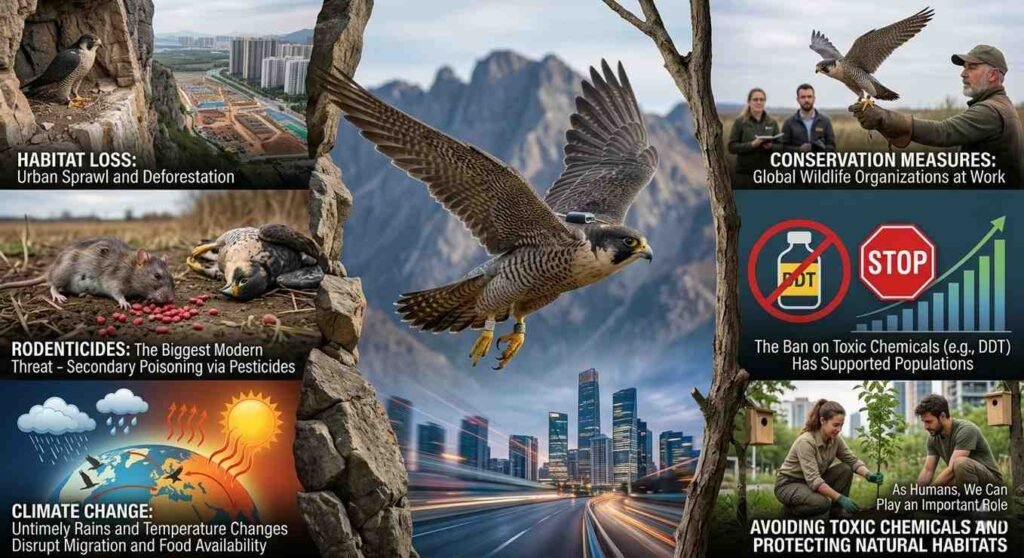
In today’s fast-paced world, these uncrowned kings face several serious threats:
Habitat Loss: Urban sprawl and rampant deforestation have taken away the nesting sites of falcons.
Rodenticides: This is the biggest threat in modern times. When rats eat poisonous pesticides and then falcons eat them, this poisoning (secondary poisoning) causes the death of the falcon.
Climate Change: Changes in temperature and untimely rains have adversely affected their migration routes and food availability.
Conservation measures:
Wildlife organizations around the world are working to protect them. The ban on toxic chemicals (such as DDT) has supported their population. As humans, we can play an important role in their conservation by avoiding the use of toxic chemicals and protecting their natural habitat.
Some surprising facts about hawks (summary)
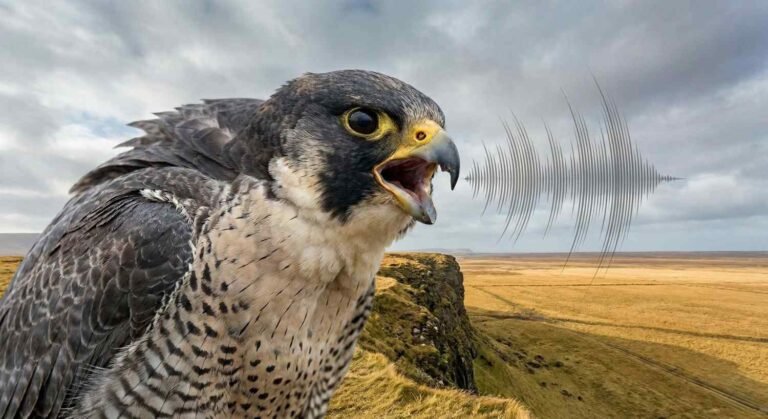
The fearsome and resonant sound of an eagle that is heard in Hollywood movies is actually not that of an eagle, but of a red-tailed hawk!- A hawk has 14 bones in its neck (compared to 7 in humans), which allows it to turn its head up to 180 degrees.
- Their lifespan in the wild can be between 20 and 30 years, which is considered a long life span for birds of prey.
- Some hawks are attracted to fire smoke because insects and small animals flee at the sight of smoke, and these birds easily prey on them.

Heard good things about W88ai. Might give it a try. Check it out for yourself if you want. Find the site at w88ai.