
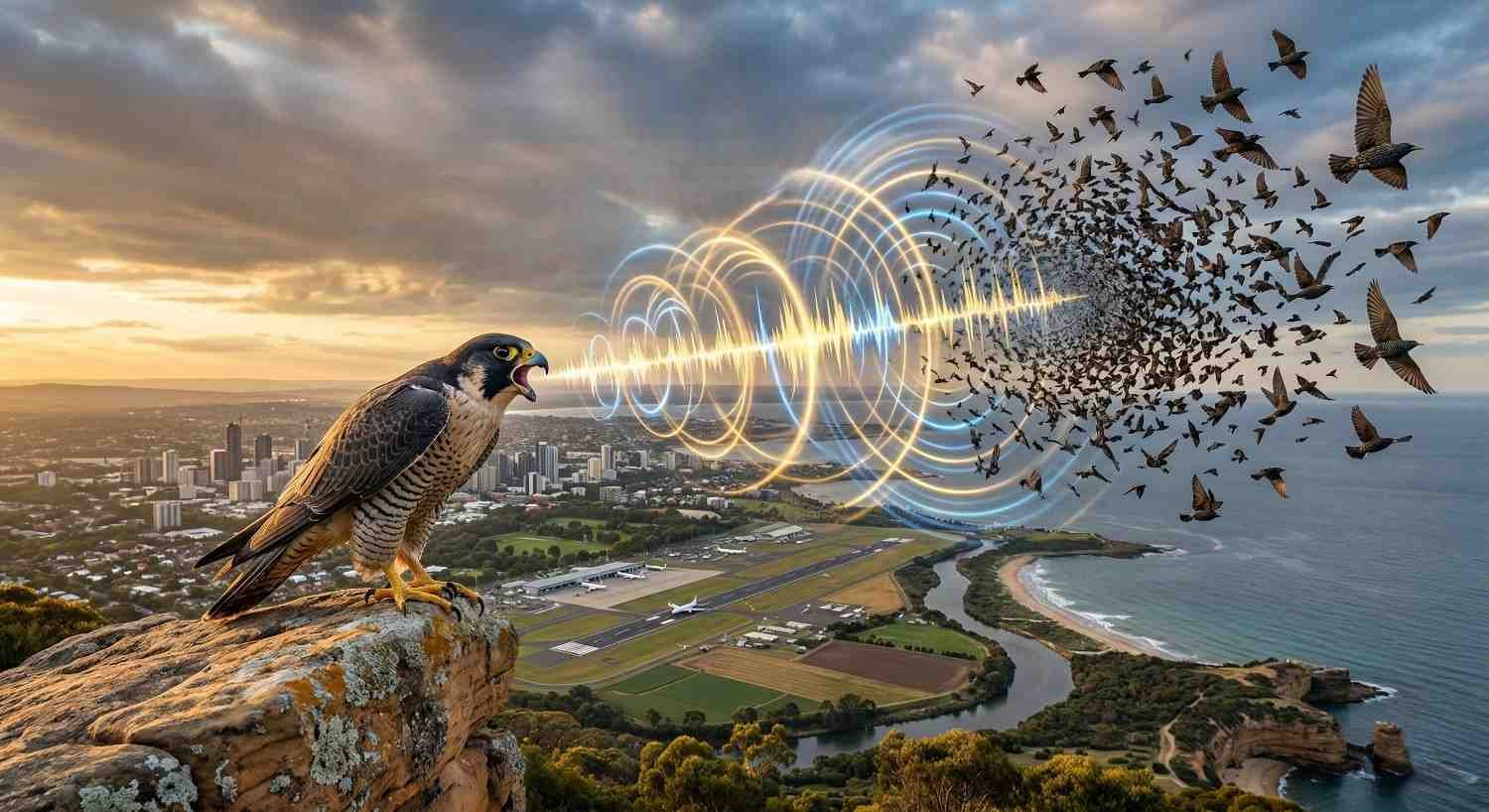
The Role of Falcon Sounds: A Unique and Effective Way to Repel Birds
Birds have always been an integral part of our environment. They play an important role in the ecological balance, agriculture and human culture. But sometimes, due to certain birds, humans have to intervene to reduce their impact. In recent years, a modern and humane way to repel birds has emerged — the use of Falcon…
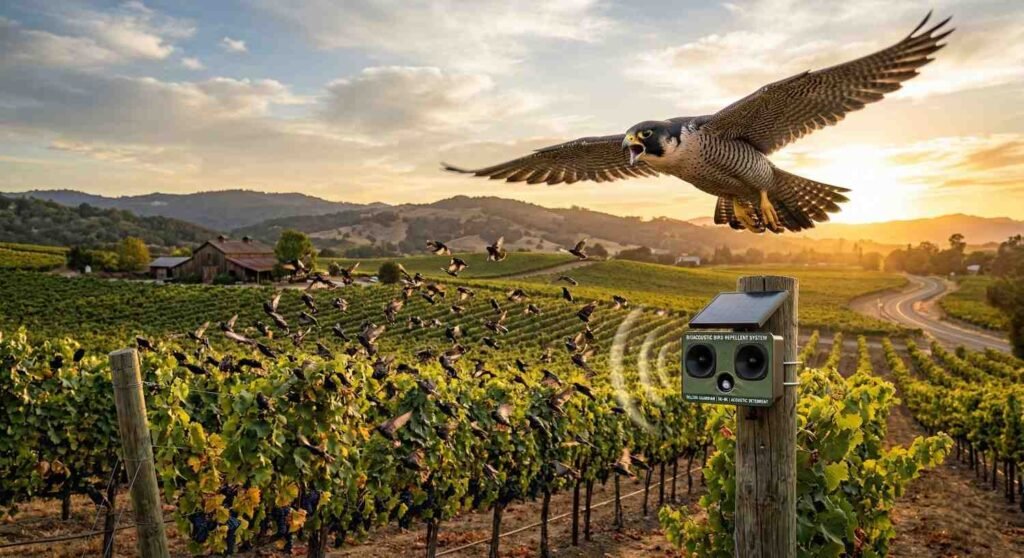
Birds have always been an integral part of our environment. They play an important role in the ecological balance, agriculture and human culture. But sometimes, due to certain birds, humans have to intervene to reduce their impact.
In recent years, a modern and humane way to repel birds has emerged — the use of Falcon sounds. This method is derived from the natural predator-prey relationship, in which the sound of a falcon, which is a dangerous bird of prey, instills fear in other small birds and they immediately fly away from the area.
This method provides a unique, environmentally friendly solution for agriculture, airport security and bird population management in urban areas.
Understanding the Concept of Falcon Sounds
The basic principle of controlling birds through falcon sounds is very simple but effective. When a hawk’s loud, sharp calls are broadcast in an area, small birds perceive them as a sign of danger and instinctively fly away.
These calls signal the presence of a predator in nature. It is as if the real hawk is not there, but the call is so powerful that other birds are frightened. This behavior is connected to the natural survival instinct of birds that has developed over millions of years of evolution.
The science behind hawk calls
To understand why hawk calls are so effective for other birds, we need to look at their auditory system.
Birds’ ears are much more sensitive than humans’, they can hear sounds with very high frequencies and even perceive slight fluctuations in sound.
The hawk’s call is sharp, loud and piercing, which can be heard from afar. This is why many birds, especially small ones such as sparrows, pigeons and starlings, feel afraid of these sounds.
Research has shown that birds usually fly away immediately upon hearing the sound of predatory birds such as eagles, hawks, or falcons to avoid becoming prey.
Practical Uses of Hawk Sounds
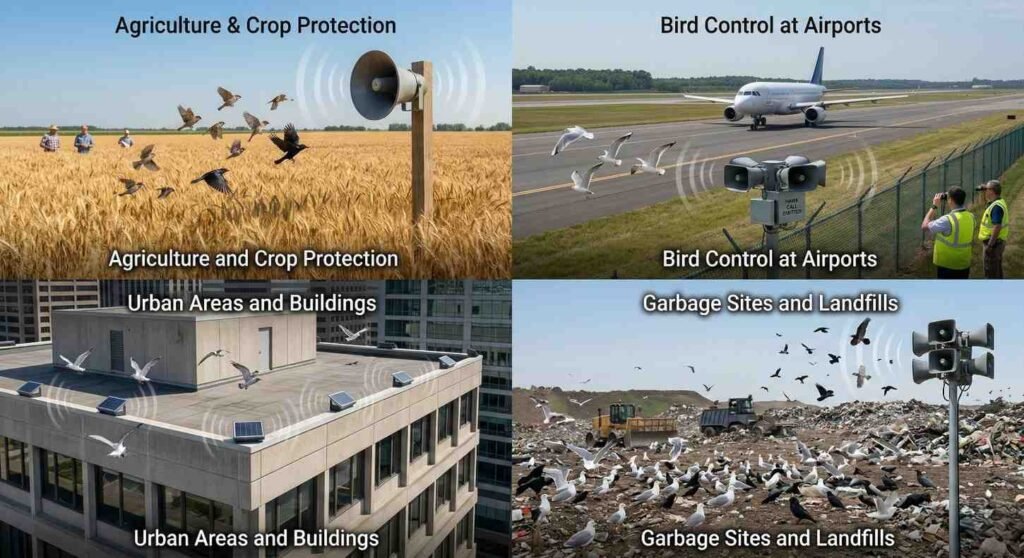
Hawk sounds are being used in various fields, offering effective solutions to bird-related problems.
Agriculture and Crop Protection
Farmers always face difficulties in protecting crops from birds. Sparrows, crows, pigeons and other birds cause severe damage to crops.
Traditional methods such as scarecrows, shiny tape or firecrackers work temporarily but do not last long.
On the contrary, when hawk sounds are broadcast in the fields through speakers, the birds consider it a threat and move away from the area.
This method is not only human-friendly but also environmentally friendly, as it does not use any toxic chemicals or harmful materials.
Bird Control at Airports
Bird strikes are a major threat to the aviation industry.
Broadcasting hawk calls around airports deters birds from approaching runways.
This method is used in conjunction with trained hawks, visual aversive devices, and other environmental modification methods to create a safer environment for both aircraft and wildlife.
Urban areas and buildings
In urban areas, birds such as pigeons, crows, and seagulls nest on the roofs and sides of buildings, causing cleanliness, health, and aesthetic problems.
Hawk calls are an effective alternative for these birds.
When sound systems are installed on the roofs of buildings that broadcast hawk calls at regular intervals, birds avoid returning to these areas.
This method is non-intrusive and non-disturbing to the human population.
Garbage sites and landfills
Large numbers of birds congregate on garbage dumps, which causes the spread of diseases and environmental pollution.
Broadcasting hawk calls in these areas keeps birds away, which improves cleanliness and safety.
Wildlife management and ecological balance
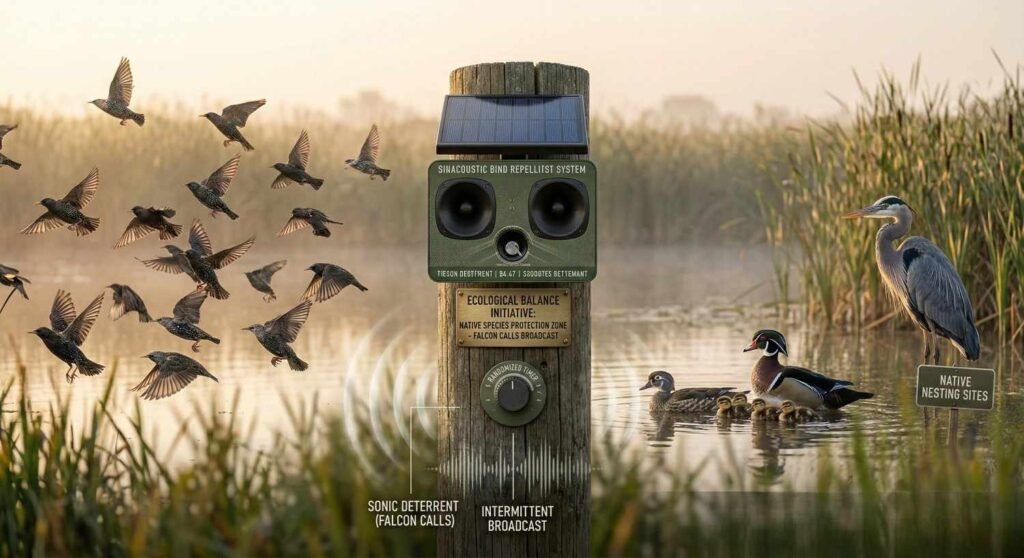
Falcon calls are also used to control the population of non-native (invasive) birds in order to protect native species.
For example, in ponds or marshes where foreign birds are harming native birds, hawk calls can be broadcast to remove them.
Benefits of hawk calls
Humane method:
This method does not harm the birds but only creates a natural fear in them.
Eco-friendly:
It does not use chemicals or poisons, but imitates the natural system.
Low cost and long lasting:
Once the system is installed, it does not require much maintenance.
Non-intrusive:
These sounds generally do not affect humans, so they can also be used in cities.
Limitations and Challenges
Not all birds are equally affected:
Some birds can become accustomed to these sounds over time.
Sound Fatigue:
If the same type of sound is played repeatedly, the effect decreases, so it is necessary to broadcast the sounds intermittently or in different ways.
Legal Restrictions:
Some areas have noise limits, so it is important to be aware of local laws.
Conclusion
The use of hawk sounds is a unique, safe and humane way to repel birds.
It is proving effective in agriculture, airports and urban environments.
Although there are some challenges, overall this method is emerging as a reliable and sustainable solution in modern wildlife management.
By maintaining a balance with the natural environment, hawk sounds are an example of how humans and wildlife can live in harmony.




Megaparilogin is pretty straightforward. Login’s simple, and they’ve got a decent range of stuff to play. No complaints so far! Get logged in here: megaparilogin
Anyone else tried ae8888? Heard the odds are pretty decent! ae8888