
How to Take Care of a Dog: The Complete Guide
We will try to understand How to Take Care of a Dog The arrival of a new pet in the yard, and especially the decision to take care of a dog, blesses your life with selfless love and a true friend. Whether you choose a mischievous and playful puppy or shelter a serious and older…
We will try to understand How to Take Care of a Dog The arrival of a new pet in the yard, and especially the decision to take care of a dog, blesses your life with selfless love and a true friend. Whether you choose a mischievous and playful puppy or shelter a serious and older rescue dog, this companionship always proves to be a beautiful experience that soothes the heart. However, remember that with this pleasant feeling comes a long and serious responsibility.
To keep your silent and loyal friend always happy, alert and energetic, it is very important to have a deep understanding of his physical and emotional needs. The best upbringing of a dog is not limited to just love, but also requires a balanced and high-quality diet, timely veterinary check-ups, constant training and your precious time and full attention every day.
1. How to Take Care of a Dog Core Essentials of Dog Care
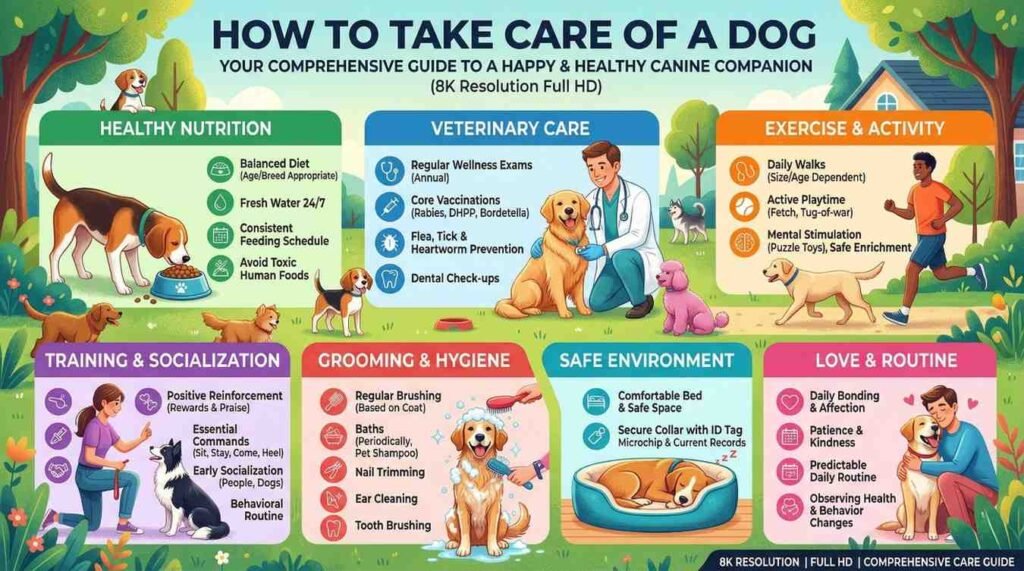
Before discussing specifics, it is vital to understand a dog’s baseline requirements. Every dog, regardless of breed or size, needs these core essentials to thrive:
- A highly nutritious, life-stage-appropriate diet.
- Unrestricted access to clean, fresh water.
- A safe, climate-controlled indoor living space.
- Daily physical exercise and mental stimulation.
- Routine grooming and hygiene maintenance.
- Preventative veterinary care and vaccinations.
- Positive reinforcement training and socialization.
- Consistent affection and daily interaction.
2. Providing Proper Canine Nutrition
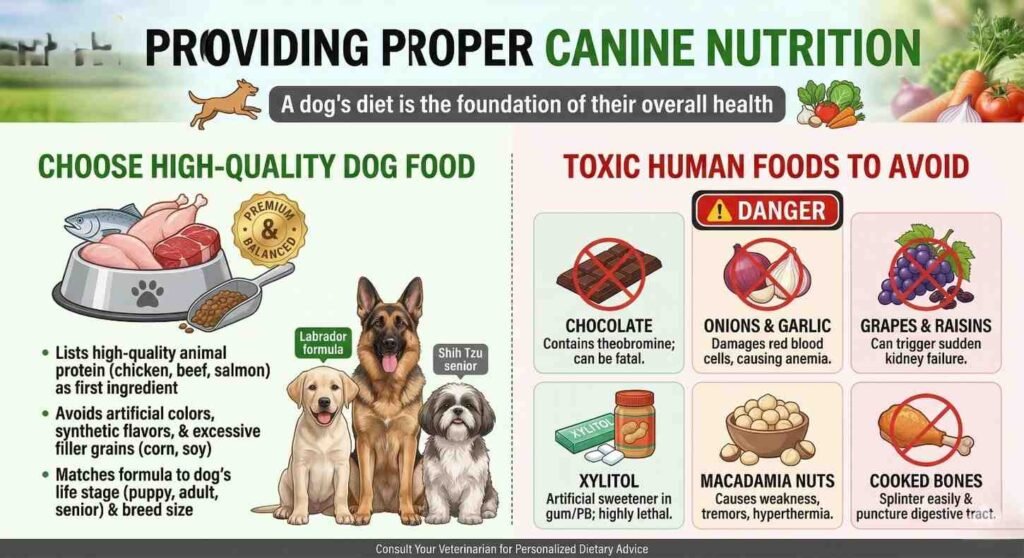
Feeding your dog the right and balanced diet has a great impact on its strength, ability to fight disease, and lifespan.
Choose High-Quality Dog Food
Select premium, balanced dog food that lists a high-quality animal protein (like chicken, beef, or salmon) as the first ingredient. Avoid brands packed with artificial colors, synthetic flavors, or excessive filler grains like corn and soy. Ensure the formula matches your dog’s specific life stage (puppy, adult, or senior) and breed size.
Toxic Human Foods to Avoid
- Chocolate: Contains theobromine, which can be fatal.
- Onions and Garlic: Damages red blood cells, causing anemia.
- Xylitol: An artificial sweetener found in gum and peanut butter; highly lethal.
- Macadamia Nuts: Causes weakness, tremors, and hyperthermia.
- Cooked Bones: These splinter easily and can puncture the digestive tract.
[Image Placeholder: Dog looking curiously at human food on table]
Establish a Consistent Feeding Schedule
Leaving food out all day (free-feeding) often leads to canine obesity. Instead, establish a routine:
- Puppies (Under 5.9 months): 4 to 5small meals daily for steady growth.
- Adult Dogs: 2 measured meals a day (morning and evening).
- Senior Dogs: 1 to 2 meals, often requiring a lower-calorie or specialized diet.Routine feeding regulates digestion and assists with house-training. Always provide a clean bowl of fresh water alongside their meals.
3. Exercise and Physical Activity
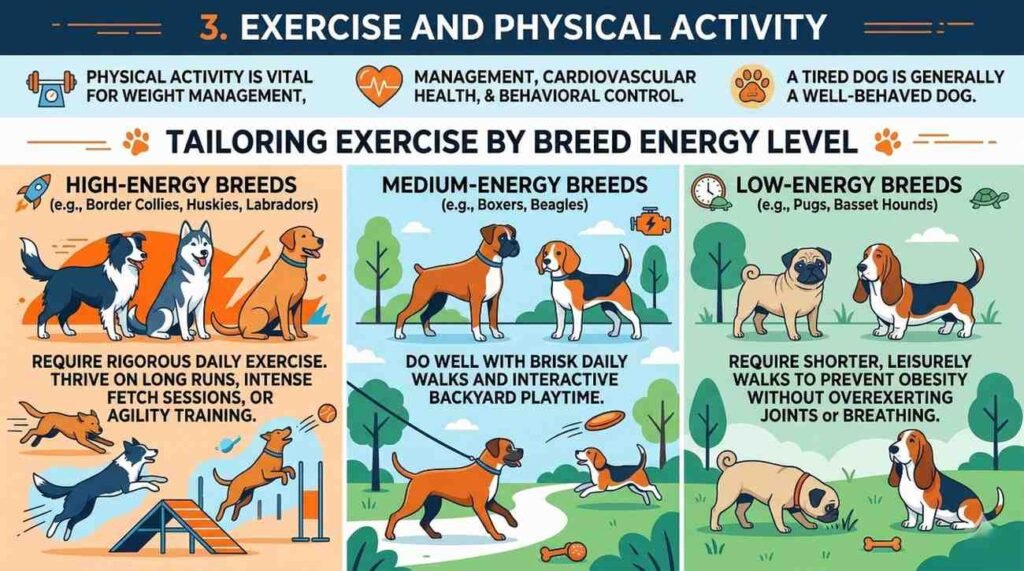
Physical activity is vital for weight management, cardiovascular health, and behavioral control.
Tailoring Exercise by Breed
Match your daily exercise routine to your dog’s natural energy levels:
- High-Energy Breeds (e.g., Border Collies, Huskies, Labradors): Require rigorous daily exercise. They thrive on long runs, intense fetch sessions, or agility training.
- Medium-Energy Breeds (e.g., Boxers, Beagles): Do well with brisk daily walks and interactive backyard playtime.
- Low-Energy Breeds (e.g., Pugs, Basset Hounds): Require shorter, leisurely walks to prevent obesity without overexerting their joints or breathing.
Fun Exercise Ideas
Keep physical activity engaging by mixing up the routine. Incorporate neighborhood scent walks, fetch at a secure park, or swimming. Indoor games like tug-of-war or using treat-dispensing puzzle toys are excellent ways to burn energy when the weather is bad.
4. Essential Grooming and Hygiene
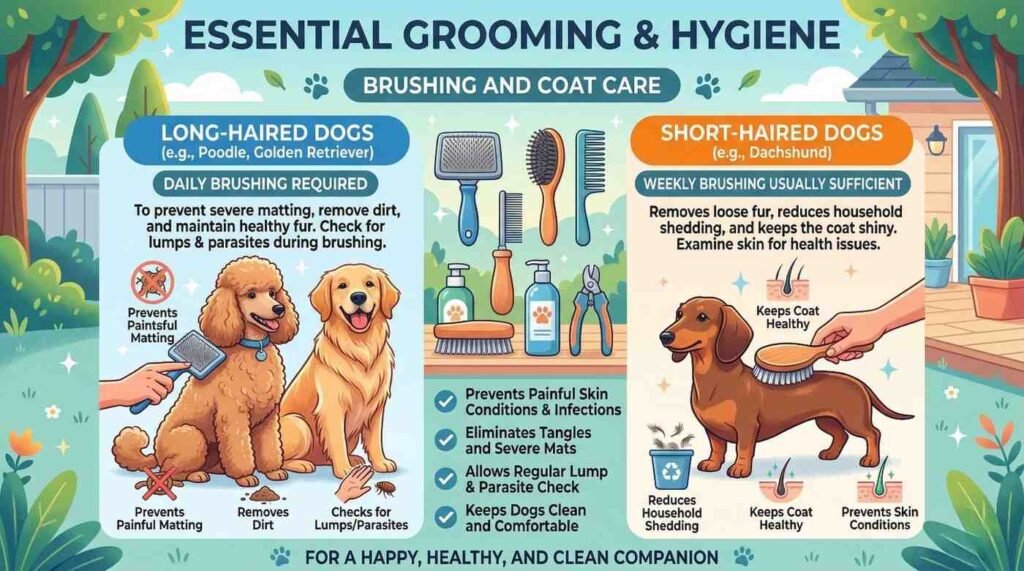
Routine grooming prevents painful skin conditions, mats, and infections while allowing you to check for lumps or parasites.
Brushing and Coat Care
Regular brushing removes dirt, prevents tangles, and significantly reduces household shedding. Long-haired breeds (like Poodles or Golden Retrievers) need daily brushing to prevent matting. Short-haired breeds (like Dachshunds) usually only require a thorough brush once a week.
[Image Placeholder: Person gently brushing a dog indoors]
Nail Trimming
If you hear your dog’s nails clicking on hard floors, they are too long. Overgrown nails alter a dog’s gait, leading to joint pain and arthritis. Trim their nails every 3 to 4 weeks using pet clippers or a grinder. If you are uncomfortable doing this, hire a professional groomer or ask your vet.
Canine Dental and Ear Care
Periodontal disease is common and can cause organ damage if oral bacteria enters the bloodstream. Brush your dog’s teeth several times a week using dog-safe enzymatic toothpaste.
Additionally, check your dog’s ears weekly for dark wax, redness, or foul odors—classic signs of an infection. Clean the outer ear gently with a vet-approved solution and a cotton ball.
5. Veterinary Care and Health Monitoring
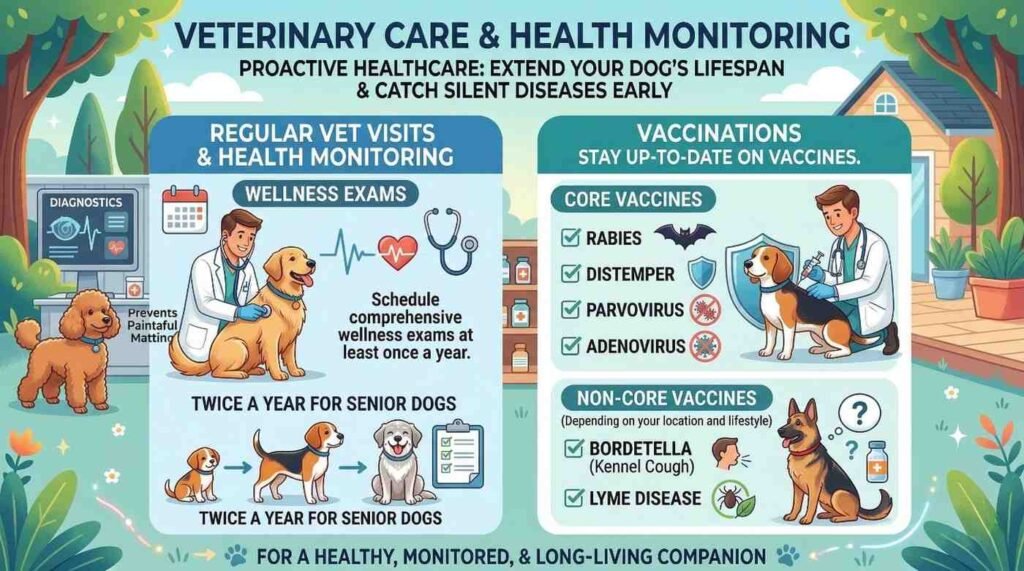
Proactive healthcare is the best way to extend your dog’s lifespan and catch silent diseases early.
Regular Vet Visits and Vaccinations
Schedule comprehensive wellness exams at least once a year (twice for seniors). Ensure your dog stays up-to-date on core vaccines, including Rabies, Distemper, Parvovirus, and Adenovirus. Depending on your location, non-core vaccines like Bordetella (Kennel Cough) or Lyme disease may also be necessary.
[Image Placeholder: Veterinarian examining a calm dog in clinic]
Parasite Prevention
Keep your dog on strict, year-round preventative medications for fleas, ticks, and heartworms. Heartworm disease is transmitted by mosquitoes and can be fatal if ignored.
Spaying and Neutering
Veterinary professionals heavily recommend spaying females and neutering males unless you are an ethical, registered breeder. This prevents pet overpopulation, reduces the risk of reproductive cancers, and limits hormonally driven behaviors like roaming.
Recognizing Signs of Illness
Contact your vet immediately if you notice:
- Sudden loss of appetite or extreme lethargy.
- Vomiting or diarrhea lasting over 24 hours.
- Labored breathing or persistent coughing.
- Unexplained aggression or signs of pain when touched.
6. Dog Training and Socialization
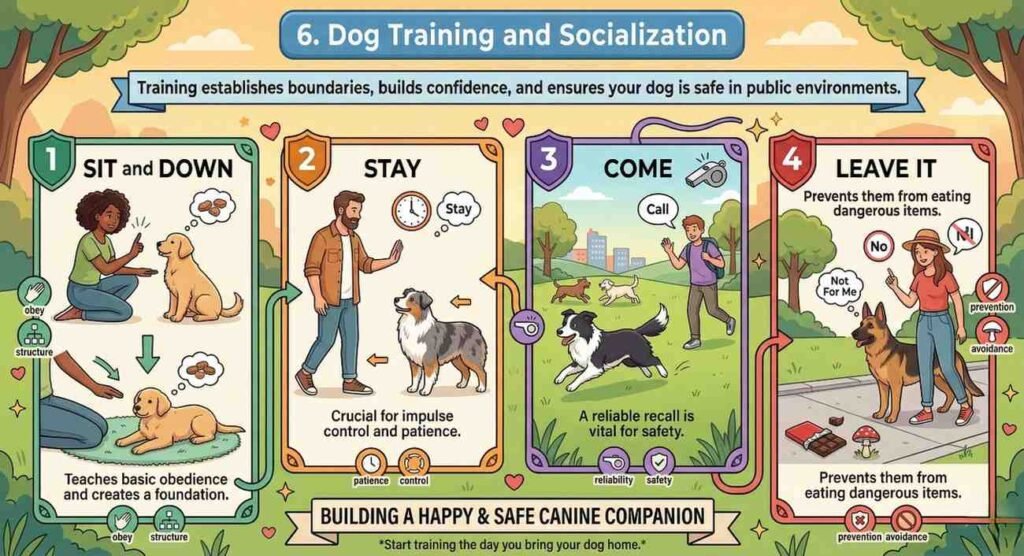
Training establishes boundaries, builds confidence, and ensures your dog is safe in public environments.
Master Basic Commands
Begin training the day you bring your dog home. Focus on mastering life-saving commands before teaching tricks:
- Sit and Down
- Stay (Crucial for impulse control)
- Come (A reliable recall is vital for safety)
- Leave it (Prevents them from eating dangerous items)
[Image Placeholder: Owner giving a training treat to sitting dog]
Always use positive reinforcement. Never use physical punishment or yelling, as this destroys trust and creates fear-based reactivity.
Crate Training and Housebreaking
A properly introduced crate acts as a safe, cozy den. Use it for short periods when you cannot supervise your dog. It is one of the most effective tools for successful housebreaking. Never use the crate for punishment.
The Importance of Socialization
Proper socialization during the critical puppy window (up to 16 weeks) shapes their temperament. Safely expose your dog to diverse people, other vaccinated animals, loud noises, and new environments. Well-socialized dogs grow into adaptable, calm adults less prone to anxiety.
7. Creating a Safe Home Environment
Your home must be a safe haven for your pet.
Indoor Dog-Proofing
Secure toxic chemicals, human medications, and cleaning supplies. Hide electrical cords to prevent chewing. Pick up small items like socks or children’s toys that could cause intestinal blockages if swallowed. Provide a supportive orthopedic bed in a quiet area for uninterrupted rest.
Outdoor Safety
If your dog uses a backyard, ensure the fencing is completely escape-proof. Dogs left outside must have access to heavy shade, sturdy shelter from the elements, and fresh water.
Never leave a dog chained or tethered outside alone for extended periods. It is psychologically damaging and leads to severe behavioral issues.
8. Mental Stimulation and Emotional Health
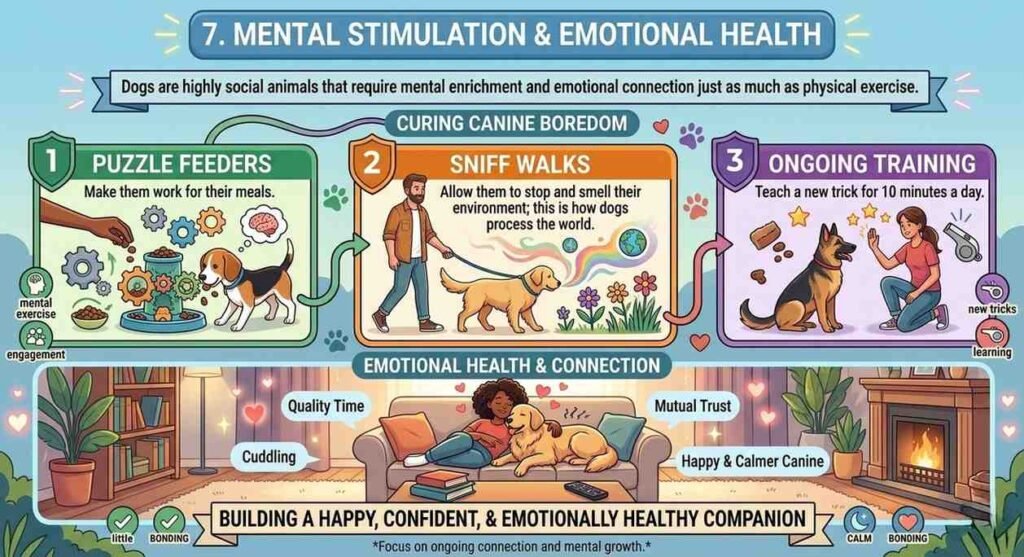
Dogs are highly social animals that require mental enrichment and emotional connection just as much as physical exercise.
Curing Canine Boredom
A bored dog will invent destructive jobs to do. Keep their minds sharp with:
- Sniff Walks: Allow them to stop and smell their environment; this is how dogs process the world.
- Ongoing Training: Teach a new trick for 10 minutes a day.
Preventing Separation Anxiety
Dogs left entirely alone for 10+ hours a day often suffer from depression and separation anxiety. If you work long hours, arrange for a midday dog walker, enroll them in doggy daycare, or come home during your lunch break to break up their day.
9. Traveling Safely with Your Dog
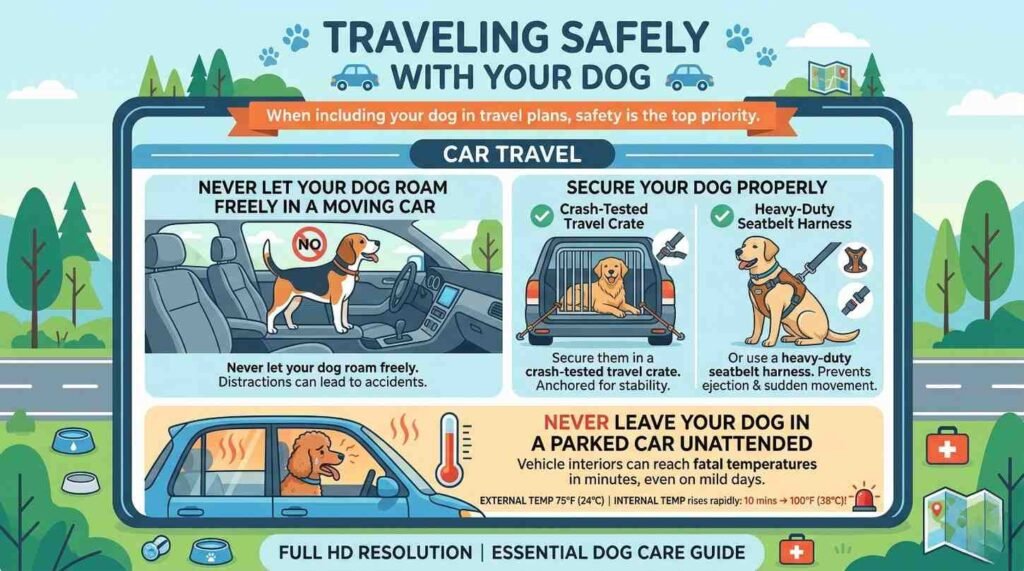
When including your dog in travel plans, safety is the top priority.
Car Travel
Never let your dog roam freely in a moving car. Secure them in a crash-tested travel crate or a heavy-duty seatbelt harness. Never leave your dog in a parked car unattended. Vehicle interiors can reach fatal temperatures in minutes, even on mild days.
[Image Placeholder: Dog safely secured with car seatbelt harness]
Air Travel and Identification
If flying, check airline pet policies well in advance. Always ensure your dog is microchipped and wearing a secure collar with an updated ID tag containing your mobile number.
10. Life Stages: Puppy vs. Senior Care
maitain your dog care routine as your dog life age.
Puppy Care
Puppies require frequent meals, constant supervision, and regular bathroom breaks. Exercise should be kept brief to protect developing joints. Early socialization and positive reinforcement training are non-negotiable during this stage.
Senior Dog Care
Senior dogs move slower and may develop arthritis or sensory loss. Switch them to a lower-calorie, easy-to-digest senior diet. Add joint supplements like Glucosamine, provide orthopedic bedding, and switch from long runs to gentle walks. Increase vet visits to monitor internal organ health.
11. Common Dog Ownership Mistakes to Avoid
To ensure your dog lives their best life, avoid these frequent pitfalls:
- Overfeeding: Showing love through food leads to obesity. Show love through playtime instead.
- Skipping Preventatives: Skipping tick or heartworm meds to save money often results in massive vet bills or tragic outcomes later.
- Neglecting Dental Health: Ignoring dirty teeth leads to chronic pain and systemic infection.
- Punishment-Based Training: Hitting or yelling creates a reactive, fearful dog.
- Ignoring Mental Needs: Assuming a quick walk is enough while leaving the dog bored for the rest of the day.





Experimentei o FortuneRabbit4 e curti demais! Jogo divertido e com boas chances de ganhar uns trocados. A plataforma é bem fácil de navegar. Corre lá pra conferir: fortunerabbit4
I downloaded the 11winnercomapp, and it seems like your average sports app. I like to keep up with my scores. I recommend it. Check it out: 11winnercomapp
G333game tiene una selección interesante de juegos y un ambiente agradable. Siempre encuentro algo nuevo para probar y me gusta la facilidad de navegación. Encuentra tu juego en g333game.