
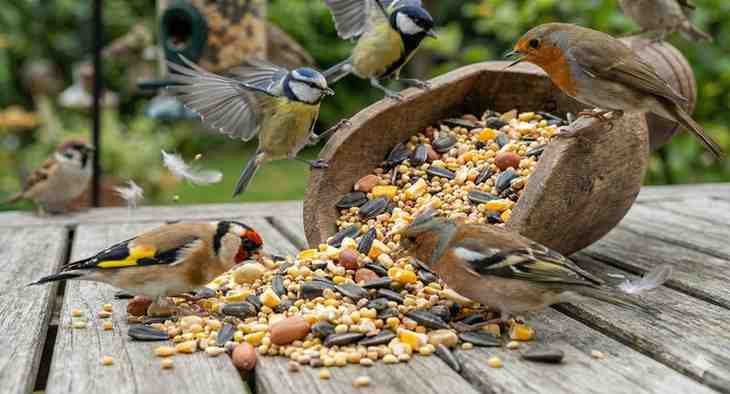
The Ultimate Guide to Seeds in Bird Food: Attracting the Right Birds to Your Backyard
The flash of a cardinal’s red wings against fresh snow, the cheerful acrobatics of chickadees, or the brilliant yellow of a goldfinch can brighten any day.There are few backyard activities more relaxing and rewarding than birdwatching. However, turning your backyard into a bustling aviary requires more than just hanging the first feeder you find on…
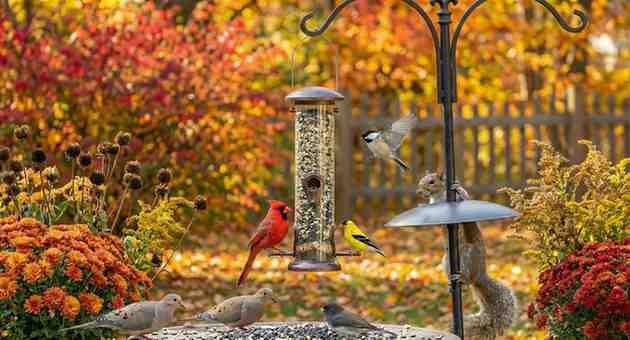
The flash of a cardinal’s red wings against fresh snow, the cheerful acrobatics of chickadees, or the brilliant yellow of a goldfinch can brighten any day.There are few backyard activities more relaxing and rewarding than birdwatching. However, turning your backyard into a bustling aviary requires more than just hanging the first feeder you find on sale and filling it with the cheapest bag of seed available.
If you have ever stared at the wall of colorful bags in the pet aisle, overwhelmed by the choices, you are not alone. Understanding the different types of seeds in bird food is the single most important step in successful backyard birding. The ingredients in that bag determine which birds will visit your yard, which “nuisance” animals will show up, and how much mess will be left on your lawn.
Many commercially available mixes, particularly inexpensive ones, are loaded with “filler seeds” that most desirable backyard birds will simply kick out of the feeder in search of the good stuff. This leads to wasted money, messy piles below the feeder that attract rodents, and a lack of the colorful songbirds you were hoping to see.
This comprehensive guide will break down the specific profiles of the most common seeds found in bird food. We will explore which birds prefer which seeds, how to avoid fillers, and how to curate a menu that attracts the specific feathered friends you want to see outside your window.
The “Big Three”: The Essential Quality Seeds
If you want to attract the widest variety of colorful, desirable songbirds, you need to focus on quality. While many mixes contain a dozen different ingredients, most songbirds are looking for three main types of high-energy seeds.
1. Black Oil Sunflower Seeds (The undisputed King)
If you only choose one type of seed to offer in your backyard, make it black oil sunflower seed. It is the gold standard of bird feeding and the cornerstone of almost any quality blend.
The Profile: Unlike the larger, grey-striped sunflower seeds used in human snacks, black oil sunflower seeds are smaller and darker. Crucially, they have very thin shells that are easy for virtually all seed-eating birds to crack open, from tiny chickadees to powerful grosbeaks. Inside, the “meat” of the seed has an exceptionally high oil and fat content, providing the essential calories birds need to survive cold winters and fuel frantic spring nesting seasons.
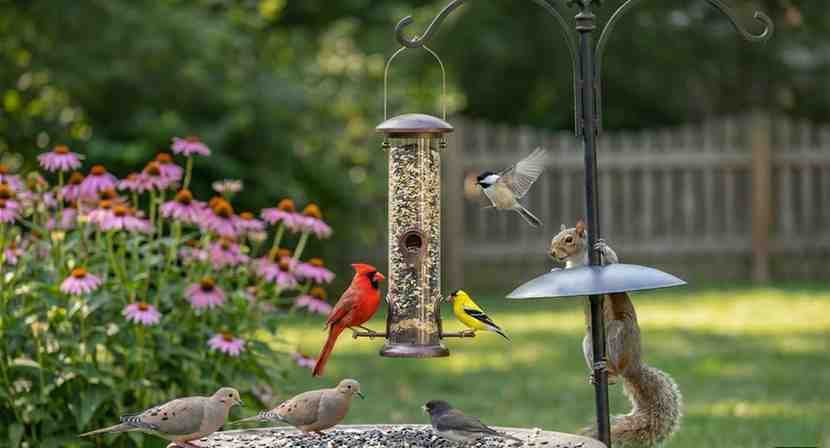
Who Eats It: A better question might be: who doesn’t eat it? You can expect to attract Northern Cardinals, Black-capped Chickadees, Tufted Titmice, Nuthatches, various Finches, Grosbeaks, and Jays. Even woodpeckers will readily visit a feeder stocked with black oil sunflower.
Best Feeder Type: These seeds work well in almost any feeder type: tube feeders (with ports large enough), hopper feeders, and platform trays.
2. Safflower Seeds
Safflower seed is a white, slightly angular seed that looks somewhat like a sunflower seed but is harder. It has gained immense popularity in recent years, not just for who it attracts, but for who it repels.
The Profile: Safflower is high in protein and fat, making it excellent nutrition. However, it has a slightly bitter taste and a harder shell.
Who Eats It: Northern Cardinals absolutely love safflower seed. Grosbeaks, chickadees, and native sparrows will also eat it readily once they get used to it.
The Secret Benefit: The real magic of safflower is that squirrels, European Starlings, and common Grackles generally dislike the taste. If your feeders are being overrun by “bully birds” or bushy-tailed marauders stripping your feeders clean in an hour, switching to straight safflower seed for a few weeks can encourage the nuisance animals to move on while keeping your cardinals happy.
Best Feeder Type: Hopper feeders and tray feeders work best, as some birds struggle to crack these harder seeds while clinging to a tube feeder.
3. Nyjer (Thistle) Seed (The Finch Magnet)
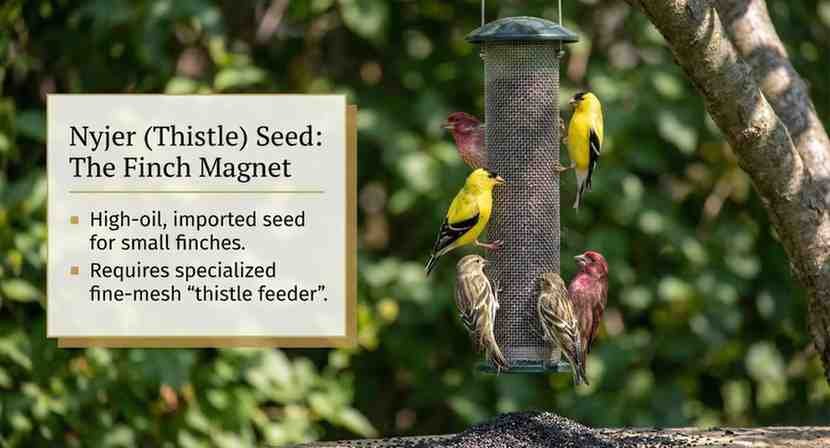
If your goal is to attract brilliant yellow American Goldfinches, Indigo Buntings, or Pine Siskins, Nyjer seed is non-negotiable.
The Profile: Often mistakenly called “thistle” (it’s not actually related to the noxious weed), Nyjer is a tiny, thin, black seed imported primarily from Africa and Asia. It is incredibly high in oil, making it a high-energy powerhouse for small birds. Because it is imported and heat-treated to prevent germination, it is often the most expensive seed per pound.
Who Eats It: This seed is almost exclusively for small finches: Goldfinches, Purple Finches, House Finches, Pine Siskins, and Common Redpolls.
Best Feeder Type: Do not put Nyjer in a standard bird feeder; it is so small it will pour right out of standard ports, wasting your money. You must use a specialized “thistle feeder” or “finch feeder,” which has tiny slits instead of holes, or a fine-mesh sock feeder that birds cling to while pulling the seeds through the mesh.
The Ground Feeders and Fillers: Handle with Care
Not all seeds in bird food mixes are designed for elevated feeders. Some seeds are intended for birds that naturally forage on the ground. However, in cheap mixes, these seeds are often used as inexpensive filler to bulk up the bag weight. Knowing the difference is vital to maintaining a tidy backyard.
White Proso Millet
Millet consists of small, round seeds that come in red and white varieties, though birds vastly prefer the white proso millet.
The Good: Millet is actually a very good seed for specific ground-feeding birds. Dark-eyed Juncos, various native Sparrows, Mourning Doves, and Towhees love it.
The Bad: The birds that love sunflower seeds—chickadees, cardinals, finches—generally do not care for millet. If you put a mix heavy in millet into a hanging tube feeder, these birds will shovel the millet out with their beaks, letting it fall to the ground to get to the sunflower seeds. This creates a mess under the feeder that can attract rodents.
How to Use It: If you want to feed ground birds, offer a mix containing millet on a low platform feeder or scatter a small amount directly on the ground close to cover. Avoid mixes with high millet content for your high-hanging feeders.
Cracked Corn
Cracked corn is exactly what it sounds like: dried corn kernels broken into smaller pieces.
The Good: It is inexpensive and high in carbohydrates. It attracts larger ground-feeding birds like Mourning Doves, Wild Turkeys, Quail, and Blue Jays.
The Bad: Corn is susceptible to rotting quickly when wet, which can harbor dangerous molds. Furthermore, it is a favorite food of deer, raccoons, bears, and squirrels. If you put corn out, be prepared for larger four-legged visitors.
How to Use It: Use sparingly on platform feeders or scattered on the ground, and only put out what can be eaten in a single day to prevent spoilage and nocturnal critter visits.
Milo (Sorghum)
This is perhaps the most controversial ingredient in birdseed. Milo is a large, reddish, round seed.
The Profile: Milo is often used as the primary filler in the least expensive birdseed mixes found in grocery stores and big-box retailers.
Who Eats It (and Who Doesn’t): In the Western and Southwestern United States, milo is readily eaten by Gambel’s Quail, Curve-billed Thrashers, and various western jays.
However, in the Eastern and Midwestern United States and most of Canada, very few backyard birds will eat milo. Most birds will discard it, leading to massive amounts of waste and messy piles under your feeder. If you live in the East and buy a bag of seed that lists Milo or Sorghum as one of the first ingredients, you are essentially paying for waste.
Specialty Add-Ins for a Gourmet Buffet
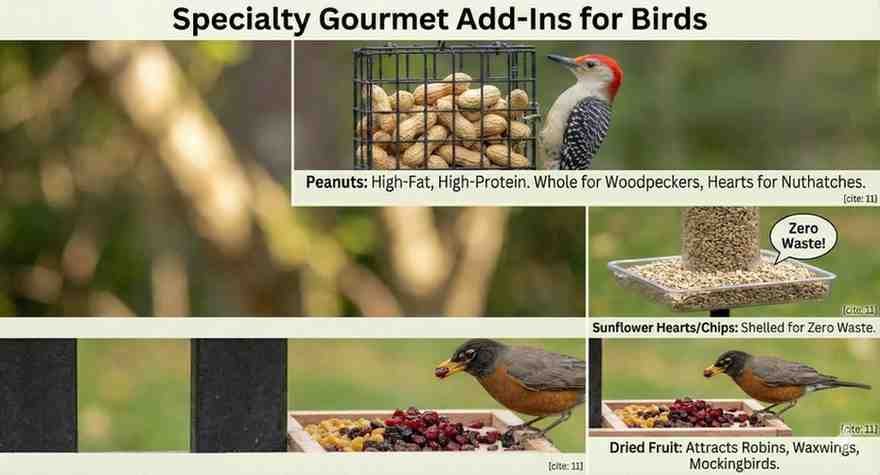
Beyond standard seeds, many high-quality mixes include other ingredients to boost energy content and attract specific species.
- Peanuts (Whole or Hearts): A high-fat, high-protein favorite. Whole peanuts attract Jays and woodpeckers. Peanut hearts (shelled bits) attract nuthatches, chickadees, and titmice. Caution: Ensure peanuts are intended for birds, as salted human peanuts are harmful to them.
- Sunflower Hearts/Chips: These are black oil sunflower seeds that have already had the shells removed. They are more expensive but result in zero waste on your lawn. They are excellent for patio or balcony feeders.
- Dried Fruit: Bits of cranberry, raisin, or cherry are often added to attract birds that don’t typically eat seeds, such as American Robins, Waxwings, and Mockingbirds.
Matching the Seed to the Feeder
Even the best seeds in bird food won’t work if placed in the wrong delivery system. The physical characteristics of the seed dictate the type of feeder required.
1. Tube Feeders: These are long cylinders with feeding ports and perches.
- Best seeds: Black oil sunflower, sunflower hearts, or a high-quality blend with very little millet.
- Specialty: Use dedicated “thistle tubes” with tiny ports for Nyjer seed.
2. Hopper Feeders: These look like little houses; they hold a lot of seed and dispense it at the bottom onto a small tray.
3. Platform/Tray Feeders: These are open trays, sometimes with a roof. They offer the best visibility and allow birds of all sizes to feed.
- Best seeds: Anything goes. This is the best place for larger treats like peanuts, cracked corn, or larger sunflower varieties, as well as standard mixes. They require frequent cleaning as birds stand on the food while eating.
Solving Common Bird Feeding Problems with Seed Choices:
You can often solve your backyard frustrations simply by changing the menu.
Problem: Squirrels are eating everything.
- The Seed Solution: Stop offering sunflower seeds and corn for a while. Switch to 100% Safflower seed. Most squirrels do not like the bitter taste. Alternatively, look for seed mixes that are coated in hot pepper (capsaicin). Birds cannot taste the heat, but mammals (squirrels) hate it.
Problem: “Bully Birds” (Starlings/Grackles) are taking over.
- The Seed Solution: Similar to squirrels, these birds generally dislike safflower. Furthermore, they have trouble clinging to small tube feeders. Avoid bread, corn, and cheap mixes heavily laden with milo, which these birds flock to.
Problem: There is a huge mess of shells and sprouted weeds under the feeder.
- The Seed Solution: Switch to a “No-Waste” or “Patio” blend. These mixes use sunflower chips (hulls removed) and hulled millet. Because the protective shell is gone, the bird eats the entire thing, leaving no debris behind to rake up or kill your grass.

Выбирая надежную платформу, стоит обратить внимание на хостинг для хрумера, который обеспечивает бесперебойную работу.
Опытные оптимизаторы заказывают прогон xrumer, чтобы получить быстрые результаты.