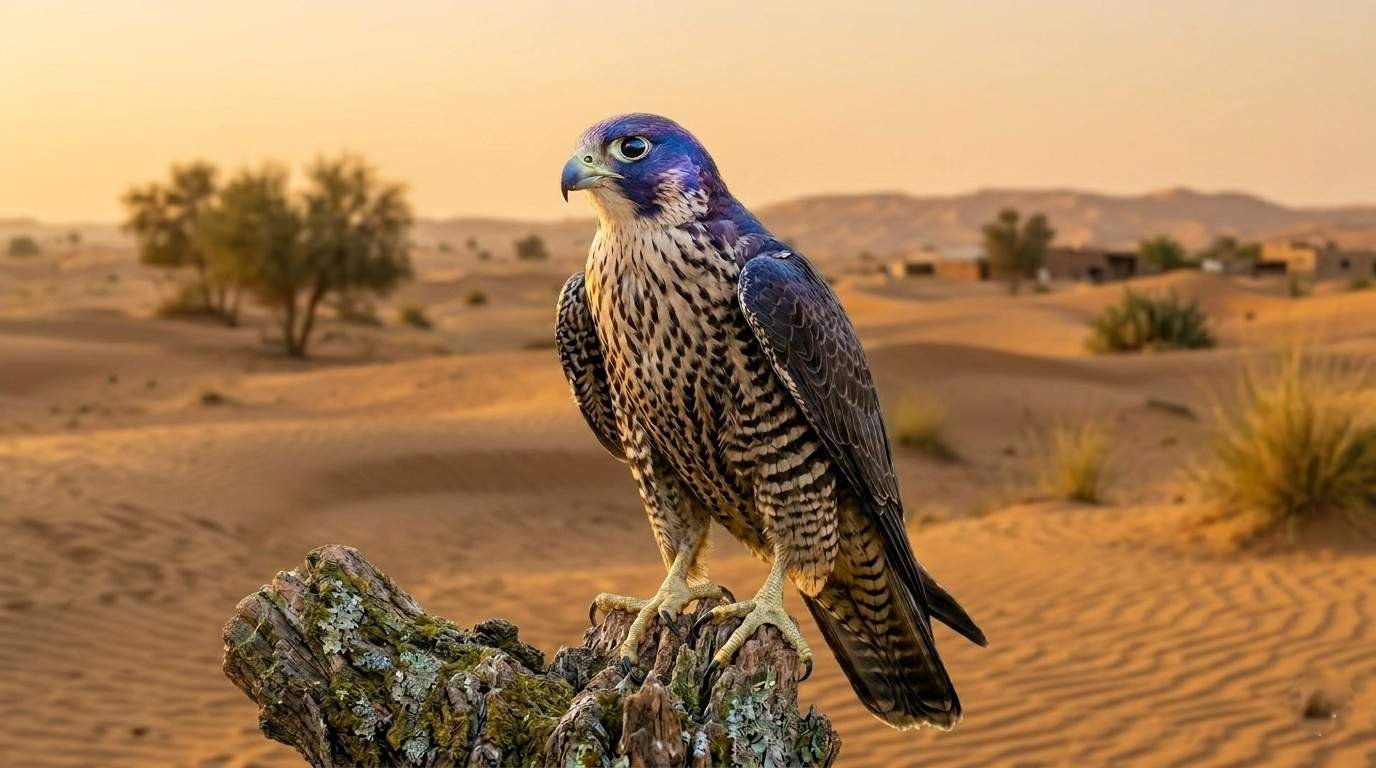
The Majestic Falcon in the UAE: A Symbol of Heritage, Power, and Conservation
In the United Arab Emirates (UAE), thefalcon is far more than just a bird of prey; it is a national emblem, a revered companion, and a living bridge to the nation’s ancestral past. While the gleaming skyscrapers of Dubai and Abu Dhabi represent the country’s rapid modernization, the falcon remains the steadfast soul of its…

In the United Arab Emirates (UAE), thefalcon is far more than just a bird of prey; it is a national emblem, a revered companion, and a living bridge to the nation’s ancestral past. While the gleaming skyscrapers of Dubai and Abu Dhabi represent the country’s rapid modernization, the falcon remains the steadfast soul of its desert heritage.
For centuries, Bedouins relied on these raptors for survival. Today, that survivalist necessity has evolved into a prestigious sport and a cornerstone of national identity. This article delves deep into the world of the falcon in the UAE, covering its history, legal frameworks, types of birds, and the world-leading conservation efforts that ensure this tradition soars for generations to come.
A Legacy Etched in the Sands: The History of Falconry in the UAE
Falconry, known locally as Al Bizarah, has been practiced in the Arabian Peninsula for over 4,000 years. Long before oil wealth transformed the region, the harsh desert environment demanded a partnership between man and nature.
Bedouin tribes trapped and trained falcons to hunt migratory birds like the Houbara Bustard and the Stone Curlew, as well as desert hares. This was not a sport of leisure but a critical means of supplementing a meager diet with protein. The relationship was reciprocal and temporary; typically, a falconer would trap a wild bird during its autumn migration, train it, hunt with it through the winter, and release it back into the wild in the spring to breed—a tradition that instilled a deep respect for conservation long before the term existed.
Did You Know? In 2016, the UAE led an international effort to have falconry inscribed on the UNESCO Representative List of the Intangible Cultural Heritage of Humanity, cementing its status as a global cultural treasure.
The Stars of the Sky: Types of Falcons in the UAE
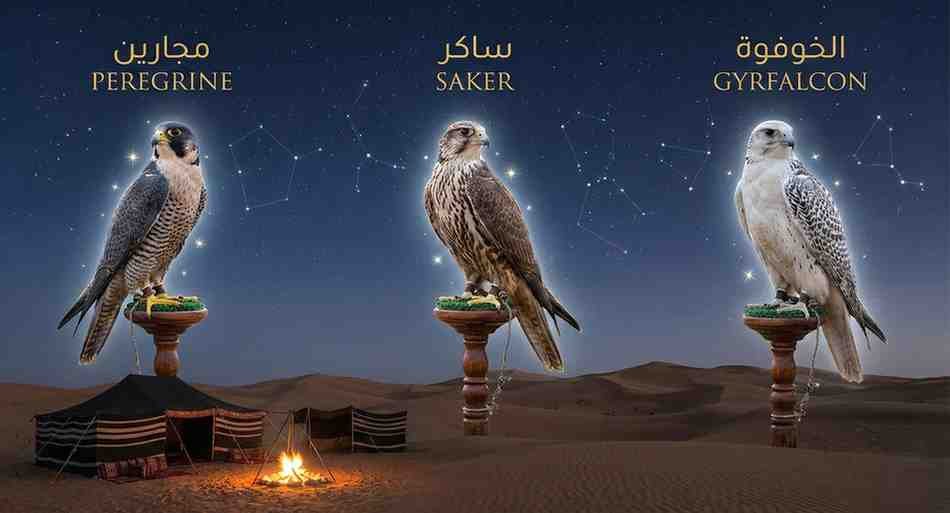
While there are many birds of prey, Emirati falconers primarily prize three specific types, each celebrated for unique traits.
1. The Saker Falcon (Falco cherrug)
Often considered the most traditional bird of Arab falconry, the Saker is renowned for its durability and resilience. It is exceptionally well-suited to the arid desert climate.
- Traits: High endurance, powerful grasp, and the ability to hunt large prey like the Houbara Bustard on the ground.
- Significance: Historically the most common bird used by Bedouins due to its abundance in the region during migration.
2. The Peregrine Falcon (Falco peregrinus)
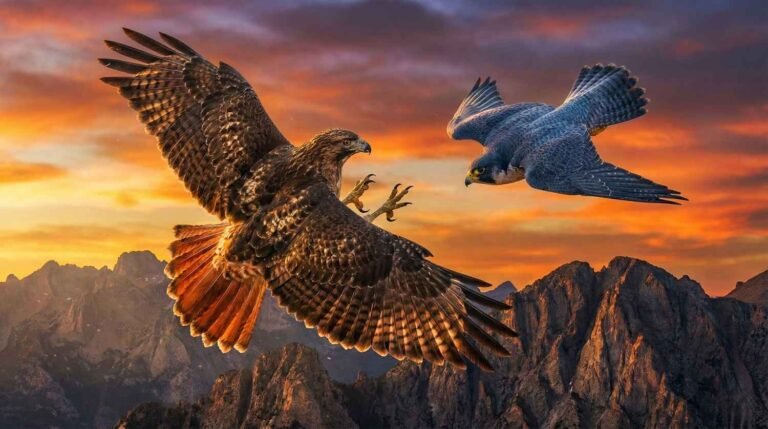
Known as the “Ferrari of the skies,” the Peregrine is the fastest animal on the planet, capable of dive speeds reaching over 300 km/h (186 mph).
- Traits: Speed, agility, and aerial dominance.
- Use: Preferred for hunting prey in flight. They require a skilled handler due to their high energy and sensitivity to heat.
3. The Gyrfalcon (Falco rusticolus)
The largest and most majestic of the falcons, the Gyrfalcon originates from the freezing Arctic. Historically rare in the desert, modern air-conditioned facilities and breeding programs have made them a status symbol in Gulf falconry.
- Traits: Sheer size, immense power, and stunning plumage (often pure white or charcoal).
- Status: Owning a pure white Gyrfalcon is often seen as the pinnacle of prestige in the falconry world.
The Modern Art of Falconry: Training and Equipment
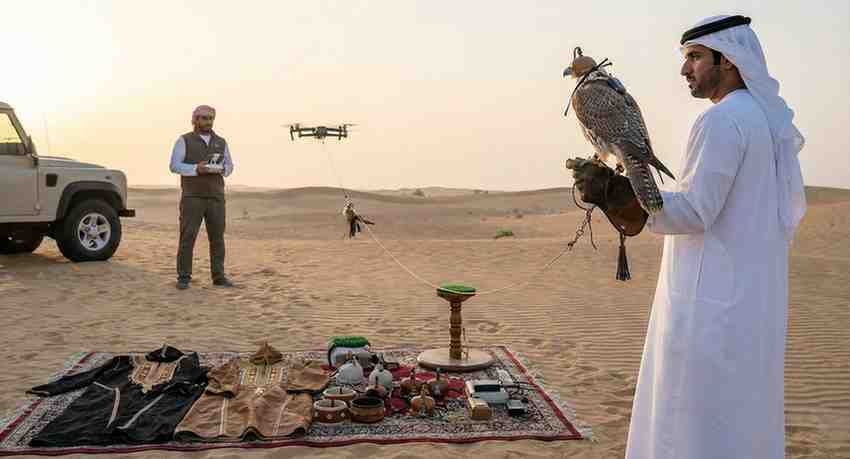
Falconry is not merely about owning a bird; it is a rigorous discipline requiring patience, empathy, and technical skill. The bond between the falconer (Saqqar) and the bird is forged through weeks of constant interaction.
Essential Equipment
- Burqa (Hood): A leather hood covers the falcon’s eyes to keep it calm. By blocking visual stimuli, the bird remains restful until it is time to hunt.
- Mangalah (Cuff): A thick leather gauntlet worn on the falconer’s left hand to protect the skin from sharp talons.
- Telwah (Lure): A bundle of feathers (often resembling the wings of a bustard) swung by the trainer to build the falcon’s fitness and hunting reflexes.
- Waker: A traditional wooden stand where the falcon rests.
Training Phases
The training process, or Manalah, begins with gaining the bird’s trust. The falconer carries the bird on his fist for hours, often while watching TV or sitting in a Majlis (gathering place), to acclimatize the bird to human presence and voice. Once trust is established, the bird is trained to fly to the Telwah for food, eventually graduating to live prey or advanced drone training techniques.
Legal Status: Passports and Protection
The UAE is a pioneer in the legal regulation of falconry, ensuring that the sport complies with international conservation laws, specifically CITES (Convention on International Trade in Endangered Species).
The Falcon Passport
In a move that surprised the world, the UAE introduced the Falcon Passport in 2002.
- Purpose: To combat illegal smuggling and allow falconers to travel with their birds for hunting trips in countries like Pakistan, Kazakhstan, and Morocco.
- Details: The passport is valid for three years and contains the bird’s breed, sex, origin, and a unique 15-digit ID ring number.
- Travel: Falcons in the UAE often travel in the main cabin of airplanes (specifically on Etihad and Emirates Airlines), not in the cargo hold. It is a common sight to see a falcon perched on a passenger’s arm in First or Business Class!
World-Class Healthcare: The Abu Dhabi Falcon Hospital
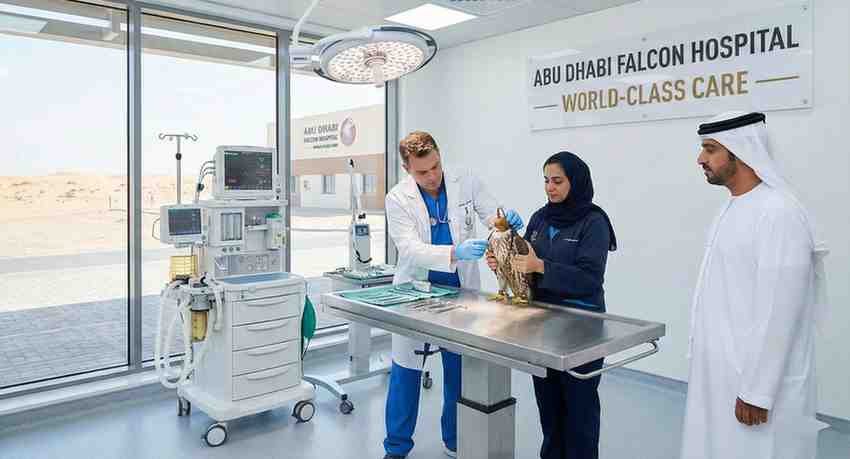
Located near the capital’s airport, the Abu Dhabi Falcon Hospital (ADFH) is the largest and most advanced falcon hospital in the world. Since opening in 1999, it has treated over 100,000 patients.
- Services: The hospital offers everything from routine check-ups and feather repair (known as “imping”) to complex orthopedic surgeries.
- Falcon Pedicures: Regular talon trimming is essential to prevent infection, a routine service provided here.
- Tourism: The hospital is also a major tourist attraction. Visitors can tour the wards, watch minor procedures, and even have a falcon land on their arm for a photo.
Conservation: The Sheikh Zayed Falcon Release Programme
The UAE’s founding father, the late Sheikh Zayed bin Sultan Al Nahyan, was a passionate falconer but also a dedicated conservationist. He recognized early on that wild falcon populations were dwindling.
In 1995, he launched the Sheikh Zayed Falcon Release Programme (SZFRP).
- Mission: To reintroduce wild falcons back into their natural habitats after the hunting season, preserving the ancient Bedouin tradition of “catch and release.”
- Impact: To date, the program has released over 2,000 falcons (mostly Sakers and Peregrines) back into the wild in countries along their migration routes, such as Pakistan, Kazakhstan, and Kyrgyzstan.
- Technology: many released birds are fitted with satellite trackers to monitor survival rates and migration paths, contributing valuable data to global ornithology.
Falconry as a Sport: The President’s Cup
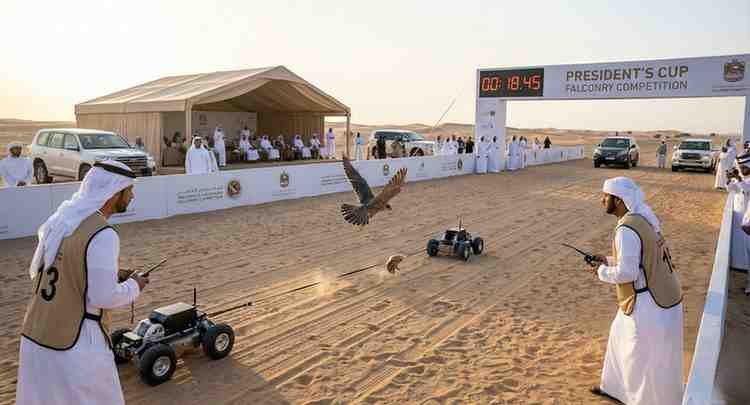
Today, falconry has evolved into a high-stakes competitive sport. The season, usually running from autumn to spring, culminates in major events like the President’s Cup for Falconry.
In these competitions, falcons are timed as they fly over a set distance (usually 400 meters) toward a lure. Technology plays a massive role here, with drones and specialized sensors measuring speed to the millisecond. Winners can receive luxury cars and cash prizes totaling millions of Dirhams, reflecting the high value placed on top-tier birds.