The Blackbuck (antilope Cervicapra): India’s Painted Spirit Of The Grasslands
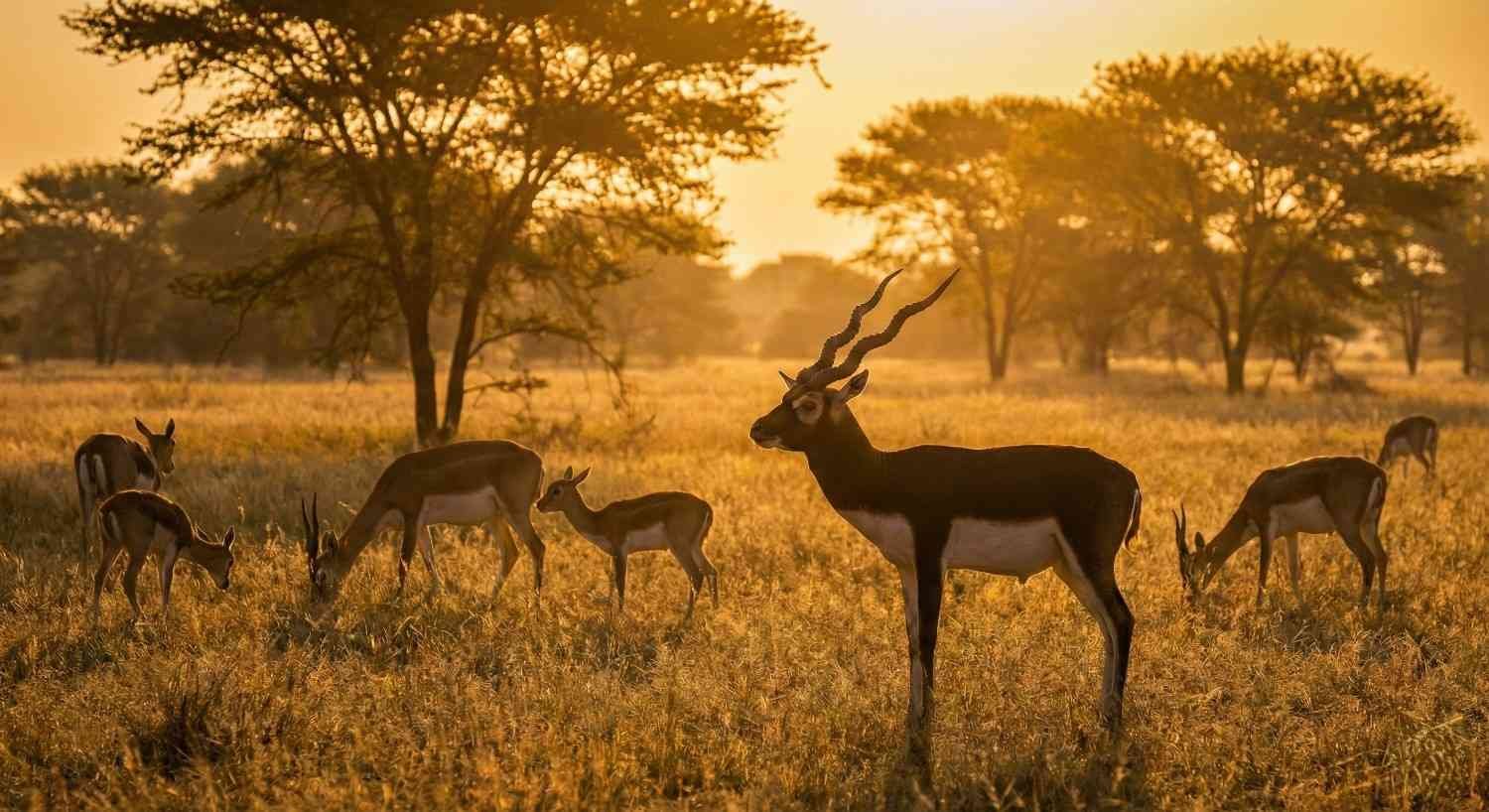
The Indian subcontinent is home to some of the world’s most spectacular wildlife, from the Royal Bengal Tiger to the Asiatic Elephant. Yet, sprinting through the open plains with an elegance that rivals the wind is a creature that embodies the very spirit of India’s grasslands: the Blackbuck (Antilope cervicapra). Also known as the Indian…
The Indian subcontinent is home to some of the world’s most spectacular wildlife, from the Royal Bengal Tiger to the Asiatic Elephant. Yet, sprinting through the open plains with an elegance that rivals the wind is a creature that embodies the very spirit of India’s grasslands: the Blackbuck (Antilope cervicapra).
Also known as the Indian Antelope, this species is the sole living member of the genus Antelope. With its striking spiral horns and two-tone coat, the Blackbuck is not just a biological marvel but a cultural icon deeply woven into the history and mythology of India.
In this comprehensive guide, we will delve deep into the world of the Blackbuck, covering their physical characteristics, unique behaviors, the threats they face, and the remarkable human communities dedicated to their survival.
Physical Characteristics: A Study in Contrast
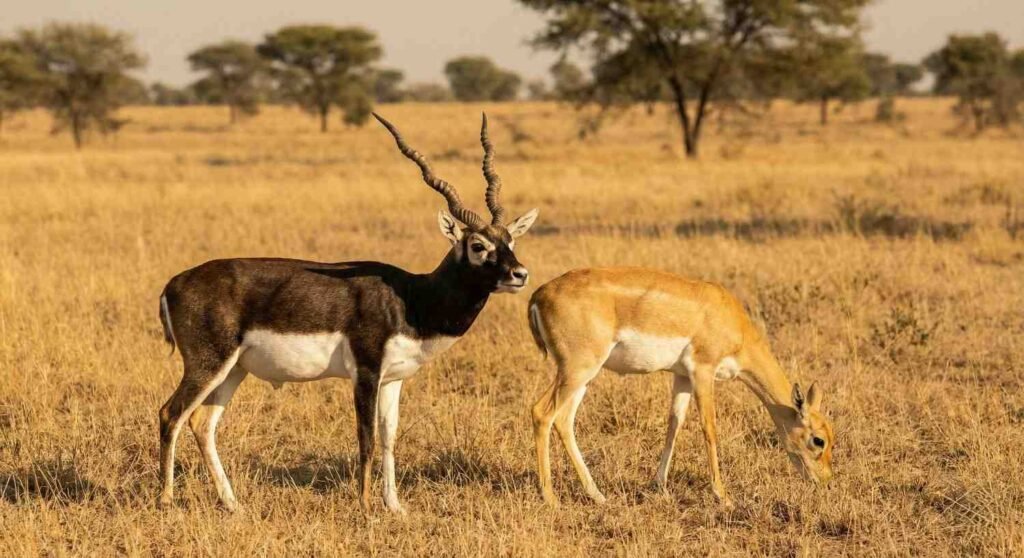
The Blackbuck is a medium-sized antelope that exhibits one of the most striking examples of sexual dimorphism (visual differences between sexes) in the animal kingdom. Understanding these differences is key to identifying them in the wild.
The Majestic Male
The adult male Blackbuck is a showstopper. Standing about 74 to 84 cm at the shoulder and weighing between 20–57 kg, the male transforms as he ages. Born fawn-colored, his upper coat gradually turns a deep, rich dark brown—often appearing distinctively black—which contrasts sharply with the brilliant white underbelly, eye rings, and chin.
- The Horns: The defining feature of the male is his horns. Unlike deer, which shed antlers, the Blackbuck possesses permanent horns that spiral in a “corkscrew” shape. These ringed horns can grow up to 75 cm (30 inches) long, twisting in a V-shape that adds to the animal’s towering appearance during dominance displays.
The Graceful Female
Females (does) and young males (fawns) offer a softer aesthetic. They lack the dark pigmentation of the mature males, retaining a yellowish-fawn color throughout their lives. This coloration provides excellent camouflage against the dry, golden grasses of their native habitat.
- Horns: Females generally do not have horns, although rare cases of horned females have been documented. They are typically smaller and lighter than the males.
Habitat and Distribution: Where the Antelope Roam
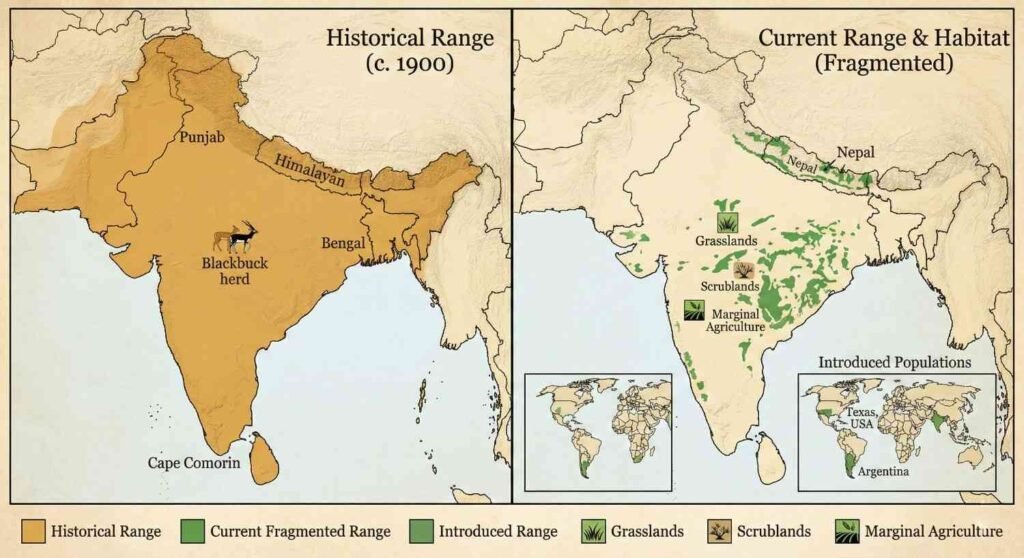
Historically, the Blackbuck ranged across almost the entire Indian subcontinent, from the foothills of the Himalayas to Cape Comorin in the south, and from Punjab in the west to Bengal in the east. Today, their range has fragmented, but they remain the most populous antelope in India.
Preferred Terrain
Blackbucks are creatures of the open country. They avoid thick forests and hilly terrain, preferring:
- Open Grasslands: Large tracts of grass allow them to use their speed to escape predators.
- Scrublands: Dry, thorny scrub provides cover and food.
- Marginal Agricultural Lands: Unfortunately, this preference often brings them into conflict with farmers.
Geographic Range
- Native: India and Nepal. They are extinct in Bangladesh and Pakistan (though reintroductions are occasionally attempted).
- Introduced Populations: Interestingly, the Blackbuck has been introduced to other parts of the world for game hunting. Significant free-ranging populations now exist in Texas, USA and Argentina. In some cases, these introduced populations are thriving better than those in their fragmented native ranges.
Behavior and Ecology: Life in the Fast Lane
The Blackbuck is a diurnal antelope, meaning it is active primarily during the day. However, in the blistering heat of the Indian summer, they often rest in the shade during midday and graze in the cooler mornings and late afternoons.
Speed: The “Pronking” Phenomenon
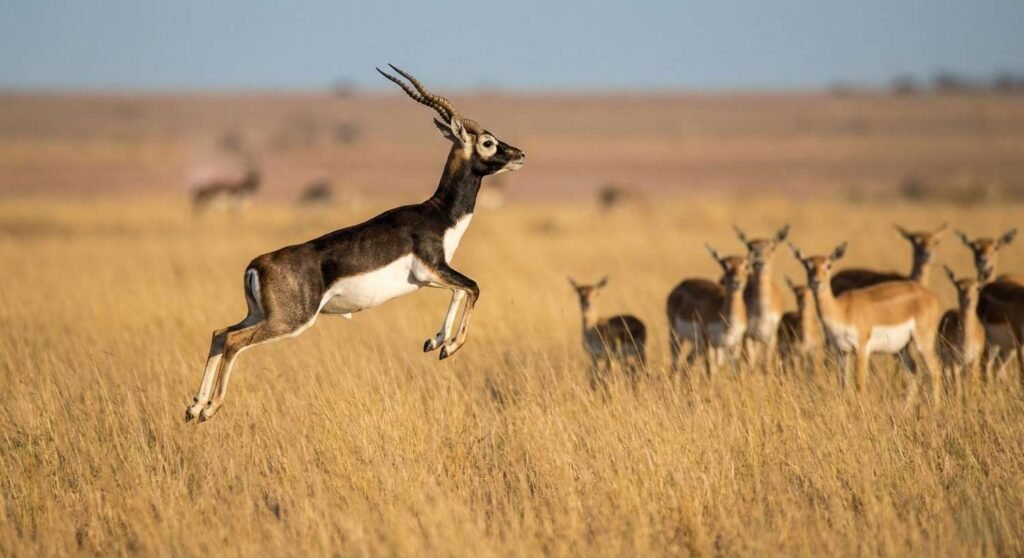
The Blackbuck is one of the fastest land animals on the planet, capable of reaching speeds of 80 km/h (50 mph). This speed was an evolutionary necessity to outrun their primary historical predator: the now-extinct Indian Cheetah.
When alarmed, the herd reacts instantly. A single individual may leap high into the air—a behavior known as pronking or “stotting.” This vertical jump serves two purposes:
- Surveillance: It allows the animal to see over tall grass to spot predators.
- Signaling: It demonstrates fitness to the predator, effectively saying, “I am strong and fast; don’t bother chasing me.”
Social Structure
Blackbucks are gregarious and highly social animals. Their herds typically fall into three categories:
- Female Herds: Consisting of females and their fawns.
- Bachelor Groups: Herds of young or non-dominant males.
- Territorial Males: Dominant males who stake out territories to attract females.
Diet and Feeding Habits
As grazers, their diet consists primarily of:
- Grasses: Short and mid-length grasses are their staple.
- Forbs and Shrubs: Consumed when grass is scarce.
- Crops: They occasionally raid fields of sorghum, millet, and other cereals, leading to human-wildlife conflict.
They have a lower requirement for water than many other ungulates, allowing them to survive in semi-arid regions, though they will drink daily if water is available.
The Cultural Connection: The Bishnoi Community
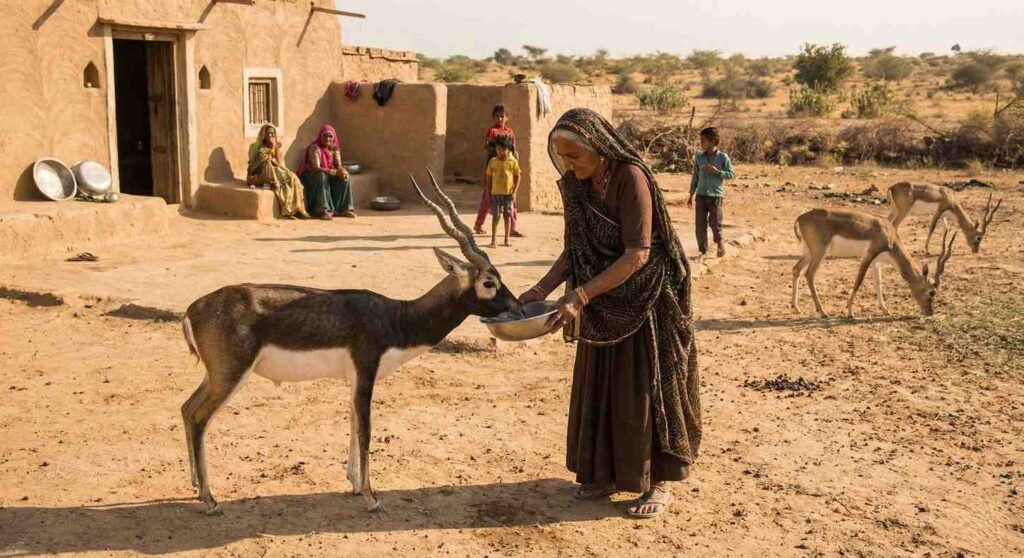
To write about the Blackbuck without mentioning the Bishnoi community of Rajasthan is to tell only half the story. The survival of the Blackbuck in prominent parts of North India is largely credited to this eco-conscious sect.
Guardians of the Desert
Founded in the 15th century by Guru Jambheshwar, the Bishnoi faith follows 29 tenets, one of which strictly forbids the killing of animals. The Blackbuck is considered the reincarnation of their Guru, making it a sacred animal.
There are countless documented cases of Bishnoi men and women risking (and sometimes losing) their lives to protect Blackbucks from poachers. In Bishnoi villages, it is not uncommon to see Blackbucks roaming fearlessly near homes, or even women breastfeeding orphaned fawns alongside their own children. This relationship is a rare and beautiful example of human-wildlife coexistence.
Conservation Status and Threats
Despite their cultural protection, the Blackbuck has faced a tumultuous history. From a population of millions in the 19th century, numbers plummeted to roughly 20,000 in the 1970s due to excessive hunting by royalty and British colonizers.
Current Status
- IUCN Red List: Least Concern (Improved from Near Threatened).
- Wildlife Protection Act of India (1972): Schedule I (Highest Level of Protection).
Thanks to strict anti-poaching laws and protected areas, the population has rebounded significantly. However, they are not out of the danger zone.
Major Threats
- Habitat Fragmentation: The conversion of grasslands into agricultural fields separates herds, reducing genetic diversity.
- Poaching: Despite the ban, they are still hunted for their meat and skin.
- Predation by Feral Dogs: In village peripheries, packs of feral dogs pose a massive threat to fawns.
- Invasive Plants: Plants like Prosopis juliflora are overtaking native grasslands, destroying the Blackbuck’s food source.
Where to Spot Blackbucks in India
For wildlife enthusiasts and photographers, India offers several sanctuaries dedicated specifically to the conservation of this antelope.
1. Velavadar Blackbuck National Park (Gujarat)
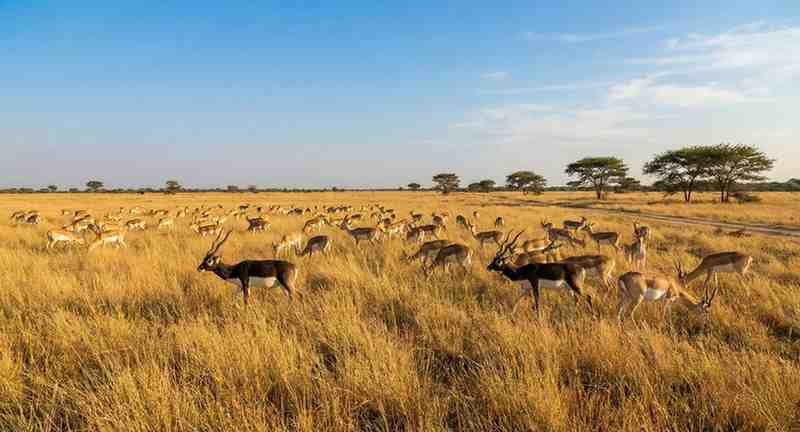
Perhaps the best place in the world to see them. The golden grasslands here host thousands of Blackbucks, along with the endangered Indian Wolf and Lesser Florican.
2. Tal Chhapar Sanctuary (Rajasthan)
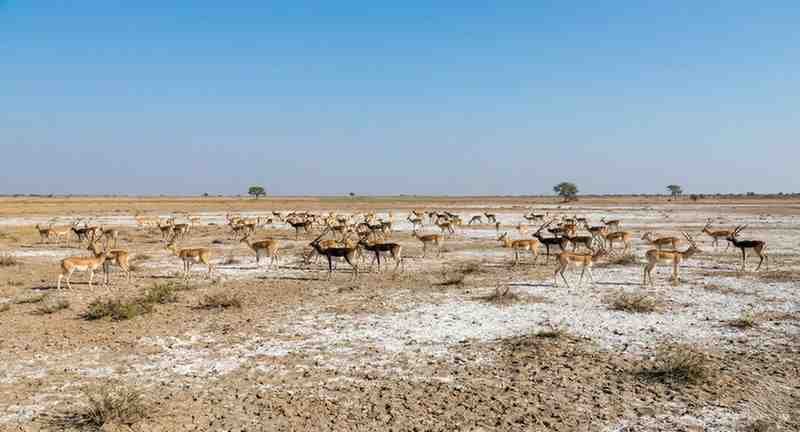
Located in the Shekhawati region, this sanctuary is famous for its flat saline depression. It is a photographer’s paradise, offering clean backgrounds and massive herds.
3. Point Calimere Wildlife Sanctuary (Tamil Nadu)
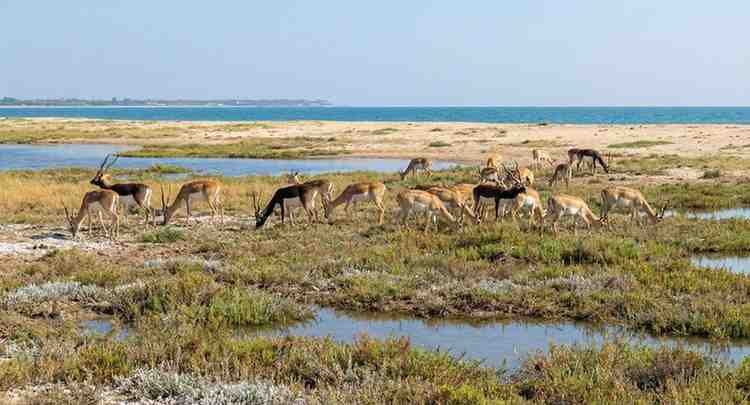
This coastal sanctuary protects the southern population of Blackbucks. It is a unique ecosystem where you can see antelopes against a backdrop of coastal wetlands.
4. Rehekuri Blackbuck Sanctuary (Maharashtra)
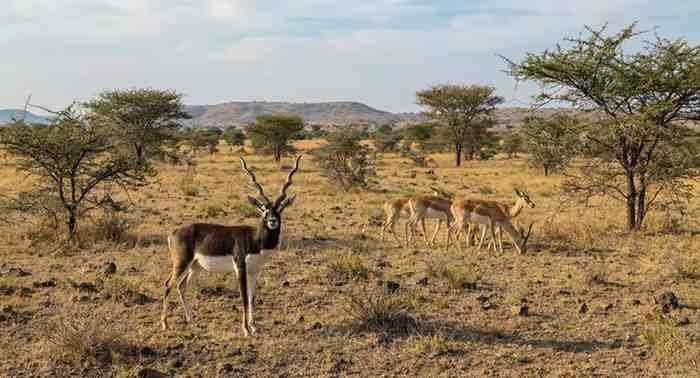
A smaller, dedicated reserve in the Ahmednagar district that provides a safe haven for a stable population.
A Symbol of Resilience:
The Blackbuck is more than just an animal; it is a symbol of the fragile beauty of the Indian plains. Its evolution tells a story of survival against the fastest predators, while its history tells a story of persecution and subsequent redemption through conservation.
Today, as we watch a male Blackbuck stand tall amidst the golden grass, his spiral horns piercing the horizon, we are reminded of our responsibility. We must ensure that the “Painted Spirit” of India continues to run free, not just in the history books, but on the grasslands where it belongs.
Frequently Asked Questions (FAQs)
Q1: How fast can a Blackbuck run? A: Blackbucks are incredibly fast, capable of reaching top speeds of 80 km/h (50 mph). They can sustain this speed for about 1.5 km, primarily to outrun predators like wolves and feral dogs.
Q2: Are Blackbucks endangered? A: Currently, the IUCN classifies the Blackbuck as Least Concern. However, they are protected under Schedule I of the Indian Wildlife Protection Act, meaning poaching them carries severe legal penalties.
Q3: Why do Blackbucks jump in the air? A: This behavior is called pronking or stotting. It is a signal to predators that the animal is fit and energetic, suggesting that a chase would be a waste of energy. It also helps them spot predators over tall grass.
Q4: Can female Blackbucks grow horns? A: Typically, no. Only males grow the distinctive spiral horns. However, hormonal imbalances can sometimes cause females to develop small, deformed horns, though this is rare.