How to Tell if You Have a Poorly Rabbit: Symptoms, Causes, and Immediate Actions
If you have a Poorly Rabbit please remember that this information is for educational purposes only and is not a substitute for the advice of a veterinarian. If your rabbit stops eating or becomes lethargic, consider it a medical emergency and consult a veterinarian immediately. Bringing a beloved rabbit into your home is a joyous…
If you have a Poorly Rabbit please remember that this information is for educational purposes only and is not a substitute for the advice of a veterinarian. If your rabbit stops eating or becomes lethargic, consider it a medical emergency and consult a veterinarian immediately.
Bringing a beloved rabbit into your home is a joyous occasion. These little creatures are not only intelligent and affectionate, but they also add a touch of personality to your home. However, when their health deteriorates, things can quickly turn serious.
Since rabbits are ‘prey’ animals in the wild, they are experts at hiding their discomfort. By the law of nature, showing weakness means making themselves a target for predators. Unfortunately, your pet rabbit has the same ancient instinct. They will try to hide their discomfort and illness from you for as long as they can.
It often happens that by the time you realize that your rabbit is truly sick, its condition has already become critical. As a responsible owner, recognizing the early and subtle signs of illness is the most important skill. Let’s learn what diseases are commonly found in rabbits, how to recognize their hidden symptoms, and what immediate steps you should take to save your little friend’s life.
The Subtle Signs: How to Spot a Poorly Rabbit
Because you cannot wait for obvious cries of pain, you must become a detective when it comes to your rabbit’s daily habits. Here are the first, subtle clues that something is wrong.
1. Changes in Posture (The “Pain Hunch”)
Healthy rabbits will often relax by stretching out entirely on their sides (the “flop”) or tucking their paws neatly underneath themselves (the “meatloaf”). However, a poorly rabbit experiencing abdominal pain will adopt a very specific, stiff posture. They will press their belly hard against the floor, hunch their back upwards, and half-close their eyes. They may frequently shift positions, unable to get comfortable.
2. A Sudden Loss of Appetite
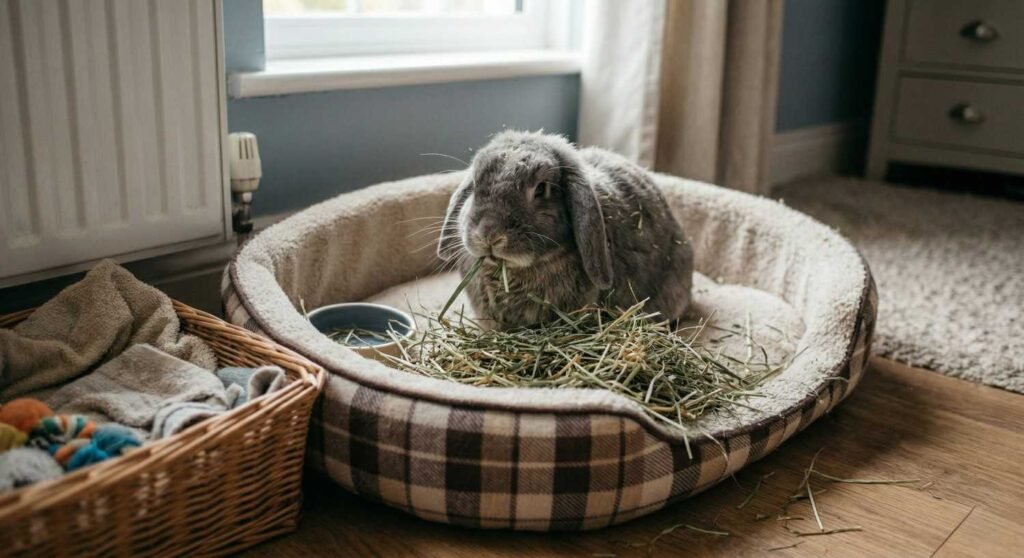
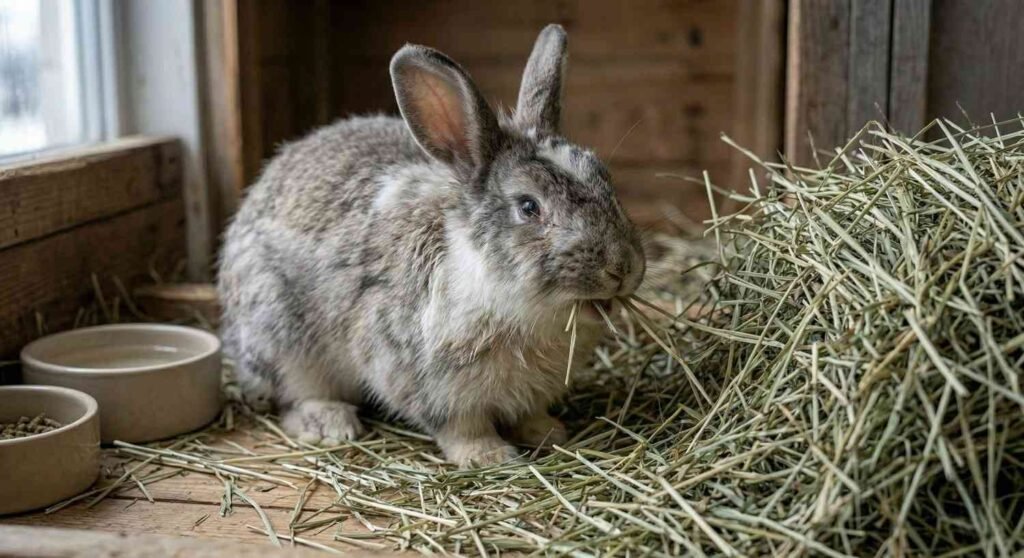
A healthy rabbit is a food-motivated eating machine. They should constantly be grazing on fresh grass and Timothy hay. If your rabbit refuses their favorite treat, ignores their fresh greens, or stops eating hay for more than 10 to 12 hours, you have an emergency on your hands.
3. Changes in Droppings
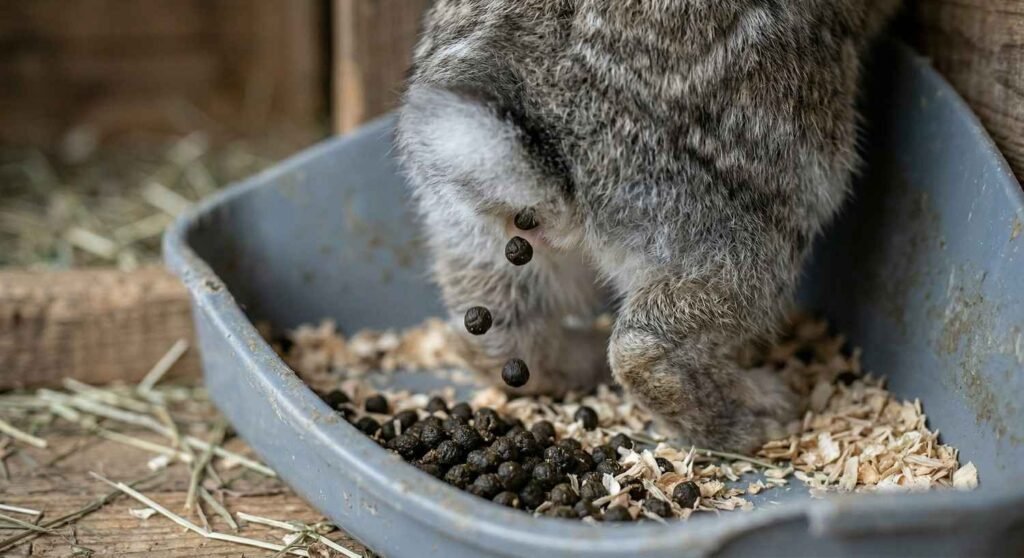
Cleaning the litter box is your daily health check. A healthy rabbit produces hundreds of uniform, round, dry, sawdust-like droppings every day. If you notice the droppings becoming smaller, misshapen, strung together with hair, or stopping altogether, your rabbit’s digestive system is failing.
4. Loud Tooth Grinding
Rabbits “purr” by softly chattering their teeth when they are happy and relaxed. However, if your rabbit is sitting rigidly in a corner and making a loud, harsh, grating sound with their teeth, this is a universal sign of severe, acute pain.
The Silent Killer: Gastrointestinal (GI) Stasis
If there is one condition every rabbit owner in the US and UK needs to be aware of, it is Gastrointestinal Stasis (commonly known as GI stasis). This is the most common reason a rabbit becomes poorly, and it is frequently fatal if ignored.
What is GI Stasis?
A rabbit’s digestive tract is designed to be in constant motion, fueled by the high fiber found in grass and hay. GI stasis occurs when the digestive tract slows down or stops completely. When the gut stops moving, harmful bacteria rapidly multiply in the stomach, producing painful gas. Because rabbits cannot burp or vomit, this gas builds up, causing agonizing bloating.
Causes of GI Stasis
- Poor Diet: A diet lacking in sufficient fibrous hay or containing too many sugary treats.
- Dehydration: Not drinking enough water from their bowl or bottle.
- Stress: Loud noises, a sudden change in environment, or the loss of a bonded companion.
- Underlying Pain: A rabbit with a hidden injury or dental issue will stop eating, triggering stasis.
How to Treat It
GI stasis is an emergency. You must take your rabbit to a “rabbit-savvy” exotic vet immediately. The vet will likely prescribe pain medication (like Meloxicam), gut motility drugs, and subcutaneous fluids. They will also instruct you to syringe-feed your rabbit a liquid recovery diet, such as Critical Care, to force their gut to start moving again.
Respiratory Infections: The “Snuffles”
If you hear your rabbit sneezing or notice a runny nose, do not assume it is just a harmless human cold. Rabbits do not catch the common cold. Instead, they are highly susceptible to a severe bacterial respiratory infection known colloquially as the “snuffles.”
The Danger of Pasteurella
The most common culprit behind the snuffles is a bacteria called Pasteurella multocida. Rabbits are obligate nasal breathers, meaning they physically cannot breathe through their mouths. If their nasal passages become blocked with thick, white, or yellowish mucus, they will struggle to breathe, panic, and deteriorate quickly.
Symptoms of the Snuffles
- Frequent, wet sneezing.
- Thick discharge from the nose and eyes.
- Matted, crusty fur on the inside of their front paws (caused by the rabbit trying to wipe the mucus away from their nose).
- Wheezing or a rattling sound in their chest.
A poorly rabbit suffering from the snuffles requires immediate veterinary intervention. Your vet will need to prescribe a long course of rabbit-safe antibiotics to clear the infection before it turns into fatal pneumonia.
![[Image: Veterinarian examining a sick rabbit on a table.]](https://falconrynews.com/wp-content/uploads/2026/03/2-2-1024x558.jpeg)
Dental Disease: The Hidden Agony
A rabbit’s teeth never stop growing. They rely on the constant, side-to-side grinding of fibrous grass and hay to wear their teeth down to a safe length. If a rabbit does not eat enough hay, or if they have a genetic misalignment of the jaw, their teeth will overgrow.
When the back molars overgrow, they form sharp “spurs” that slice into the rabbit’s tongue and cheeks every time they chew.
Signs of Dental Disease
- Drooling: You will notice a wet chin or a soaking wet dewlap (the fold of skin under the chin).
- Dropping Food: The rabbit will eagerly run to their food bowl, pick up a pellet, and then drop it out of their mouth because it hurts too much to chew.
- Weight Loss: A slow, gradual thinning of the rabbit over several weeks.
Dental disease requires a vet to put the rabbit under light anesthesia to carefully burr (file) the teeth back to their correct anatomical shape.
Head Tilt (E. Cuniculi)
One of the most frightening sights for a pet parent is walking into the room to find their rabbit’s head twisted drastically to one side, causing them to lose their balance and roll on the floor.
This severe symptom, known as “head tilt” or torticollis, is usually caused by one of two things:
- A severe inner ear infection that has reached the neurological center of the brain.
- Encephalitozoon cuniculi (E. cuniculi): A microscopic parasite that attacks the rabbit’s brain and kidneys.
While head tilt looks absolutely terrifying, it is often treatable. A poorly rabbit with this condition needs a quiet, heavily padded environment to prevent them from hurting themselves when they roll, alongside an aggressive, weeks-long course of anti-parasitic medication (like Panacur) and anti-inflammatories prescribed by a vet.
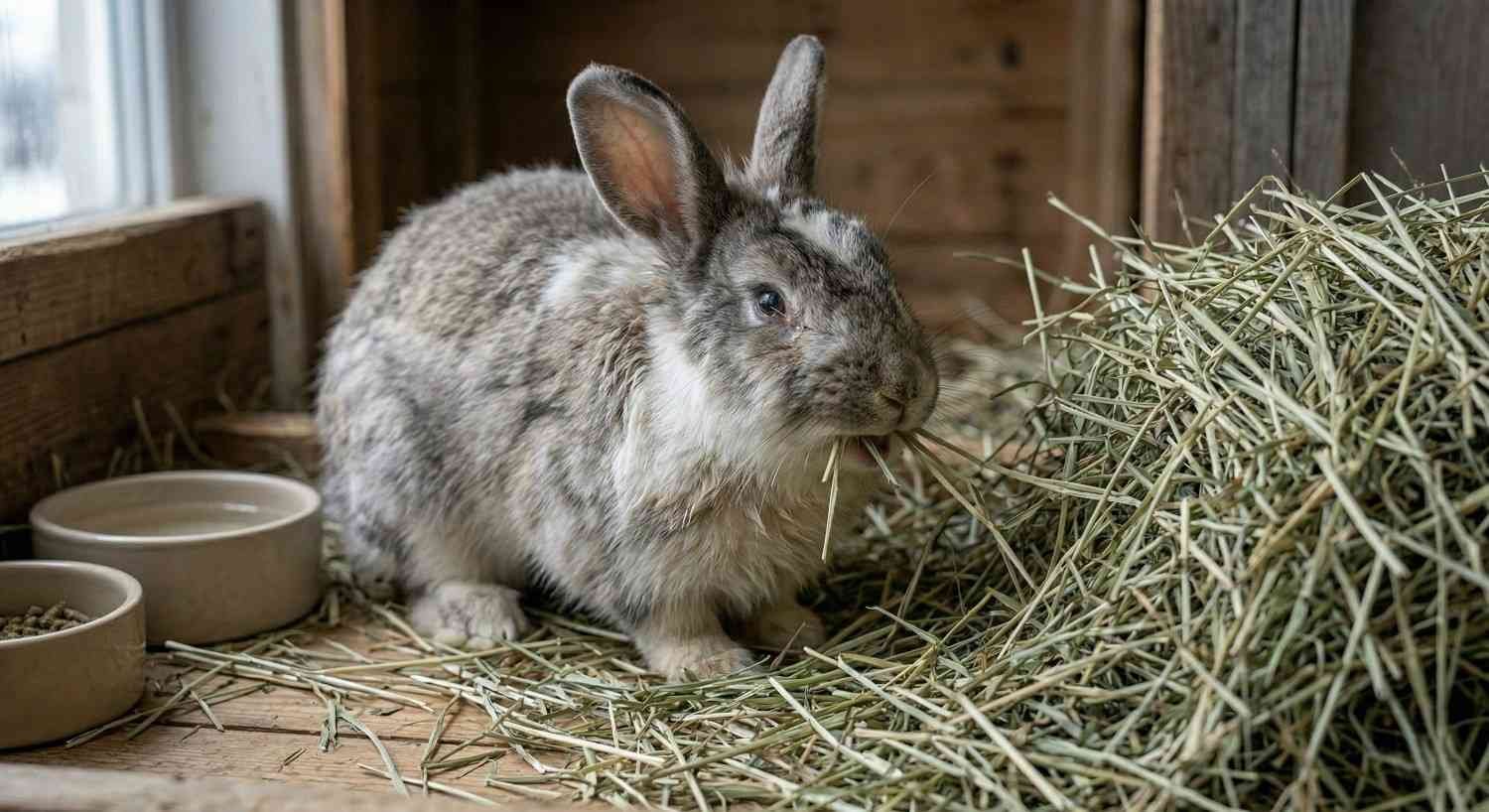
[Image: Fluffy rabbit eating a healthy pile of hay.]
What to Do If Your Rabbit Is Poorly: An Action Plan
When panic sets in, it is vital to stay calm and act methodically. If you suspect your rabbit is ill, follow these immediate steps:
1. Secure an Exotic Vet Appointment
Do not wait to see if they get better overnight. With rabbits, a 12-hour delay can be the difference between life and death. Call an exotic veterinarian immediately. Standard dog-and-cat vets often do not have the specialized training or medications required to safely treat a rabbit.
2. Keep the Rabbit Warm
When a rabbit goes into shock or suffers from GI stasis, their body temperature drops rapidly (hypothermia). Wrap a snuggle-safe microwave heat pad or a hot water bottle in a thick towel and place it next to the rabbit. Ensure they have enough room to move away from the heat if they get too warm.
3. Do Not Force Feed Without Vet Approval
While syringe feeding is a standard treatment for GI stasis, never force-feed a rabbit without a vet confirming there is no intestinal blockage. If your rabbit has swallowed a piece of carpet or a massive hairball that has caused a physical blockage, force-feeding them will cause their stomach to rupture.
4. Bring Their Bonded Mate
Rabbits bond fiercely with their cage-mates. If your poorly rabbit needs to go to the vet clinic, put their bonded partner in the carrier with them. The presence of their friend will drastically reduce their stress levels, keeping their heart rate calm during the car ride and examination.