The Ultimate Guide to Highland Cows: Care, History, and Why We Love Them
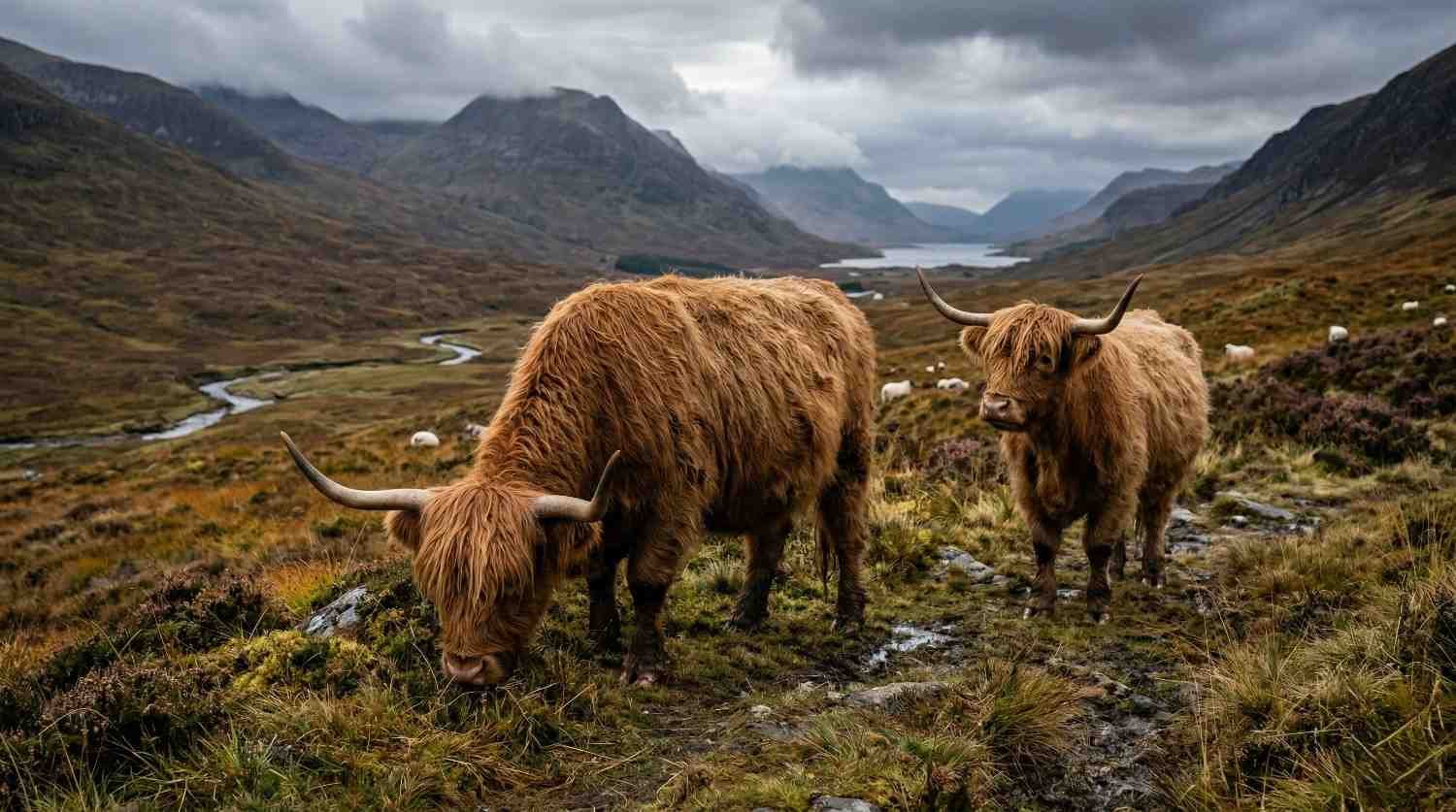
If you’ve spent even a little time scrolling through homesteading blogs, farming forums, or simply social media pages, you’ve probably stopped to see them. Their magnificent, curved horns and eyes, hidden behind a stylish fringe of shaggy hair, make Highland cows instantly recognizable. They’re no longer just a symbol of Scotland’s rugged landscapes; they’ve become…
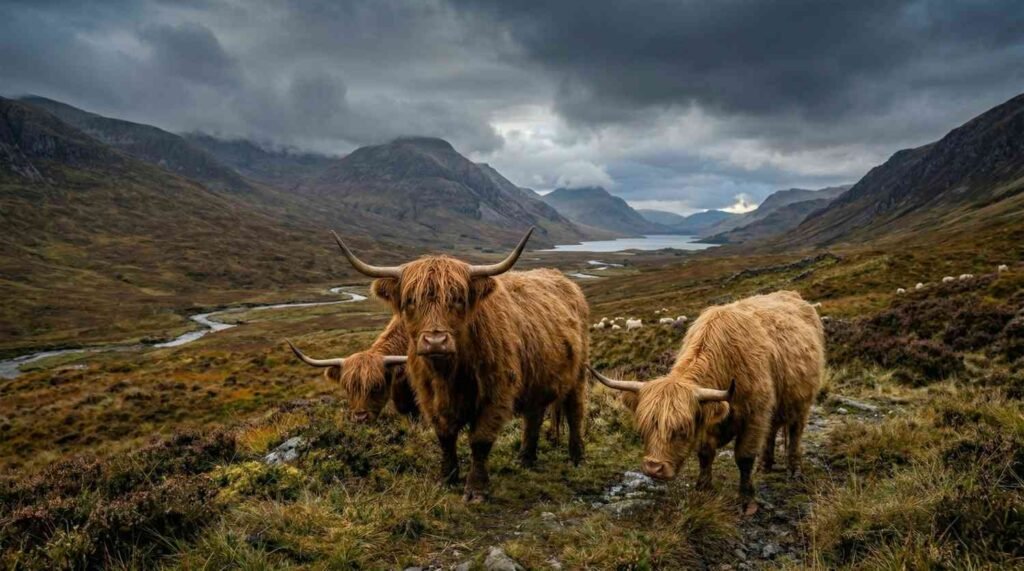
If you’ve spent even a little time scrolling through homesteading blogs, farming forums, or simply social media pages, you’ve probably stopped to see them. Their magnificent, curved horns and eyes, hidden behind a stylish fringe of shaggy hair, make Highland cows instantly recognizable. They’re no longer just a symbol of Scotland’s rugged landscapes; they’ve become incredibly popular in the United States, the United Kingdom, and around the world.
Whether you’re an experienced farmer looking to diversify their pasture, a hobbyist dreaming of the perfect addition to their homestead, or simply an animal lover captivated by their undeniable charm, you’ve come to the right place. This comprehensive guide will introduce you to the rich history, unique characteristics, and essential care requirements of Highland cows, as well as shed light on the growing trend of their “miniature” versions.
The Fascinating History of Scottish Highland Cattle
To understand the true nature of Highland cows, we need to look into their past. Native to the Scottish Highlands and the Hebrides, this breed is one of the oldest registered cattle in the world. Although their formal records were compiled in 1885, their story goes back centuries.
Interestingly, there were two distinct types of Highland cows in the past:
Kyloe: These were small, usually black cows found on the western coast of Scotland. The rugged and unforgiving climate there made them extremely hardy.
Mainland Cattle: This second type lived in the plains and mountains of Scotland. They were larger in stature and mostly red in color.
Queen Victoria’s preference and the changing appearance of colors
Over time, the combination of these two breeds gave rise to the modern Highland cow that we see today. There is a popular tradition that when Queen Victoria visited these parts of Scotland in the mid-19th century, she was very fond of red cows.
To please the Queen, herders began to breed red cows on a large scale, which is why red is still their most prominent characteristic today. However, even today these beautiful animals are found in attractive colors such as black, yellow, brown (dun), white and striped (brindle).
Built for Survival: Unique Physical Characteristics
Highland cows are built differently than your average dairy or beef cattle, and every unique physical trait serves a specific survival purpose.
The Famous Double Coat
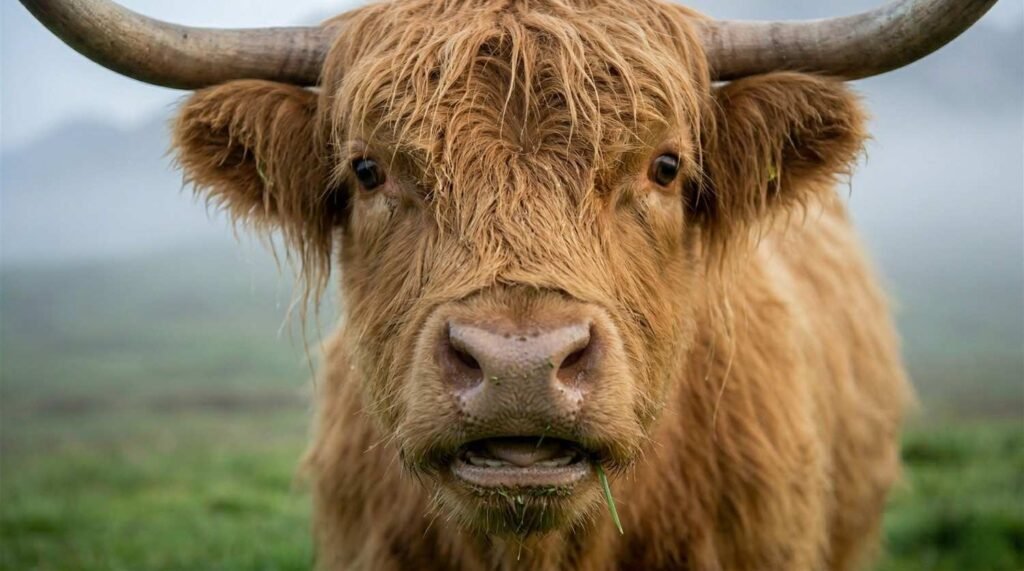
The most striking feature of the Highland cow is undoubtedly its hair. They are the only breed of cattle to possess a true double coat.
- The Outer Coat: The outer layer consists of coarse, oily hair that can grow over a foot long. This layer acts as a natural raincoat, repelling heavy rain and harsh snow so it never reaches the animal’s skin.
- The Undercoat: Beneath the oily outer layer lies a soft, dense undercoat that traps body heat.
Because of this incredible natural insulation, Highland cows do not need the thick layer of back fat that other cattle breeds develop to stay warm. This makes their meat exceptionally lean and highly sought after. Furthermore, that adorable fringe of hair covering their face—known as a dossan—isn’t just for looks. It protects their eyes from biting flies and harsh winter winds.
The Sweeping Horns
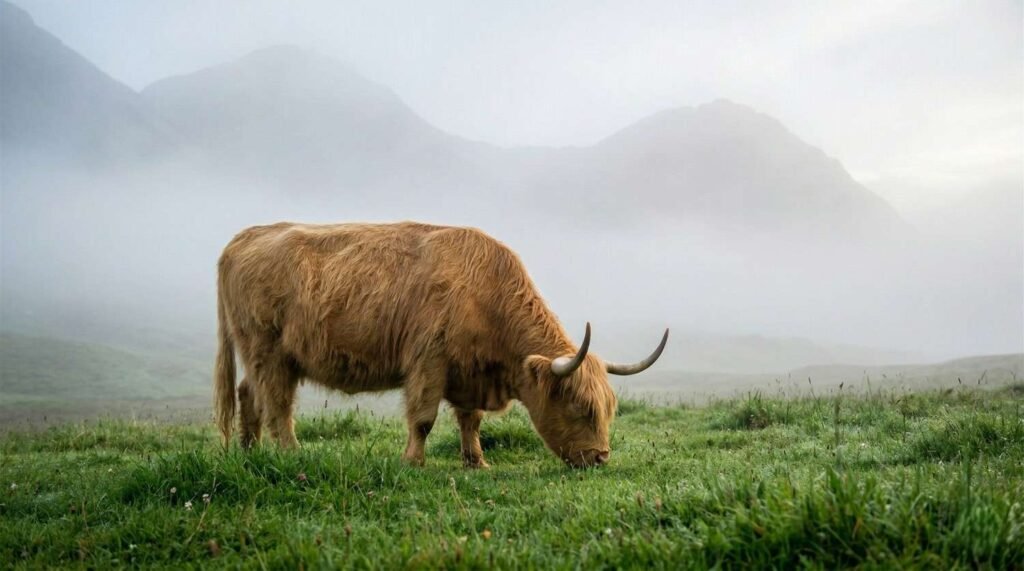
Both male (bulls) and female (cows) Highland cattle have horns, which they use to forage for food by brushing away deep snow during the winter. You can actually tell the gender of a Highland cow by looking at the shape of its horns. A bull’s horns generally grow forward and even point slightly downward, with a thicker base. A cow’s horns, on the other hand, usually face outward and curve gracefully upwards at the tips, giving them a wider, more elegant sweep.
Temperament: The Gentle Giants of the Pasture
One of the primary reasons Highland cows have seen a massive surge in popularity, particularly on family-run farms in the US and UK, is their remarkable temperament. Despite their intimidating horns and large size (bulls can weigh up to 1,800 pounds, while cows average around 1,100 pounds), they are widely known as the gentle giants of the bovine world.
Highland cows are famously docile, calm, and highly intelligent. They are much less easily spooked than other breeds and can become quite affectionate with their owners, especially if they are halter-trained and handled frequently from a young age. Their laid-back nature makes them remarkably easy to manage, which is a massive selling point for first-time cattle owners or those running agritourism businesses where visitors might interact with the animals.
They also have a very strong maternal instinct. Highland cows are known to be exceptional mothers, often calving easily on their own without human intervention. The herd is highly protective of calves, yet the mothers remain surprisingly calm when their trusted human caretakers approach.
Why Highland Cows Are Trending in the US and UK
While they have always been a staple in Scotland, the demand for Highland cows in countries like the United States and the United Kingdom has skyrocketed. But why?
- Homesteading Popularity: There is a growing movement of people leaving cities to start homesteads and hobby farms. Highland cows are the perfect starter cattle due to their hardiness and friendly nature.
- Agritourism and Social Media: Let’s face it—Highland cows are incredibly photogenic. Farms that host farm stays, pumpkin patches, or wedding venues often keep a few Highland cows simply because visitors love taking pictures with them. They are a massive draw for agritourism.
- Low Maintenance: Because they evolved in a rugged landscape, they thrive on poor-quality grazing land that other cattle would starve on. They will happily eat rough brush, ivy, and weeds, making them excellent natural land clearers for overgrown pastures.
- Premium Meat Market: For those who do breed them for beef, Highland beef commands a premium price. It is lower in cholesterol and fat than commercial beef, yet deeply marbled and flavorful, appealing to the high-end farm-to-table market.
The Phenomenon of Miniature Highland Cows
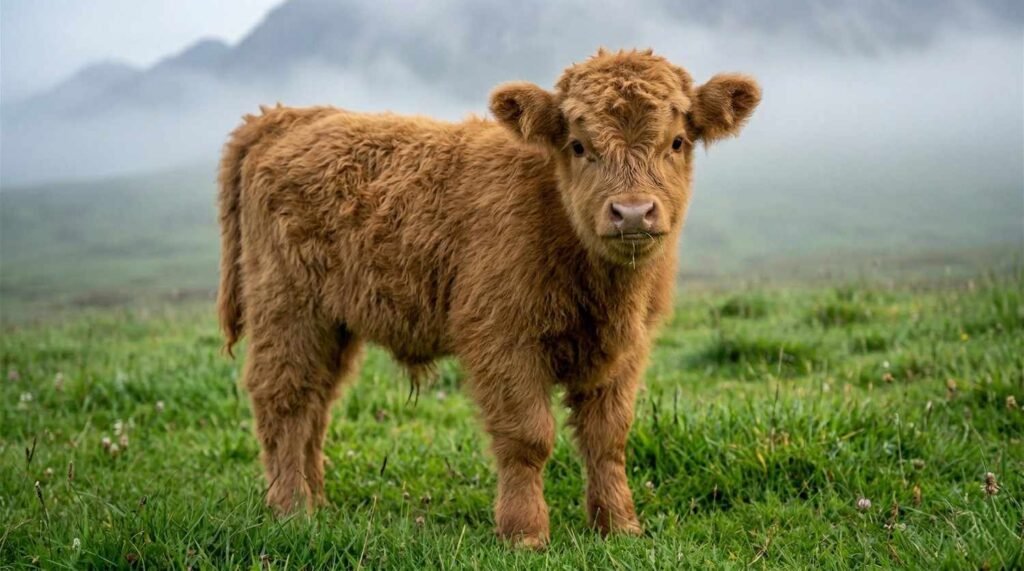
If you think standard Highland cows are popular, the market for miniature Highland cows is currently operating on another level entirely. In high-CPC markets where rural land is expensive, many hobby farmers don’t have the acreage to support full-sized cattle. Enter the mini Highland.
To be classified as a miniature, the cow must measure 42 inches or less at the hip. There are also “mid-sized” Highlands that measure between 43 and 48 inches.
These smaller variants possess all the wonderful traits of the standard breed—the fluffy coats, the sweet temperaments, and the hardiness—but packed into a much smaller footprint. They require significantly less pasture, consume far less hay in the winter, and are much easier to handle. Because of their high demand and relatively low supply, miniature Highland cows are currently fetching incredibly high prices, sometimes selling for tens of thousands of dollars in the US market. They have transitioned from being agricultural livestock to luxury pets and farm mascots.
Caring for Highland Cattle: A Quick Overview
While they are famous for being low-maintenance, keeping Highland cows still requires dedication, resources, and proper husbandry. If you are considering adding a “fold” (the traditional term for a herd of Highland cattle) to your property, here are the basics you need to know:
1. Fencing and Shelter
Highland cows do not need expensive, insulated barns. In fact, they generally prefer to be outside in the snow rather than locked in a stuffy barn, as they can easily overheat. However, they do need a three-sided shelter to escape severe wind chill and freezing rain, as well as plenty of shade in the summer months to stay cool. Strong, secure fencing is a must. While they aren’t naturally prone to escaping, those long horns can easily pop the wires off a poorly constructed fence if they decide to reach over for a tasty branch.
2. Diet and Foraging
As mentioned, Highland cows are excellent foragers. During the spring, summer, and fall, they can thrive entirely on pasture, and they aren’t picky. They will clear out poison ivy, thistles, and rough brambles. In the winter, their diet must be supplemented with good quality hay. They also require constant access to fresh water and loose cattle minerals to ensure they get all the vitamins they need.
3. Grooming and Vet Care
While they survive in the wild without a brush, domestic Highland cows benefit greatly from regular grooming. Brushing helps remove dead hair during their spring shed and prevents painful matting. It is also an excellent way to bond with the animal and keep them tame. From a medical standpoint, they require the same vaccinations, deworming protocols, and hoof checks as any other cattle breed. Establish a relationship with a large animal veterinarian before bringing your cows home.
Fun Facts About Highland Cows
To wrap up, here are a few fun facts you can share at your next farm gathering:
- They are called a Fold: A group of Highland cows is not called a herd. In the old days, Scottish farmers brought the cattle into open-faced stone shelters called “folds” at night to protect them from weather and wolves. The name stuck!
- Long Lifespans: Highland cows generally live much longer than other cattle breeds. It is not uncommon for a Highland cow to live for 20 years and continue producing healthy calves well into her late teens.
- Vocal Range: They have a wide variety of sounds, from a deep, low rumble to call their calves, to surprisingly high-pitched moos when they are excited about feeding time.
Conclusion
Highland cows are much more than just a trendy, photogenic animal. They are a resilient, historic breed that has carved out a permanent place in modern agriculture and homesteading. Whether you are captivated by their gentle personalities, their ability to thrive on rough terrain, or the sheer aesthetic joy of seeing a fluffy calf running through a field, it is easy to see why the US, UK, and the rest of the world have fallen in love with them. With proper care, adequate space, and a little bit of grooming, a fold of Highland cattle can bring life, utility, and endless joy to any farm