The Giants of the Reptile World: Exploring Huge Snakes in the World
From the mysterious depths of the Amazon to the humid forests of Southeast Asia, the world’s giant snakes inspire awe and curiosity that few creatures can match. These giant reptiles are not just the stuff of nightmares; they are masterpieces of biological engineering and powerful predators of their environment, ruling over their prey with their…
From the mysterious depths of the Amazon to the humid forests of Southeast Asia, the world’s giant snakes inspire awe and curiosity that few creatures can match. These giant reptiles are not just the stuff of nightmares; they are masterpieces of biological engineering and powerful predators of their environment, ruling over their prey with their size, silence, and amazing strength.
The Heavyweight Champion: The Green Anaconda
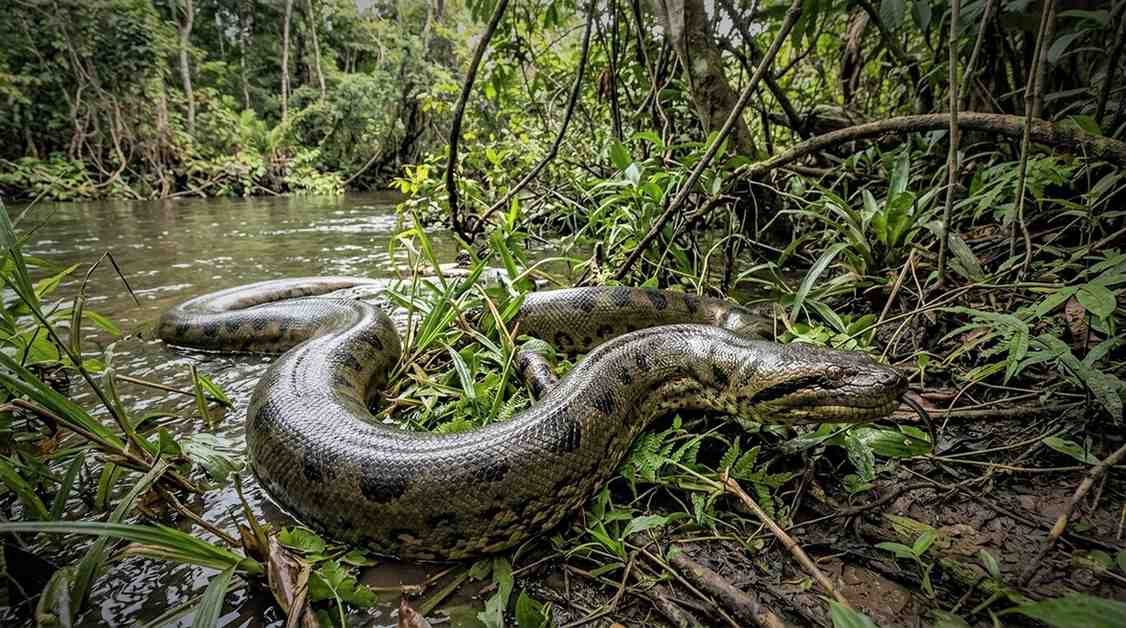
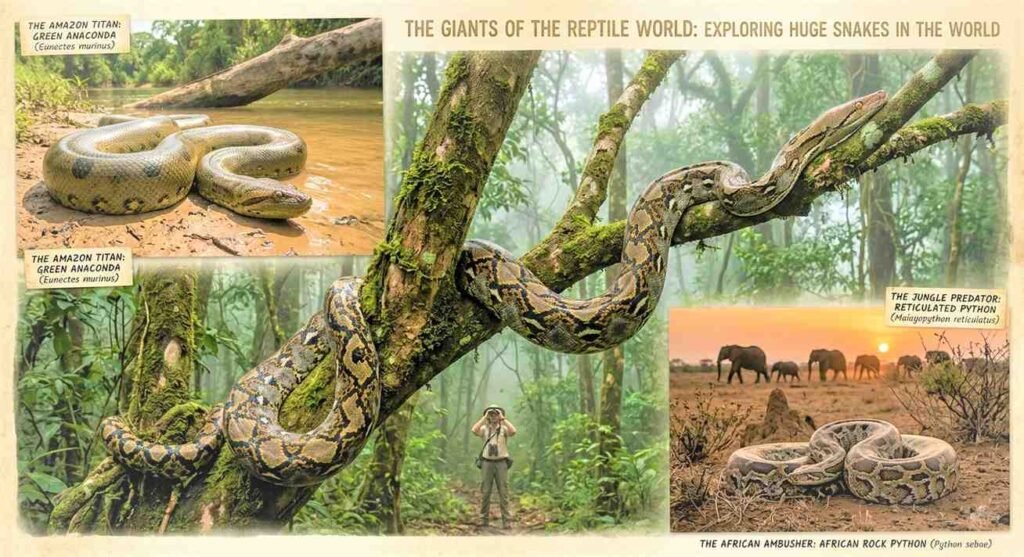
When people discuss huge snakes in the world, the Green Anaconda is usually the first name mentioned. Native to the swamps and slow-moving rivers of South America, this snake is the heaviest species currently in existence.
Size and Weight
While it may not always be the absolute longest, the Green Anaconda’s girth is unmatched. A large female can reach lengths of 21 to 25 feet and weigh upwards of 550 pounds. Its body is as thick as a grown man’s torso, providing the muscular leverage needed to take down massive prey.
Habitat and Hunting
The Green Anaconda is highly aquatic. Its eyes and nostrils are located on the top of its head, allowing it to stay almost entirely submerged while waiting for prey. This “water boa” uses its massive weight to drown and constrict animals as large as capybaras, caimans, and even jaguars.
The Length Leader: The Reticulated Python
If the anaconda is the heavyweight boxer, the Reticulated Python is the world’s most elite long-distance runner. Found throughout Southeast Asia, this species holds the official title for the world’s longest snake.
Breaking Records in 2026
At the beginning of 2026, a new record has caused a stir in scientific circles. A female reticulated python, nicknamed “Ebu Baroon” (The Baroness), was measured in Indonesia and was recorded at an astonishing 23 feet 8 inches (7.22 meters) in length.
While historical records often contain claims of lengths of up to 30 feet, modern and verified specimens like “Baroones” prove that these giant snakes of the world are still attaining extraordinary sizes in the wild.
Diet and Behavior
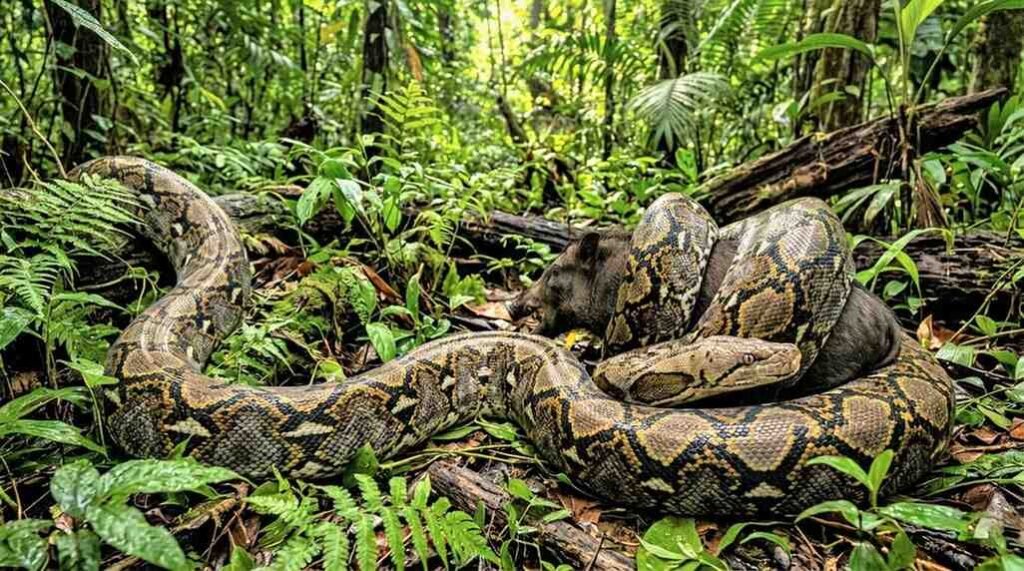
“Retics” are famous for their beautiful, complex skin patterns (hence the name “reticulated” or “net-like”). They are opportunistic feeders, eating birds, primates, and pigs. In rare, documented cases, they have even been known to consume humans, making them one of the few snake species truly dangerous to people due to their size.
The New Discovery: Northern Green Anaconda
In 2024, a groundbreaking study revealed that what we thought was one species of Green Anaconda was actually two. The discovery of the Northern Green Anaconda in the Ecuadorian Amazon has redefined our list of huge snakes in the world.
- Genetic Distinction: This new species is genetically 5.5% different from its southern cousins.
- Massive Dimensions: Researchers have filmed specimens reaching 26 feet in length and weighing over 1,100 pounds (500 kg), potentially making it the largest extant snake species on the planet.
The Invasive Giant: The Burmese Python
The Burmese Python is one of the most recognizable huge snakes in the world. Originally from Southeast Asia, it has gained international notoriety as an invasive species in the Florida Everglades.
- Average Length: 12–16 feet.
- Florida Record: Recently, an 18-foot female weighing over 215 pounds was captured in the Everglades.
- Impact: In Florida, these snakes have decimated local populations of rabbits, foxes, and deer, and have even been filmed battling alligators in “clash of the titans” scenarios.
Comparison: Python vs. Anaconda
To understand just how big these huge snakes in the world truly are, it helps to compare the two reigning champions.
| Feature | Green Anaconda | Reticulated Python |
| Max Weight | ~550 lbs (Record claims higher) | ~350 lbs (Captive record) |
| Max Length | ~26–28 feet | ~23–29 feet |
| Build | Extremely Thick / Stocky | Slender / Muscular |
| Primary Habitat | Water (Swamps/Rivers) | Land/Trees (Rainforests) |
| Hunting Style | Ambush (Water-based) | Ambush (Terrestrial/Arboreal) |
The Longest Venomous Snake: The King Cobera
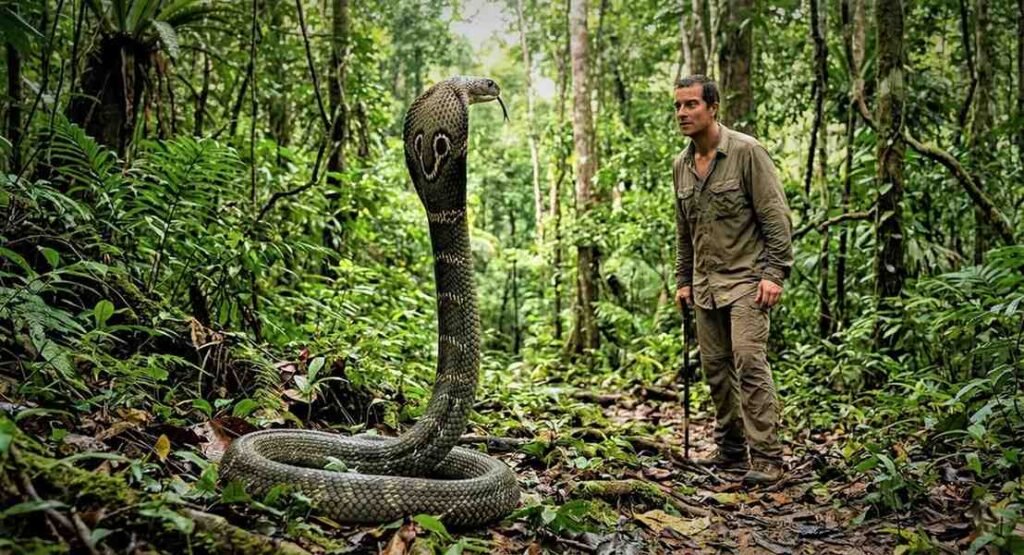
While most huge snakes in the world are constrictors, the King Cobra deserves a spot on this list for being the longest venomous snake on Earth.
Growing up to 18 feet long, the King Cobra can literally stand up and look an adult human in the eye. Unlike the bulky pythons, the King Cobra is fast and agile. A single bite delivers enough neurotoxin to kill an Asian elephant within hours. Interestingly, its scientific name Ophiophagus means “snake-eater,” as its diet consists almost entirely of other snakes.
Prehistoric Titans: Titanoboa and Vasuki
When discussing huge snakes in the world, we must look back at the fossils of the giants that came before us.
- Titanoboa (Titanoboa cerrejonensis): Living 60 million years ago, this monster reached 42–50 feet in length and weighed over 2,500 pounds. It was the undisputed apex predator of the Paleocene epoch.
- Vasuki (Vasuki indicus): A more recent discovery from India suggests another extinct giant that may have rivaled Titanoboa, with estimated lengths reaching up to 49 feet.
Why Do Snakes Grow So Large?
The size of the world’s largest snakes is determined by three main factors: habitat, diet, and temperature.
- Thermal Regulation: Because snakes are cold-blooded (ectothermic) creatures, warm regions (such as the equator) increase their digestive system and metabolic rate, which helps them grow larger.
- Abundant Prey: Areas like the Amazon or the Everglades provide an abundance of large mammals, which allows snakes to continue to grow.
- Indeterminate Growth: Unlike humans, many snakes continue to grow as long as they are alive and have access to food, meaning that the oldest snakes are usually the largest.
Protecting the Giants
Despite their fearsome reputation, these giant snakes of the world play a vital role in our ecosystems as “apex predators.” They keep prey populations in balance and serve as indicators of ecological health. Whether it’s the weight of an anaconda or the length of a reticulated python, these animals remind us that the natural world is still home to true wonders.