The Bird Kestrel Falcon: Identification, Habitat, and Hunting Secrets
You have just witnessed the amazing hunting skills of the kestrel falcon. Despite its small size—often no larger than a common dove or pigeon—the kestrel is a fierce and highly skilled bird of prey. They belong to the falcon family and have the unique ability to adapt to all kinds of environments, from rural fields…
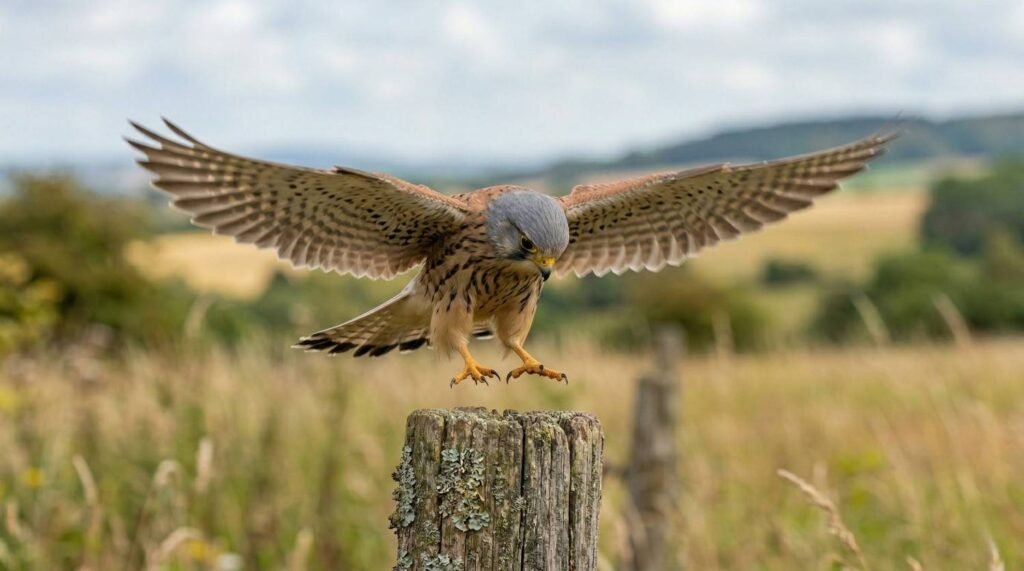
You have just witnessed the amazing hunting skills of the kestrel falcon.
Despite its small size—often no larger than a common dove or pigeon—the kestrel is a fierce and highly skilled bird of prey. They belong to the falcon family and have the unique ability to adapt to all kinds of environments, from rural fields to city crowds.
Whether you are a birdwatcher, a wildlife photographer, or just interested in the ancient art of falconry, learning about this magnificent little predator is a great experience. Let’s take a closer look at the world of kestrels and find out how to identify them, what they eat, and what qualities make them one of the most successful small predators on Earth.
What is a Kestrel? Understanding the Species
When people search for the bird kestrel falcon, they are usually looking for one of two specific species, depending on their geographic location. While there are over a dozen species of kestrels worldwide, the two most prominent in high-tier regions are the American Kestrel and the Common Kestrel.
1. The American Kestrel (Falco sparverius)
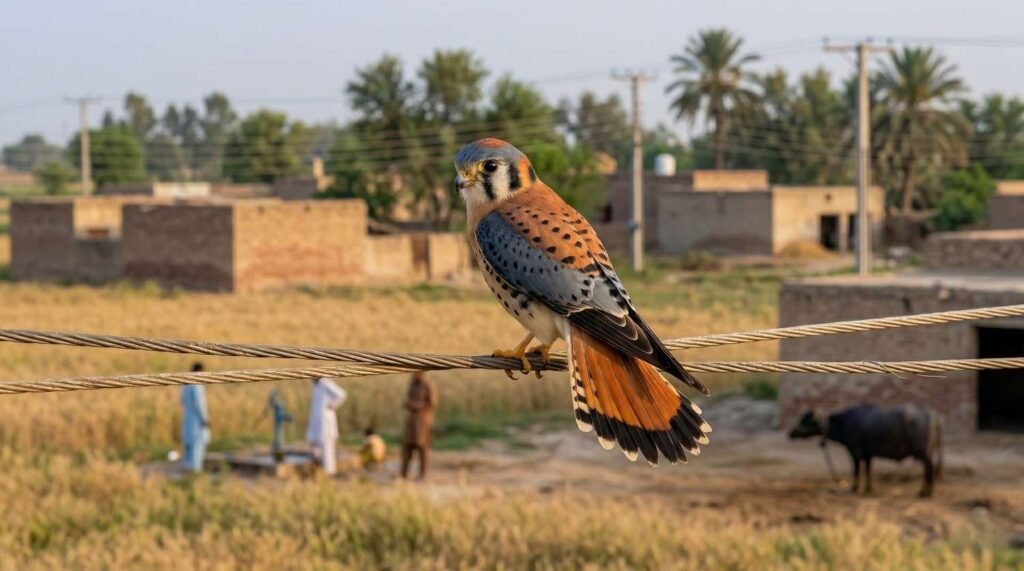
Endemic to the Americas, the American Kestrel is the smallest and most colorful falcon in North America. They are found from the harsh climates of Alaska and northern Canada all the way down to South America. They are a staple of the US landscape, often seen perched on telephone wires scanning the ditches for prey.
2. The Common Kestrel (Falco tinnunculus)
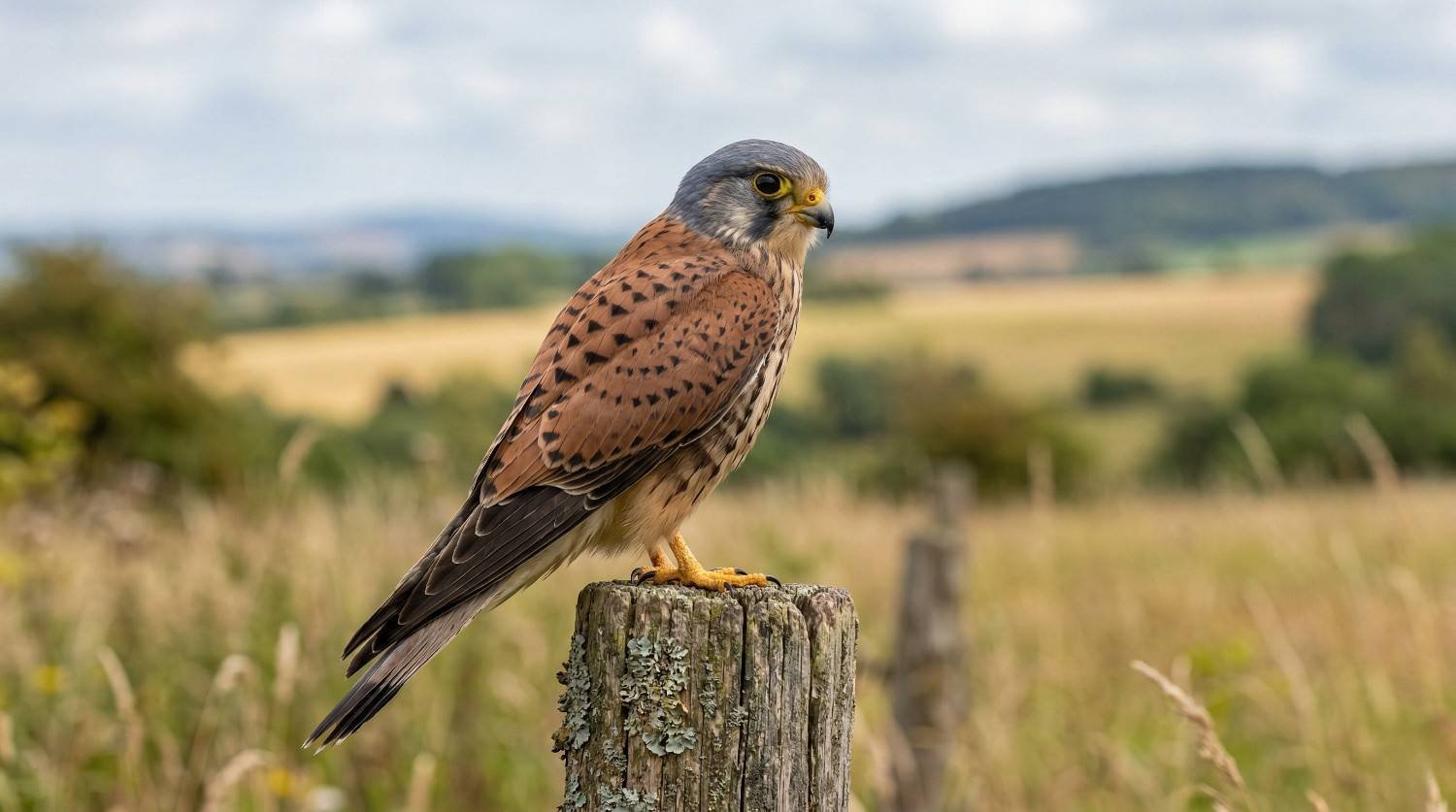
If you are in the United Kingdom, Europe, or parts of Asia, the bird you are seeing is the Common Kestrel. It is slightly larger than its American cousin and has a less vividly colorful plumage, leaning more toward warm, heavily spotted chestnut browns. In the UK, they are affectionately known as the “windhover” due to their signature hunting technique.
How to Identify a Kestrel Falcon
Identifying a kestrel in the wild is relatively easy once you know what to look for. They have the classic falcon silhouette: a large, rounded head, broad shoulders, and long, pointed wings that sweep back like a fighter jet.
Sexual Dimorphism: Males vs. Females
Unlike many other raptors where the males and females look identical (aside from size), the American Kestrel displays striking sexual dimorphism.
- Male American Kestrels: The males are stunningly colorful. They feature slate-blue wings, a rusty-red back and tail with a single thick black band at the tip, and a pale, spotted belly.
- Female American Kestrels: The females are slightly larger and have a more camouflaged, uniform coloring. They boast warm, reddish-brown wings and backs crossed with dark brown barring (stripes).
Both sexes share a distinct facial pattern: two vertical black stripes on their white cheeks, often referred to as a “mustache” and a “sideburn.” These dark marks, called malar stripes, act like the eye-black worn by baseball players—they absorb the glare of the sun, allowing the bird to see prey clearly in bright daylight.
The Master of the Wind: How Kestrels Hunt
The most defining characteristic of the bird kestrel falcon is its hunting style. While larger falcons, like the Peregrine, rely on breathtaking speed and vertical dives (stoops) to catch other birds in mid-air, the kestrel takes a different approach.
The Art of “Windhovering”
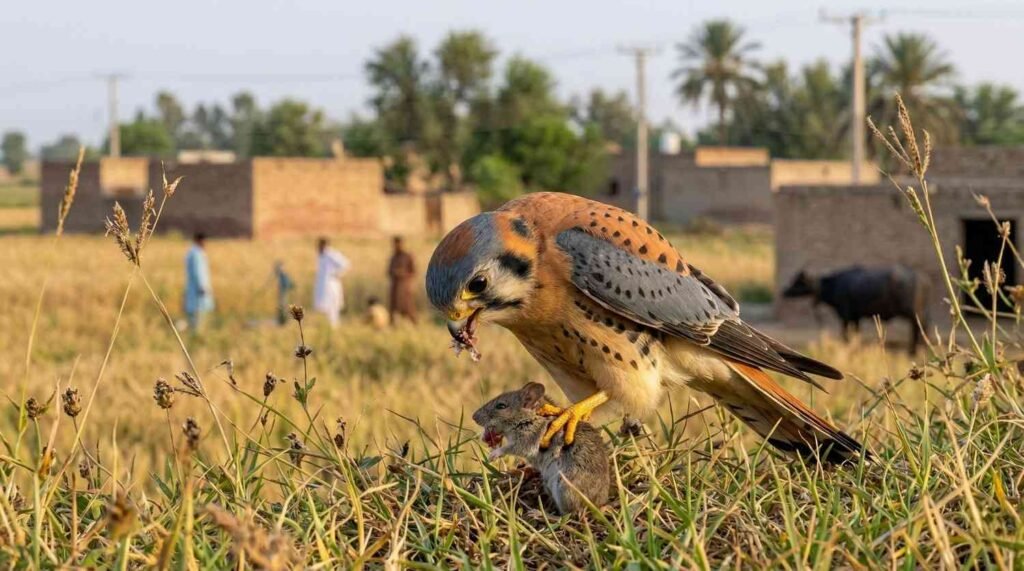
Kestrels hunt by flying into a headwind and flapping their wings at the exact speed of the oncoming breeze. This allows them to stay completely stationary in the sky—a technique called windhovering. While hovering, they keep their heads perfectly stabilized, locked onto the ground below, acting as a living camera gimbal. When they spot their target, they tuck their wings and drop down to pin the prey to the ground with their sharp talons.
Ultraviolet Vision
How do they find tiny mice hiding in deep grass? Kestrels possess a superpower: they can see ultraviolet (UV) light. Voles and mice frequently leave trails of urine as they scurry through the grass. To a kestrel’s UV-sensitive eyes, these urine trails glow brightly, acting like a neon sign pointing directly to the rodent’s hiding spot.
The Kestrel Diet: Nature’s Pest Control
Because of their small size, a kestrel’s diet consists of smaller prey. They are incredibly opportunistic hunters, shifting their diet based on the season and what is most readily available.
- Summer Diet: During the warmer months in the US and UK, kestrels are primarily insectivores. They gorge on large insects such as grasshoppers, cicadas, beetles, and dragonflies. They will often catch these insects on the wing, eating them while still flying.
- Winter Diet: When the insect population dies off in the winter, the kestrel diet shifts to small mammals and reptiles. They hunt voles, field mice, shrews, small snakes, lizards, and occasionally small songbirds like sparrows.
Because they consume such a massive volume of crop-destroying insects and rodents, kestrels are highly valued by farmers and gardeners. They provide free, natural, and highly effective pest control.
Habitat and Nesting Behaviors
The adaptability of the bird kestrel falcon is the key to its widespread success. They prefer open spaces with short vegetation for hunting, paired with high perches for spotting prey. This makes agricultural fields, pastures, parklands, and highway corridors their ideal habitats.
Cavity Nesters
When it comes to raising their young, kestrels have a unique quirk: they do not build their own nests. They are secondary cavity nesters. This means they rely on finding pre-existing holes to lay their eggs.
In nature, they will use old woodpecker holes, hollowed-out dead trees, or crevices in rock faces. In urban environments, they happily adapt to nesting in the nooks and crannies of old buildings, church steeples, or abandoned barns.
Because dead trees (snags) are frequently cut down in modern landscaping, natural nesting cavities are becoming scarce. This is why kestrels readily accept man-made nest boxes.
Kestrels in Falconry
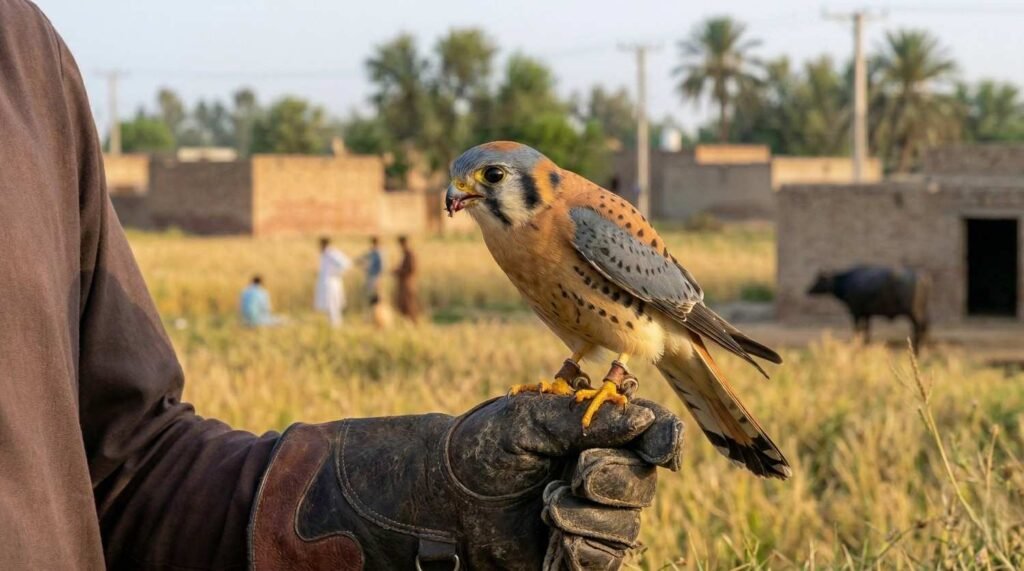
The kestrel holds a special place in the history of falconry. In the United States, the American Kestrel (alongside the Red-tailed Hawk) is one of the two birds legally permitted for an apprentice falconer to trap and train.
Because they are small and relatively easy to manage, they teach beginners the essential mechanics of weight management, diet, and raptor husbandry. While they are too small to hunt rabbits or large game, a trained kestrel can provide an apprentice with thrilling flights, hunting nuisance birds like starlings or English sparrows in suburban environments.
Conservation Status: Are Kestrels Endangered?
Globally, kestrels are not considered an endangered species. The IUCN lists them as a species of “Least Concern.” However, this broad classification hides a troubling local trend.
In North America, the American Kestrel population has been experiencing a slow, steady, and puzzling decline over the last 50 years. Ornithologists and wildlife biologists believe this decline is due to a combination of factors:
- Loss of Nesting Sites: The removal of dead trees and old wooden fence posts removes their natural breeding cavities.
- Pesticide Use: The heavy use of agricultural insecticides eliminates their primary summer food source (grasshoppers and beetles) and can cause secondary poisoning.
- Predation: As larger raptor populations (like Cooper’s Hawks) recover, smaller falcons often become prey.
How You Can Help
If you own property in a rural or semi-rural area, one of the best ways to support the bird kestrel falcon is by installing a kestrel nest box. Placing a wooden box on a tall pole near an open field can provide a safe breeding ground for a mating pair, ensuring these beautiful little falcons continue to grace our skies for generations to come.
Frequently Asked Questions (FAQs)
Can a kestrel pick up a small dog or cat?
Absolutely not. A kestrel weighs between 4 to 6 ounces (about the weight of a smartphone). They physically cannot lift anything larger than a small mouse, vole, or grasshopper. Your pets are entirely safe from this tiny falcon.
How fast can a kestrel fly?
While they are known for their stationary hovering, they are still falcons. In level flight, a kestrel can reach speeds of roughly 39 mph (60 km/h), and they can reach up to 60 mph (96 km/h) when diving for prey.
Do kestrels mate for life?
Generally, yes. Kestrels are monogamous and will often return to the exact same nesting cavity year after year, reuniting with the same mate for the breeding season.