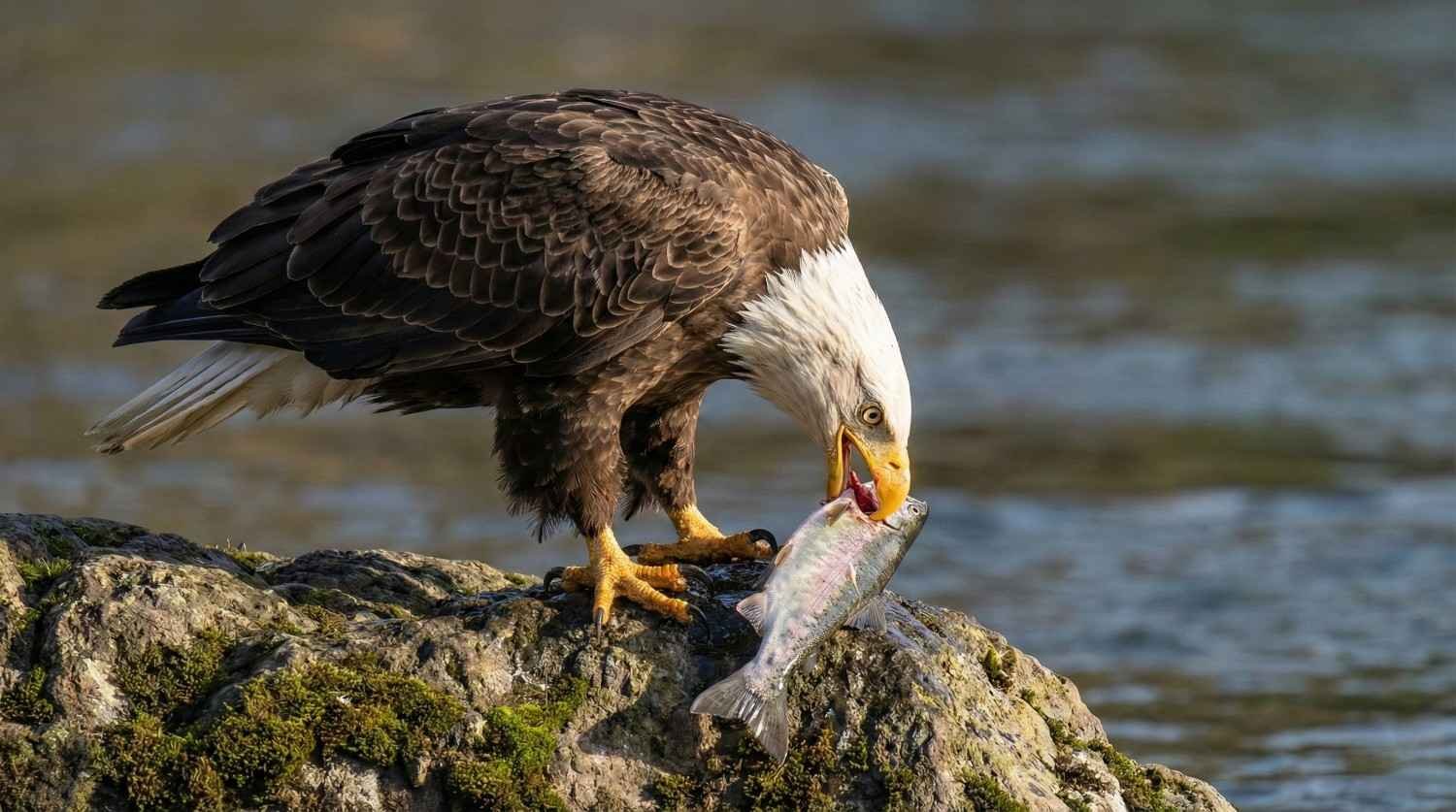
What Do Eagles Eat? A Complete Guide To The Diet Of The King Of Birds
Discover the fascinating details of the eagles eat. From fish to land mammals, learn what different eagle species eat and how they hunt as apex predators. When we think of eagles, we often picture a majestic silhouette soaring high above the mountains, searching for its next meal. As apex predators, eagles sit at the very…
Discover the fascinating details of the eagles eat. From fish to land mammals, learn what different eagle species eat and how they hunt as apex predators.
When we think of eagles, we often picture a majestic silhouette soaring high above the mountains, searching for its next meal. As apex predators, eagles sit at the very top of the food chain, commanding the skies with keen eyesight and crushing talons. But defining the typical eagles eat isn’t as simple as it seems.
The menu depends entirely on the species. While some eagles are specialized fishermen, others are master hunters of land mammals, and some even dine on monkeys in the rainforest. This complete guide explores the fascinating, sometimes gruesome, and incredibly varied food sources of the eagle family.
The General Rule: Carnivores of the Sky
First and foremost, all eagles are carnivores. They do not eat plants, seeds, or fruits. Their entire biology—from their hooked beaks to their razor-sharp talons—is evolved for tearing flesh.
An eagle’s diet is typically split into four main categories:
- Live Prey: Fish, mammals, birds, and reptiles caught actively.
- Carrion: Dead animals found on the road or in the wild (essential for winter survival).
- Stolen Food: Meals harassed away from other birds (known as kleptoparasitism).
- Nestlings/Eggs: Occasionally raiding the nests of other birds.
However, to truly understand their diet, we must look at the specific groups of eagles.
The Fish Eaters: Sea Eagles (e.g., Bald Eagle)
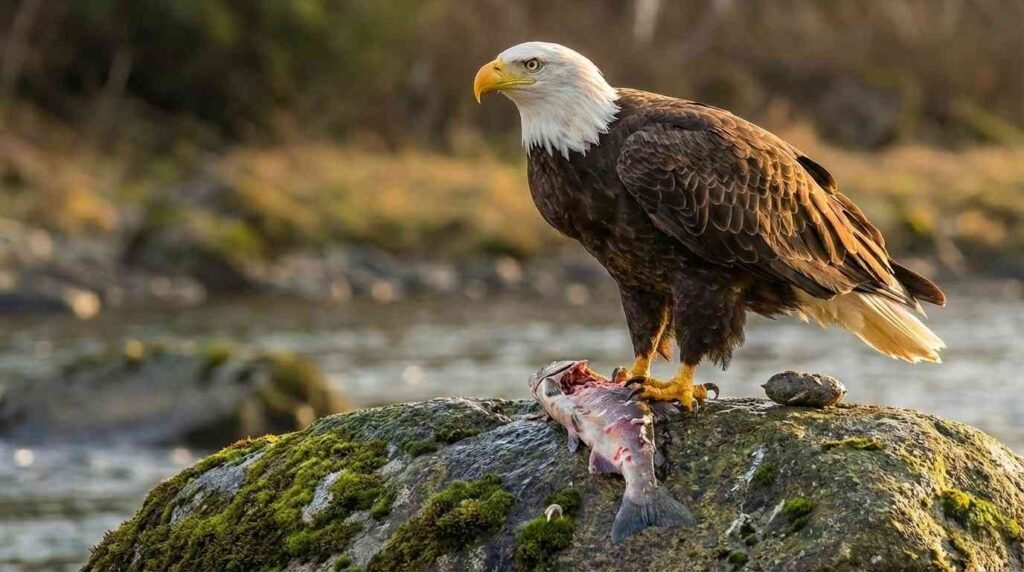
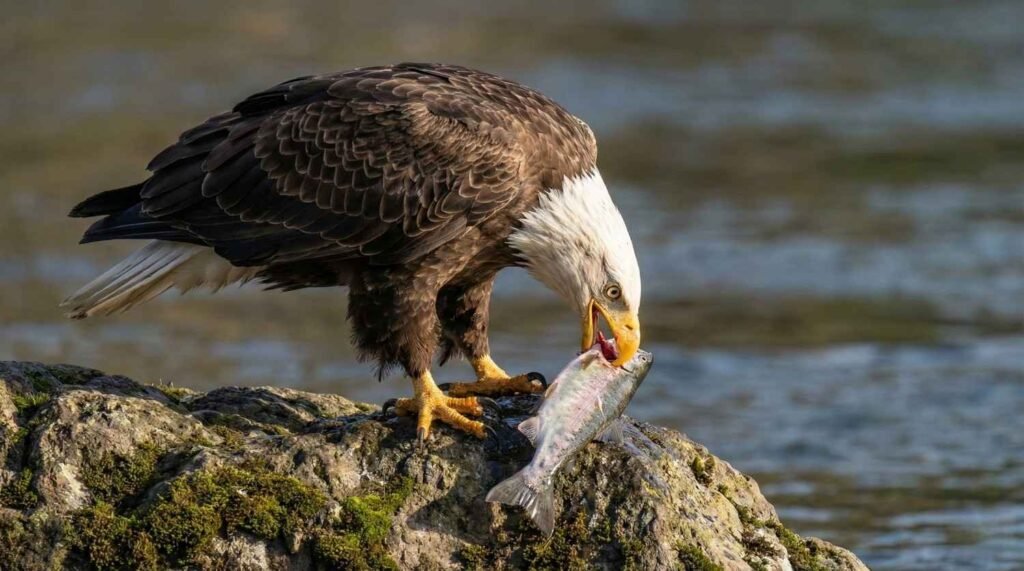
The most famous member of this group is the Bald Eagle, the national bird of the United States. Along with the African Fish Eagle and the massive Steller’s Sea Eagle, these birds live near open water and rely heavily on aquatic prey.
The Bald Eagle Diet
Contrary to their fierce reputation, Bald Eagles are actually part-time scavengers and full-time fish lovers.
- Fish (70-90% of diet): Their primary food source. They prefer fish that feed near the surface, such as salmon, trout, herring, catfish, and shad.
- Waterfowl: When fish are scarce, particularly in winter, they hunt ducks, coots, and geese. They often target injured or slow-moving birds.
- Carrion: Bald Eagles are notorious scavengers. You will often see them alongside vultures eating roadkill deer or feeding on fish that have washed up on shore.
- Piracy: Benjamin Franklin famously called the Bald Eagle a bird of “bad moral character” because they frequently steal food. They will harass Ospreys in mid-air until the smaller bird drops its catch, which the eagle then snatches before it hits the water.
Fun Fact: A Bald Eagle can see a fish from a mile away and swoop down at speeds of up to 100 mph to snatch it from the water without getting its feathers wet.
The Mammal Hunters: Booted Eagles (e.g., Golden Eagle)
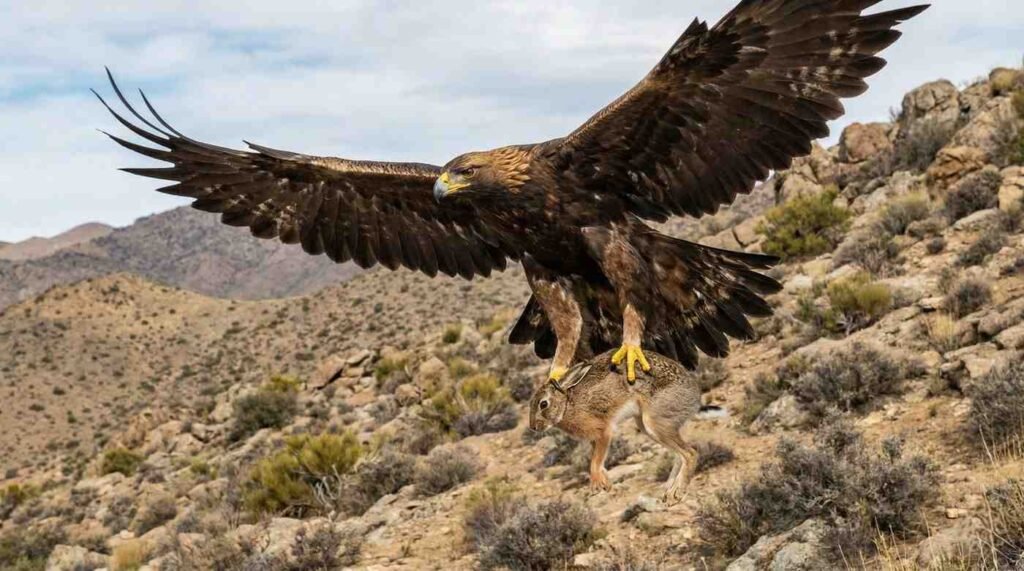
“Booted” eagles have feathers all the way down to their toes (unlike the bare legs of sea eagles). The Golden Eagle is the prime example of this group. These are true hunters of the land, patrolling mountains and prairies.
The Golden Eagle Diet
Golden Eagles are more aggressive hunters than their bald cousins and rarely scavenge if live prey is available.
- Small to Medium Mammals: Their bread and butter are rabbits, hares, ground squirrels, prairie dogs, and marmots.
- Larger Prey: Golden Eagles are powerful enough to take down full-grown foxes, young deer (fawns), pronghorn antelope calves, and even cranes.
- Reptiles: In arid regions, they will eat snakes and large lizards.
Unlike the Bald Eagle, the Golden Eagle hunts cooperatively. It is not uncommon for a mated pair to hunt together; one eagle distracts the prey while the other swoops in for the kill.
The Forest Giants: Harpy Eagles
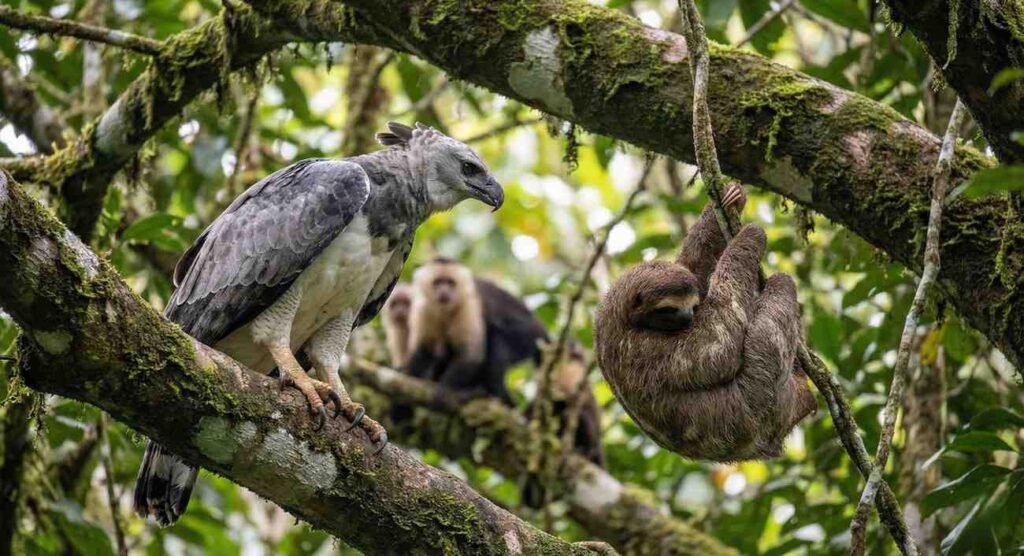
In the dense rainforests of Central and South America lives the Harpy Eagle, one of the largest and most powerful eagles on Earth. Their environment dictates a very different menu.
The Harpy Eagle Diet
Because they hunt in the canopy of the Amazon, their prey consists of tree-dwelling mammals.
- Sloths: Sloths make up a massive portion of the Harpy’s diet (sometimes over 70%). Their slow movement makes them easy targets for a bird with talons as long as a grizzly bear’s claws.
- Monkeys: They frequently hunt capuchin monkeys, howler monkeys, and spider monkeys.
- Other: They also eat iguanas, parrots (like macaws), and porcupines.
The Specialized Feeders
Some eagles have evolved to eat very specific things:
- Snake Eagles (Circaetus): Found in Africa and Europe, these birds are immune to many snake venoms and specialize in hunting vipers, cobras, and other reptiles.
- Wedge-Tailed Eagle: Australia’s largest bird of prey. While they hunt kangaroos and wallabies, they are also heavily reliant on roadkill and have been known to gang up on dingoes.
How Much Does an Eagle Eat?
Eagles have a high metabolism but are also adapted to feast-and-famine cycles.
- Daily Intake: An average eagle needs about 250 to 550 grams (0.5 to 1.2 lbs) of food per day.
- The “Gorge”: If food is scarce, an eagle can survive for weeks without eating. When they finally find a kill, they can gorge themselves, consuming up to 2 lbs of meat in a single sitting. They store this food in a specialized pouch in their throat called a crop, allowing them to digest it slowly over time.
Digestion and “Casting”
Eagles swallow small prey whole or tear large chunks of meat with bones and fur attached. They have a two-part stomach:
- Proventriculus: Produces strong acids to digest bone and meat.
- Gizzard: A muscular stomach that grinds down food.
Indigestible parts like fur, feathers, and large teeth are compacted into a ball called a pellet. Every morning, usually before flying, an eagle will regurgitate (cast) this pellet to clear its digestive tract.
Debunking Myths: Do Eagles Eat Pets?
A common fear among pet owners is that an eagle will snatch up their cat or small dog. While this makes for dramatic internet rumors, the reality is different.
The Weight Limit Physics is the main limitation. Even the strongest eagles can typically only lift 4 to 5 pounds into the air.
- Cats: An average house cat weighs 8-10 lbs. An eagle cannot fly away with it. While attacks on cats are possible, they are extremely rare and usually involve young or very small cats.
- Dogs: Most dogs are too heavy. A teacup Chihuahua might be at risk, but a standard terrier is safe.
- Human Babies: This is a pure myth. No eagle can lift a human baby.
That said, eagles are opportunistic. If a small pet is left unattended in an open yard in eagle country, there is a non-zero risk, but it is not a common part of their diet.
Summary: The Eagle’s Place in the Food Chain
Eagles play a vital role in the ecosystem. As scavengers, they (along with vultures) act as nature’s cleanup crew, preventing the spread of disease from rotting carcasses. As predators, they keep populations of rodents and rabbits in check, maintaining a healthy balance in their habitats.
Whether it is a Bald Eagle snatching a salmon from an icy river or a Golden Eagle chasing a jackrabbit across the plains, the diet of an eagle is a testament to its adaptability and power.
Shutterstock
For a closer look at the difference between the two most common North American eagles and their feeding habits, check out this video:
Differences between Bald and Golden Eagles
This video provides an excellent visual comparison of the Bald and Golden eagles, highlighting the physical traits that dictate their differing diets.