The Ultimate Guide To Rabbit Food
Choosing the right rabbit food is an impressive investment in your pet’s longevity and daily happiness. If you’ve just brought a pet rabbit home, a trip to the small animal section of your local supply store can be quite confusing. You’re greeted by dozens of colorful bags, boxes, and mixes, each claiming to be the…
Choosing the right rabbit food is an impressive investment in your pet’s longevity and daily happiness. If you’ve just brought a pet rabbit home, a trip to the small animal section of your local supply store can be quite confusing. You’re greeted by dozens of colorful bags, boxes, and mixes, each claiming to be the best “rabbit food” on the market.
However, what a rabbit actually needs is very different from what commercial advertisements portray. If you feed your rabbit a diet consisting solely of store-bought pellets and treats, you’re setting him up for serious and often very expensive medical problems in the future.
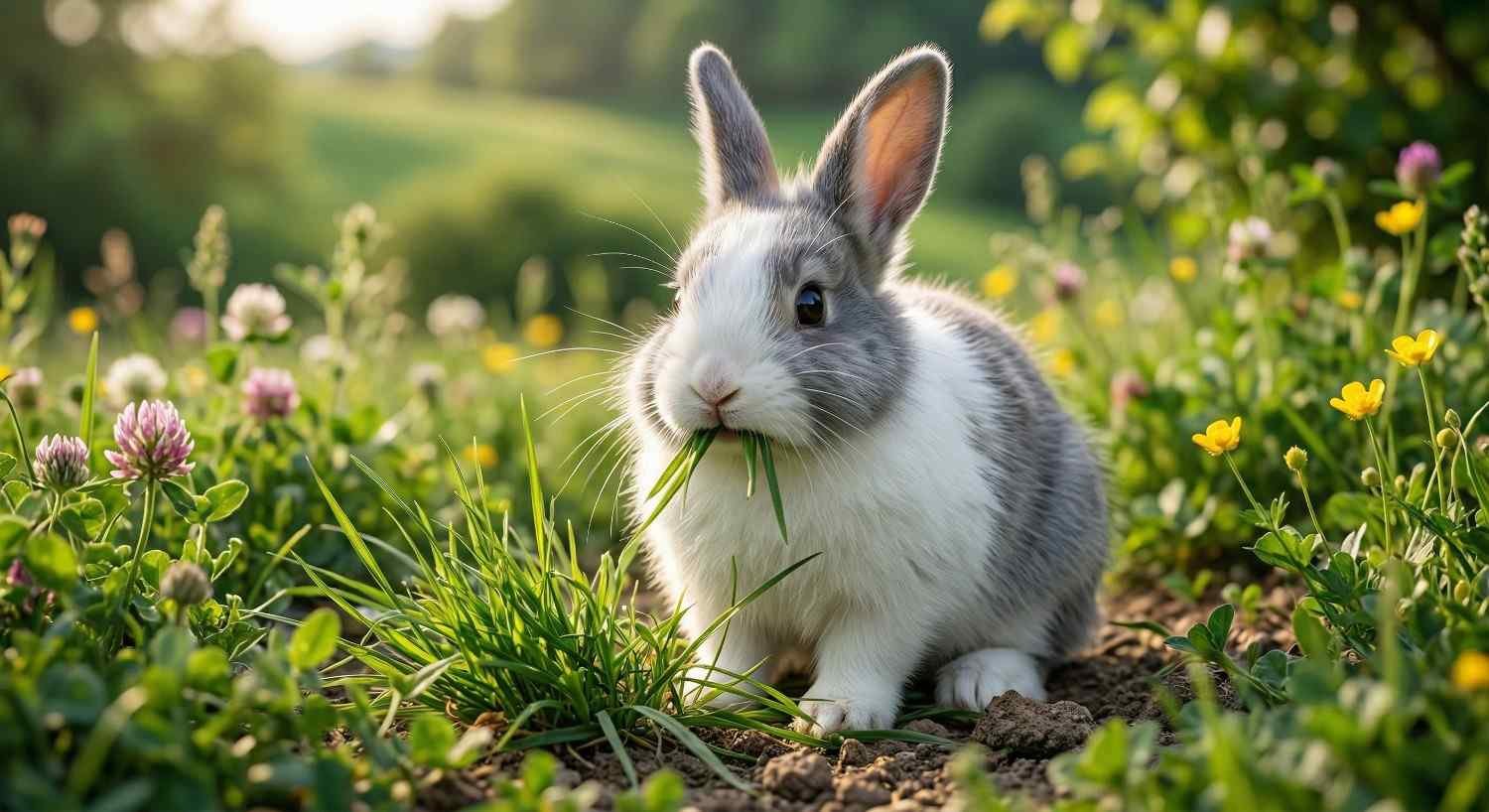
To keep your pet healthy, active, and out of the veterinary clinic, you need to mimic their natural diet as much as possible. Grazing animals have a deep and natural connection to grass; For rabbits, this is not just a matter of preference, but a strict biological necessity.
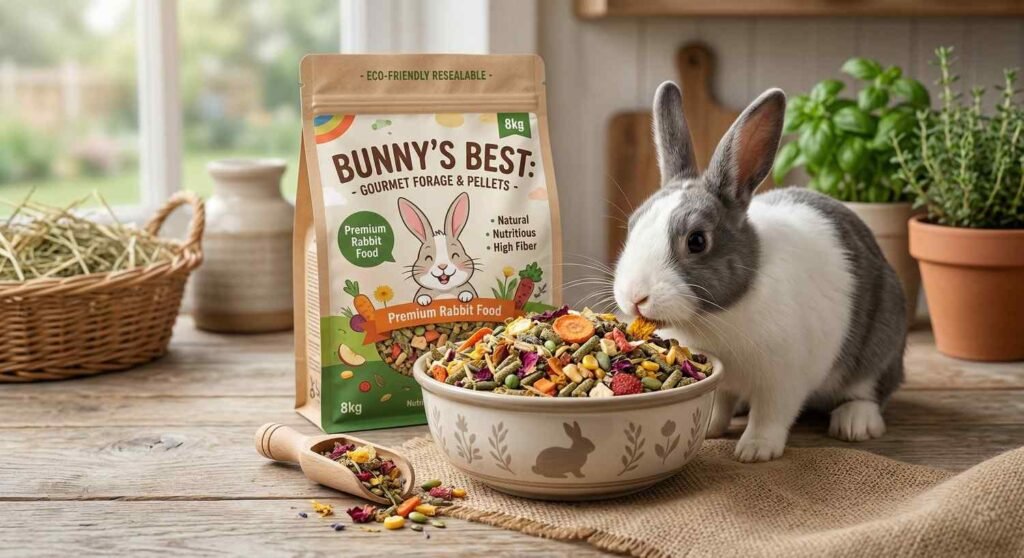
The Bugs Bunny Myth: Why Carrots and Rabbit Food Are Not A Meal
Before we talk about what you should feed your rabbit, we need to dispel one of the most common misconceptions about rabbit care: carrots.
Popular cartoons have led to the idea that rabbits only eat carrots for breakfast, lunch, and dinner. In reality, root vegetables like carrots are very high in sugar and carbohydrates. A rabbit’s digestive system is simply not designed to handle that much sugar.
Feeding your rabbit too many carrots can lead to obesity, severe digestive upset, and tooth decay. Carrots should be treated like candy or toffee—something that should be given in small, occasional, special treats.
The 80% Rule: The Power Of Hay And Grass
The absolute foundation of a rabbit’s diet is roughage. A staggering 80% to 85% of your rabbit’s daily food intake should consist of high-quality hay or fresh grass. Why is grass so incredibly important? It comes down to two major biological factors:
1. Dental Health
A rabbit’s teeth never stop growing. In fact, their front incisors can grow up to 3 millimeters a week! If a rabbit only eats soft food, their teeth will overgrow, leading to painful spurs that cut into their cheeks and tongue. The constant, side-to-side grinding action required to chew tough, fibrous hay naturally files their teeth down to a safe, healthy length.
2. Gastrointestinal (GI) Motility
Rabbits are “hindgut fermenters.” Their digestive tracts must be constantly moving to push food through. If a rabbit stops eating high-fiber grass, their gut slows down and gas begins to build up. This leads to a life-threatening condition called GI Stasis, which is fatal without immediate veterinary intervention.
Which Hay is Best?
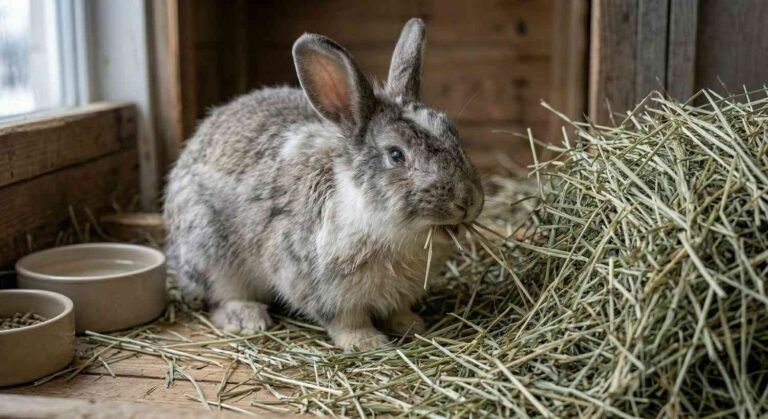
- Timothy Hay: The gold standard for adult rabbits. It has the perfect balance of high fiber, low protein, and low calcium.
- Orchard Grass / Meadow Hay: Excellent alternatives if you (the owner) are allergic to Timothy hay. It is slightly softer and sweeter.
- Alfalfa Hay: This is actually a legume, not a grass. It is very high in calcium and protein. It should only be fed to baby rabbits under 6 months old, pregnant, or nursing rabbits. Feeding alfalfa to a mature adult will cause kidney and bladder stones.
![: Large pile of fresh timothy hay for a rabbit.]](https://falconrynews.com/wp-content/uploads/2026/03/3-4-1024x558.jpeg "The Ultimate Guide To Rabbit Food")
Decoding Commercial Rabbit Food (pellets)
So, where do commercial rabbit food pellets fit into the equation?
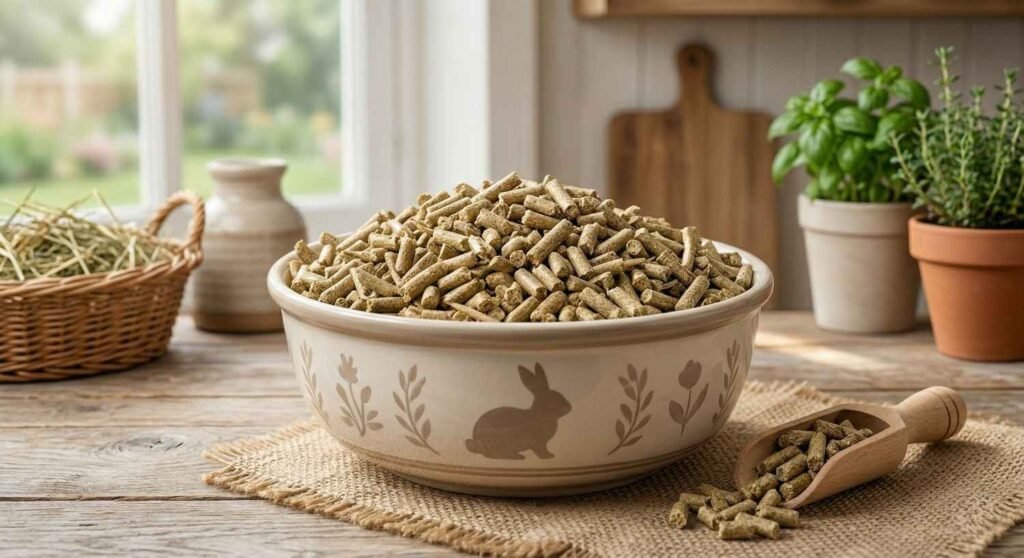
Pellets should make up a very small percentage of the diet—roughly 5%. They are meant to be a nutritional supplement to ensure your rabbit gets the trace minerals and vitamins they might miss from hay alone. A healthy adult rabbit weighing about 6 pounds only needs about 1/4 cup of pellets per day.
The “Muesli” Danger
When shopping for rabbit food, you will likely see bags filled with pellets mixed with dried corn, colorful cereal pieces, seeds, and dried fruit. This is called a “muesli” mix. Avoid these at all costs. Rabbits are notoriously selective eaters. If you give them a bowl of muesli, they will pick out the sugary, high-fat pieces (the seeds and fruit) and leave the healthy, fibrous pellets behind. This selective feeding leads to severe malnutrition and obesity.
What to Look for in a Pellet
You want a plain, uniform, boring-looking extruded pellet. Every bite should look exactly the same so the rabbit cannot selectively feed. When checking the nutritional label on the back of the bag, look for:
- Fiber: Minimum of 18% (20%+ is ideal).
- Protein: Around 12% to 14%.
- Fat: Maximum of 2% to 3%.
- Calcium: Under 1%.
- Main Ingredient: It should list Timothy grass or Orchard grass as the very first ingredient, not wheat or soy.
Fresh Greens: The Daily Salad
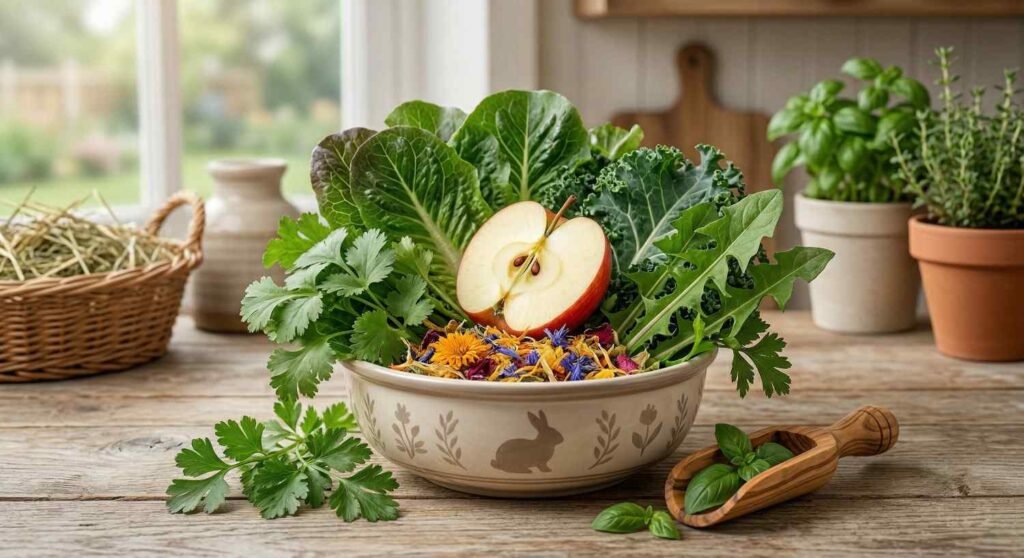
The remaining 10% to 15% of the rabbit diet should be fresh, leafy greens. These provide essential hydration, a variety of textures, and micronutrients.
A good rule of thumb is to feed about 1 packed cup of leafy greens per 2 pounds of your rabbit’s body weight daily. It is best to mix three different types of greens to provide a spectrum of nutrients.
Excellent Daily Greens:
- Romaine lettuce (dark, leafy green)
- Cilantro and Parsley
- Basil, Mint, and Dill
- Watercress and Arugula
Greens to Feed Sparingly (High in Oxalates or Calcium):
- Spinach
- Kale
- Mustard greens
- Cabbage (can cause excess gas)
Toxic Foods to NEVER Feed:
- Iceberg lettuce (contains lactucarium, which can act as a sedative, and has zero nutritional value).
- Onions, garlic, and chives.
- Avocado, seeds, and fruit pits.
- Human junk food (bread, crackers, pasta, chocolate).
Treats: What You Can and Cannot Feed
Treats should make up less than 1% to 2% of a rabbit’s diet. While commercial yogurt drops and seed sticks are sold in every pet store, they are incredibly unhealthy. They are packed with refined sugars and dairy (rabbits are strict vegans and cannot digest dairy products).
Instead, offer natural treats. Small pieces of fruit are highly appreciated and much safer. Remember, the portion size should be tiny—no larger than the tip of your thumb, given once or twice a week.
Safe Natural Treats:
- A thin slice of banana
- A single strawberry or raspberry
- A small slice of apple (strictly no seeds)
- A chunk of bell pepper (any color)
- A piece of melon
Rabbit Feeding Guide by Age
A rabbit’s nutritional needs shift drastically depending on their life stage. Here is a quick reference guide to keep them on track as they grow.
| Age Group | Hay / Grass | Pellets | Vegetables |
| Baby (0 – 3 weeks) | None | None | None (Mother’s milk only) |
| Juvenile (4 weeks – 6 months) | Unlimited Alfalfa Hay | Unlimited Alfalfa-based pellets | Introduce greens slowly at 12 weeks |
| Young Adult (7 months – 1 year) | Transition to Timothy/Grass Hay | Transition to Timothy pellets (1/2 cup) | Gradually increase daily salad |
| Adult (1 – 5 years) | Unlimited Timothy/Grass Hay | 1/4 cup per 6 lbs of body weight | 1 to 2 cups of mixed daily greens |
| Senior (6+ years) | Unlimited Timothy/Grass Hay | Adjust based on weight (consult vet) | Normal daily salad |
The Secret to Digestion: Water and Cecotropes
A rabbit diet isn’t complete without discussing hydration and their unique digestive by-products.
Proper Hydration
Water is the lubricant that keeps a rabbit’s heavily fibrous diet moving through the gut. While many cages come with drip bottles, these are actually quite frustrating for rabbits to use and do not provide enough water flow. A heavy, shallow ceramic bowl is far superior. Rabbits drink a massive amount of water—a 5-pound rabbit can drink as much water in a day as a 20-pound dog!
What are Cecotropes?
You might occasionally see your rabbit bend down, pull something from their rear end, and eat it. While this sounds alarming to a new owner, it is a vital, healthy behavior. Rabbits produce two types of droppings: standard round, dry cocoa-puff poops, and “cecotropes.”
Cecotropes look like dark, squishy, shiny clusters of grapes. They are packed with protein, Vitamin B, and Vitamin K that the rabbit’s body didn’t absorb the first time through. If a rabbit does not eat their cecotropes, they will suffer from severe nutritional deficiencies.
Conclusion
Feeding your rabbit properly doesn’t have to be complicated or expensive. By avoiding the flashy, colorful muesli mixes in the pet store and focusing on the core essentials—unlimited fresh hay, a heavy ceramic bowl of clean water, a daily handful of leafy greens, and a small portion of high-quality pellets—you will ensure your bunny lives a long, happy, and vibrant life.