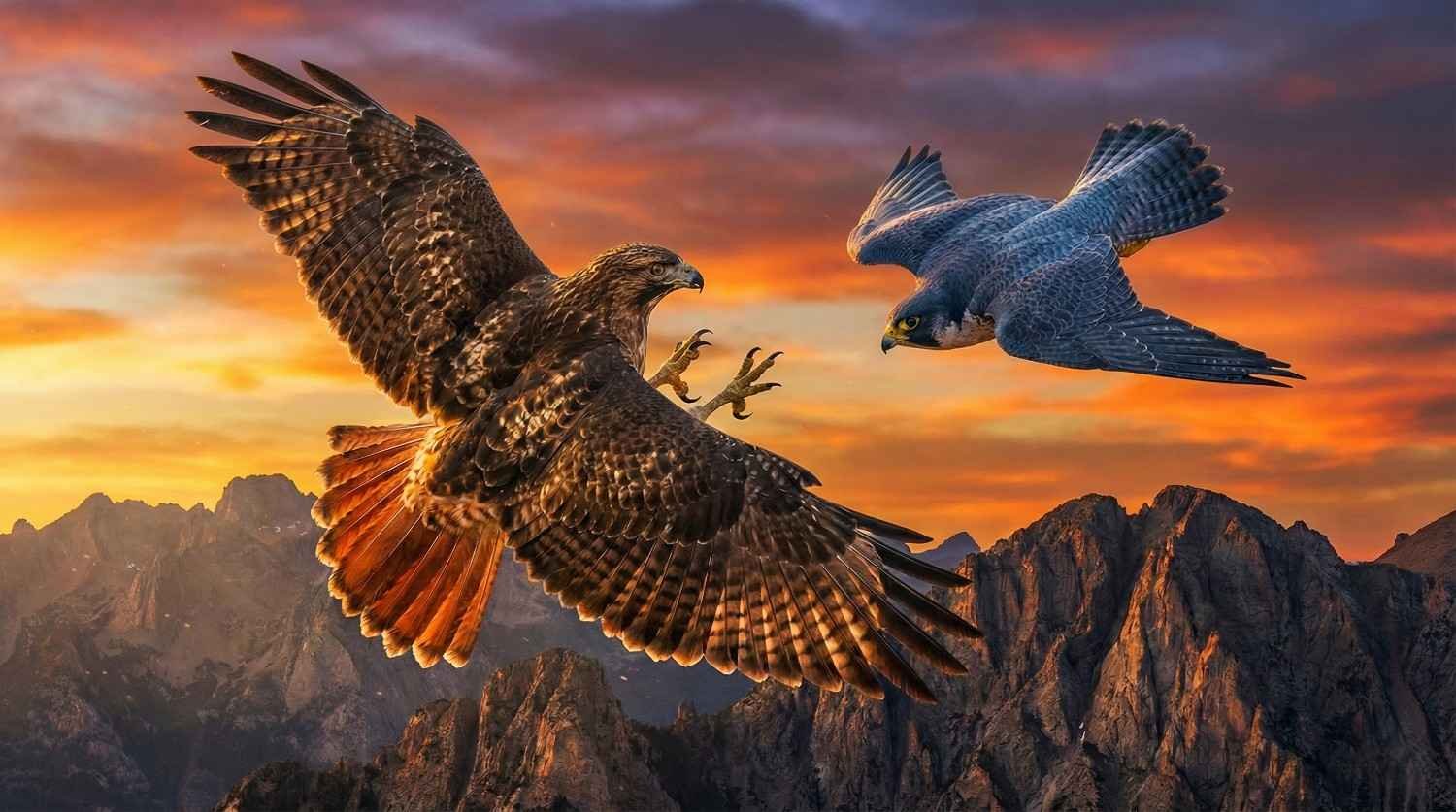
hawk vs. falcon: the ultimate guide to identifying birds of prey
Hawk vs falcon silhouettes patrolling the open skies often trigger a moment of pause for nature enthusiasts, sparking an immediate curiosity about the predator overhead. “Hawk or falcon?” is the question that inevitably follows, yet few observers realize that the answer involves a biological divide as vast as the one separating wolves from tigers. Hawks…
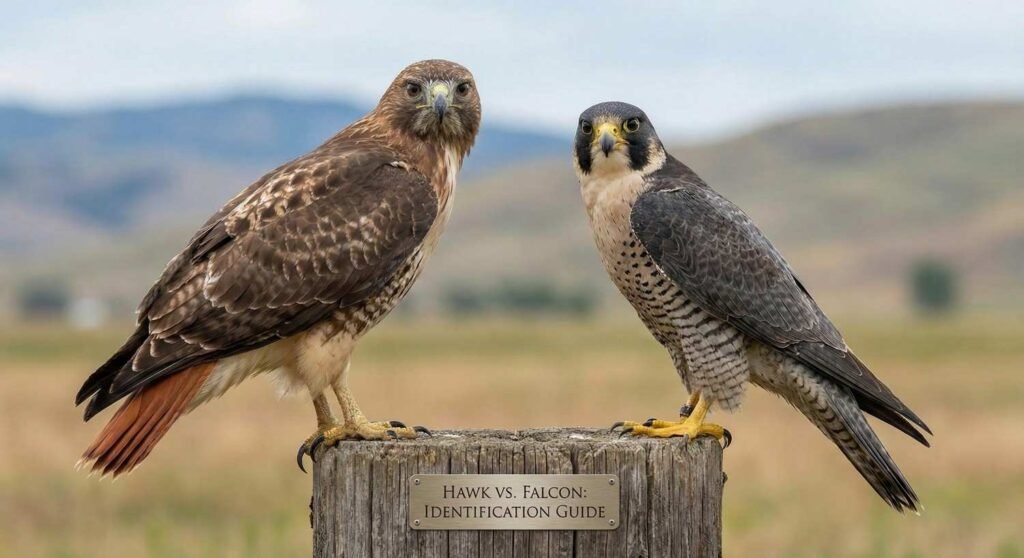
Hawk vs falcon silhouettes patrolling the open skies often trigger a moment of pause for nature enthusiasts, sparking an immediate curiosity about the predator overhead.
“Hawk or falcon?” is the question that inevitably follows, yet few observers realize that the answer involves a biological divide as vast as the one separating wolves from tigers.
Hawks and falcons may share the same high-altitude lifestyle and carnivorous diet, but beneath the feathers, they belong to entirely different evolutionary families that diverged millions of years ago.
Hawk and falcon differentiation stands as the critical threshold for true birding mastery, moving beyond simple observation to understanding complex genetic lineages.
This hawk and falcon guide aims to dismantle the confusion by rigorously analyzing their unique physical anatomy, aerodynamic flight mechanics, and distinct hunting styles to help you identify them with 100% accuracy.
The Evolutionary Surprise: They Are Not Cousins
The biggest shock in ornithology is that hawks and falcons are not closely related. For centuries, scientists grouped them together. However, modern DNA analysis has rewritten the bird family tree.
- Hawks (Accipitridae): They are part of a massive family that includes eagles, kites, harriers, and Old World vultures. They are ancient predators.
- Falcons (Falconidae): Believe it or not, falcons are more closely related to parrots and songbirds than they are to hawks. They evolved their “raptor” traits independently—a process called convergent evolution.
Wing Shape and Flight Style
When identifying a bird in flight, ignore the color for a moment and look at the geometry of the wings. This is the most reliable difference.
The Hawk: The Broad-Winged Soarer
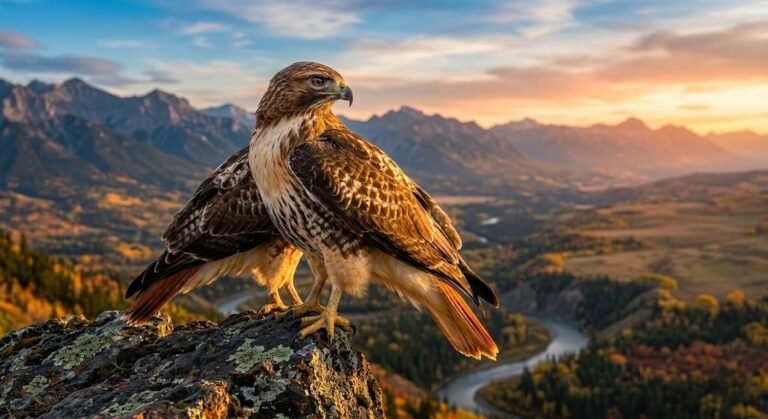
Most hawks you see (like the Red-tailed Hawk) are “Buteos.”
- Wing Shape: Broad, wide, and rounded.
- Wing Tips: The primary flight feathers at the tip of the wing are often separated, looking like distinct “fingers” on a hand. These “slots” reduce turbulence and allow the hawk to catch thermals (rising columns of warm air).
- Flight Style: Hawks are efficient gliders. They will lock their wings and soar in lazy circles for hours without flapping, using almost no energy.
The Falcon: The Aerodynamic Jet
Falcons are built for speed, not lazy soaring.
- Wing Shape: Long, slender, and pointed. They look like boomerangs or sickles.
- Wing Tips: Tapered to a sharp point. They do not have “fingers.”
- Flight Style: Falcons rarely soar in circles. Their flight is active and energetic. You will see rapid, powerful wingbeats followed by a short glide, then more flapping.
Visual Cheat Sheet:
- Hawk: Flying Plank (Broad wings, short tail).
- Falcon: Flying Anchor (Pointed wings, streamlined).
Head and Beak Anatomy
If you have binoculars or a camera, the face reveals the predator’s true nature.
The Beak and The “Tooth”
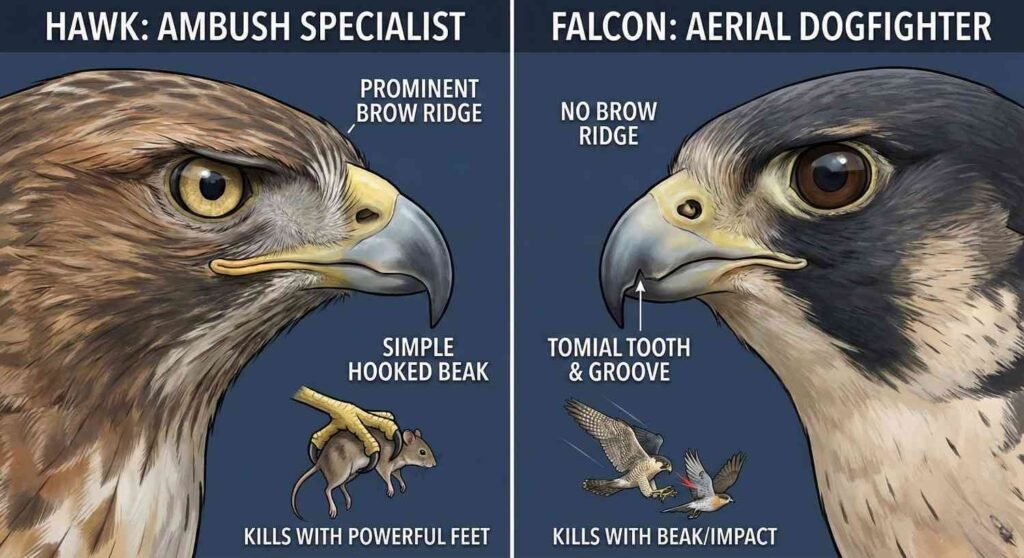
- Hawks: They have a smooth, simple curved hook. They use this beak to tear meat after the prey is dead.
- Falcons: They possess a specialized weapon called a Tomial Tooth. This is a sharp, triangular notch on the upper beak (mandible) with a matching groove on the bottom.
- Why? Falcons often catch other birds in mid-air. They use this “tooth” to sever the spinal cord of their prey with a single bite, killing it instantly.
Eye Color and Shape
- Hawks: They have a prominent “supraorbital ridge”—a bony brow bone that gives them a permanent “angry” or intense expression. Their eye color often changes with age (e.g., Cooper’s Hawks go from yellow to deep red).
- Falcons: They lack the heavy brow ridge, giving them a large-eyed, “cute,” or doe-eyed appearance. Their eyes are almost always dark brown or black, regardless of age. They also usually feature a “malar stripe” or “mustache”—a dark patch of feathers under the eye that reduces glare from the sun (like an athlete’s eye black).
Hunting Strategy: Strength vs. Speed
The physical build of these birds dictates how they secure a meal.
Hawks: The Ambush Specialists
Hawks are the heavy lifters. They rely on grip strength.
- The Kill: A hawk kills with its feet. Their talons are incredibly powerful. They squeeze their prey until it suffocates or internal damage occurs.
- The Method: They utilize “Perch and Pounce.” A hawk will sit motionless on a telephone pole or tree branch, scanning the ground. When a mouse, rabbit, or snake moves, the hawk drops down, using gravity to crash into the prey.
Falcons: The Aerial Dogfighters
Falcons are the speedsters. They rely on velocity.
- The Kill: As mentioned, they kill with the beak (severing the spine) or the sheer impact of the collision.
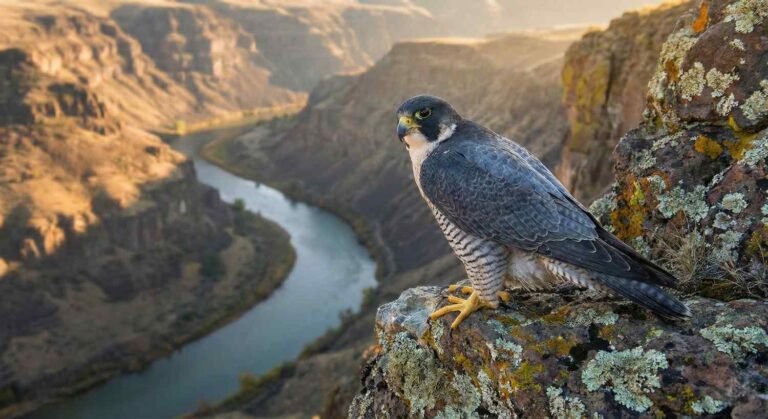
- The Method: The most famous move is the Stoop. A Peregrine Falcon will fly high, spot a pigeon below, tuck its wings tight to its body, and drop. During this dive, they can reach speeds of over 240 mph (386 km/h), striking the prey with a closed fist (talons curled) to knock it unconscious mid-air.
Nesting Habits
Where you find the baby birds is another major clue.
- Hawks: They are builders. They construct large, bulky nests made of sticks, usually high up in trees or on man-made structures like billboards. They will often reuse and add to the same nest for years.
- Falcons: They are minimalists. Falcons generally do not build nests. Instead, they lay their eggs in a “scrape”—a simple depression in gravel on a cliff ledge (or a skyscraper). They will also happily steal old nests abandoned by crows or hawks rather than build their own.
Common Species Comparisons (North America)
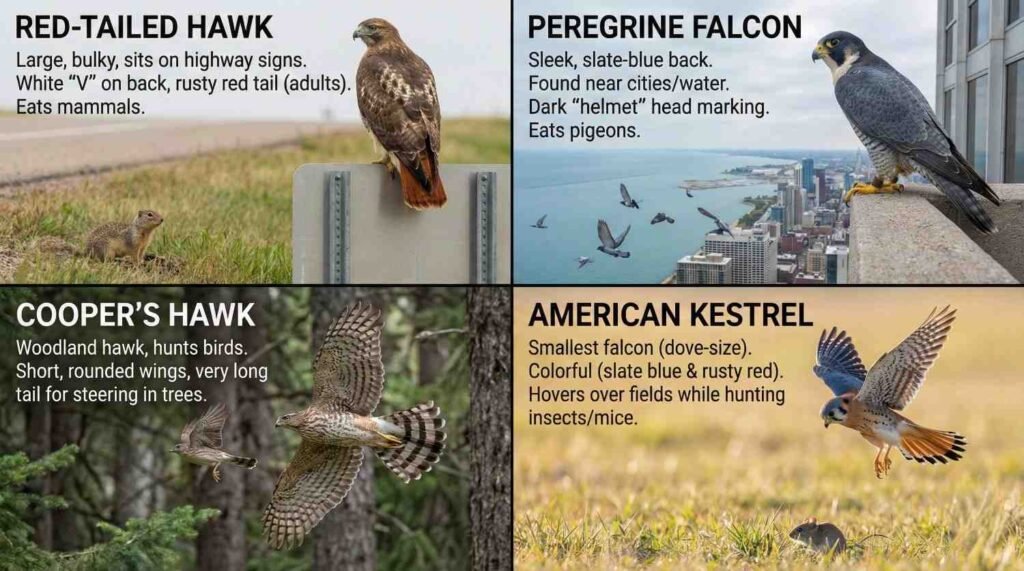
Red-tailed Hawk vs. Peregrine Falcon
- Red-tailed Hawk: Large, bulky, often seen sitting on highway signs. Look for the white “V” on the back and the rusty red tail (in adults). They eat mostly mammals (ground squirrels, rabbits).
- Peregrine Falcon: Sleek, slate-blue back, often found near water or cities (eating pigeons). Look for the dark “helmet” head marking.
Cooper’s Hawk vs. American Kestrel
- Cooper’s Hawk: A woodland hawk (Accipiter) that hunts birds. It has short, rounded wings but a very long tail (like a rudder) for steering through trees.
- American Kestrel: North America’s smallest falcon. It is roughly the size of a dove. It is colorful (slate blue and rusty red) and is famous for hovering in place over open fields while hunting insects and mice.
Comparison Table: At a Glance
| Feature | Hawk (Accipitridae) | Falcon (Falconidae) |
| Wing Shape | Broad, Rounded, “Fingered” | Long, Pointed, Tapered |
| Flight | Soaring, slow flaps | Fast, continuous flapping |
| Killing Method | Talons (Feet) | Beak (Tomial Tooth) |
| Head Shape | Angular, “Angry” brow | Round, “Mustache” marks |
| Nesting | Builds stick nests | Scrapes on cliffs / No nest |
| Closest Relative | Eagles, Vultures | Parrots, Songbirds |
| Eye Color | Changes (Yellow -> Red/Brown) | Dark Brown / Black |
Common Species You Might See
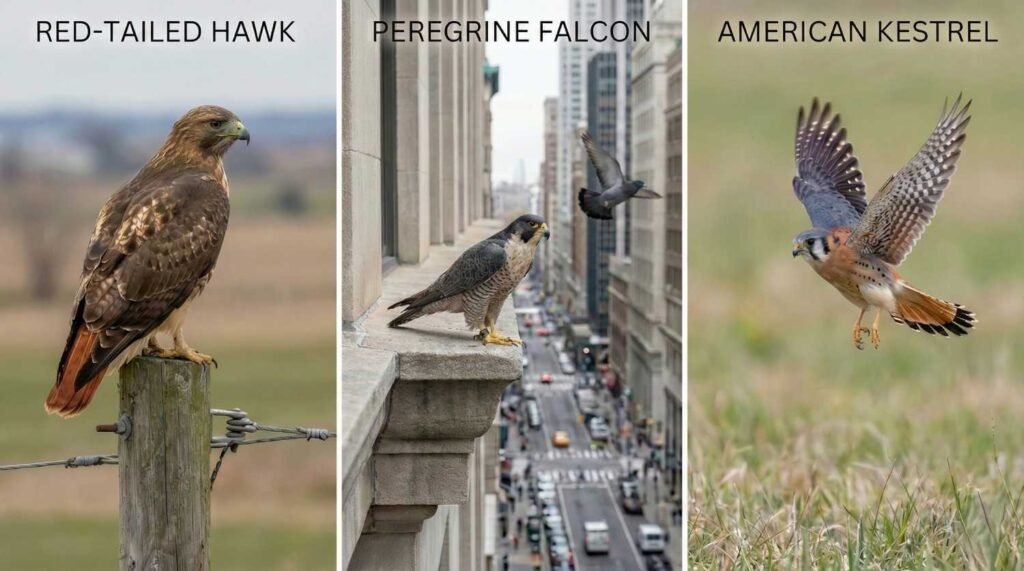
Red-Tailed Hawk
The most common hawk in North America. You have likely seen them sitting on roadside light poles. They are large, with a signature rusty-red tail and a broad, heavy body. They are excellent mousers.
Peregrine Falcon
The celebrity of the falcon world. Famous for living on skyscrapers (which resemble their natural cliff habitats) in major cities like New York and London, where they hunt pigeons. They are easily identified by their “black helmet” or “sideburns” marking on their face.
American Kestrel
This is North America’s smallest falcon. It is roughly the size of a mourning dove and is arguably the most colorful raptor, with slate blue and rusty red markings. It is often seen hovering in place over a field—a unique behavior among raptors.