The American Crow Bird: Intelligence, Habitat, and Secrets Revealed
When you look out into your backyard, a local park, or even a bustling city street, chances are you have locked eyes with an American crow bird. Glossy, entirely black, and incredibly vocal, these birds are a staple of the North American landscape. However, because they are so common, we often overlook just how extraordinary…
When you look out into your backyard, a local park, or even a bustling city street, chances are you have locked eyes with an American crow bird. Glossy, entirely black, and incredibly vocal, these birds are a staple of the North American landscape. However, because they are so common, we often overlook just how extraordinary they truly are.
Far from being just a noisy neighbor or an agricultural nuisance, the American crow (Corvus brachyrhynchos) is one of the smartest, most adaptable, and socially complex animals on the planet. Whether you are a dedicated bird watcher in the United States or a wildlife enthusiast in the UK fascinated by global corvid species, understanding the American crow opens up a world of fascinating animal behavior.
What is an American Crow Bird? Identification and Features
Spotting an American crow bird is relatively easy, provided you know exactly what to look for. At first glance, they might just look like large black birds, but closer inspection reveals striking details.
Physical Characteristics
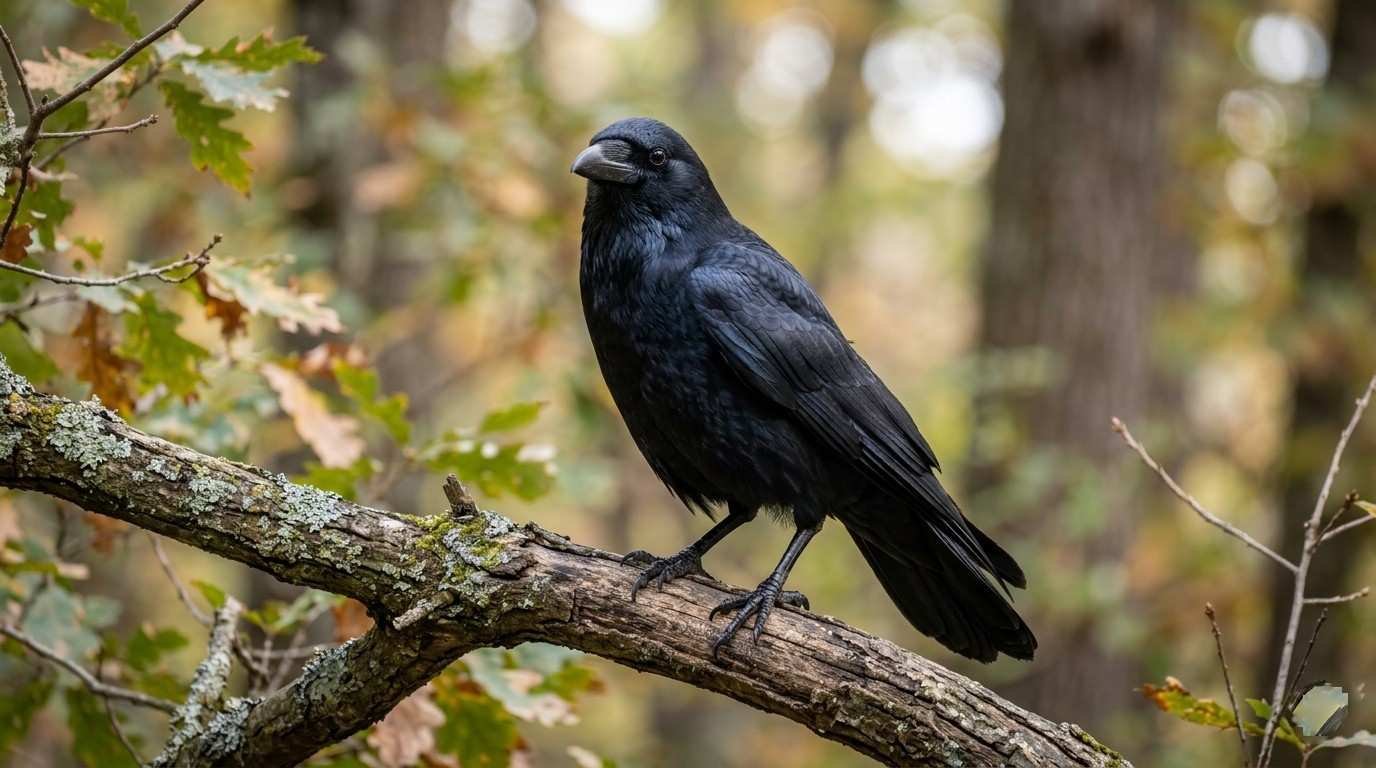
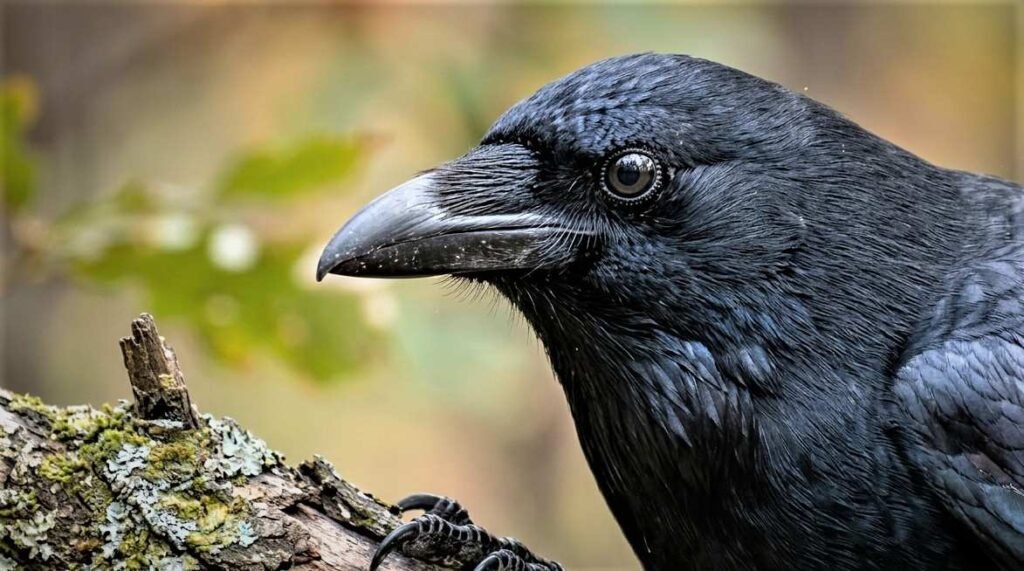
An adult American crow is entirely black. This isn’t just limited to their feathers; their legs, feet, and stout bills are also a deep, dark black. When the sunlight catches their plumage just right, you might notice an iridescent, purplish-blue sheen reflecting off their feathers.
In terms of size, they are substantial birds. They typically measure between 16 to 21 inches in length, with a wingspan stretching up to 39 inches. In flight, they have a steady, rowing wingbeat that looks purposeful and strong.
American Crow vs. Raven: How to Tell the Difference
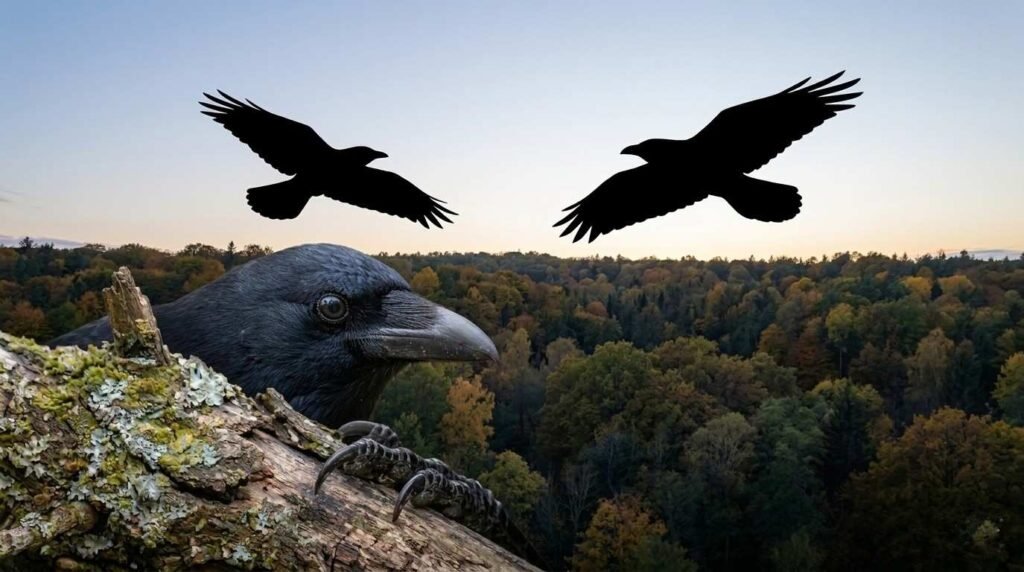
One of the most common questions birders ask is how to differentiate the American crow bird from its larger cousin, the Common Raven.there is most different part which make them different:
- Size: Ravens are significantly larger, roughly the size of a Red-tailed Hawk, while crows are closer to the size of a pigeon.
- Beak: A raven has a heavy, thick, curved beak (often described as a “Roman nose”). A crow’s beak is slightly thinner and smoother.
- Tail Shape: When flying overhead, look at the tail. An American crow has a squared-off or slightly rounded, fan-shaped tail. A raven has a distinct wedge-shaped tail.
- Voice: Crows make the familiar, high-pitched caw-caw sound. Ravens produce a deep, hollow, echoing croak.
Habitat and Distribution: Where Do They Live?
If you are looking for an American crow bird in the United States, you won’t have to look hard. Their adaptability is their greatest survival tool. They are endemic to North America, spanning from the southern edges of Canada all the way down to the southern United States.
Historically, crows preferred open woodlands, agricultural fields, and riverbanks. However, as human expansion altered the landscape, the American crow didn’t retreat; it adapted. Today, they are incredibly common in suburban neighborhoods, city centers, golf courses, and municipal parks. They thrive wherever human activity creates open spaces and accessible food sources.
Unlike many other bird species, crows do not mind the hustle and bustle of human life. In fact, they have learned to use our infrastructure to their advantage, roosting on streetlights to stay warm in the winter and using buildings as vantage points to scout for meals.
The Astonishing Intelligence of the American Crow
If there is one reason to respect the American crow bird, it is their staggering intellect. Corvus brachyrhynchos belongs to the corvid family (which includes jays, magpies, and ravens), a group of birds whose cognitive abilities rival those of great apes.
Facial Recognition and Memory
Research conducted by wildlife biologists at the University of Washington proved that American crows can recognize individual human faces. If a human captures, bands, or even just shoos away a crow, that bird will remember the person’s face for years. More remarkably, they communicate this information to their flock. A person who wronged a single crow might return to the area years later, only to be scolded and dive-bombed by dozens of crows who learned of the “threat” through social communication.
Tool Use and Problem Solving
While New Caledonian crows are famous for crafting tools, the American crow bird is no slouch in the problem-solving department. They have been observed dropping hard-shelled nuts onto busy roads, waiting for passing cars to crush the shells, and then retrieving the edible nut when the traffic light turns red. This displays an understanding of cause and effect, timing, and human behavioral patterns that is incredibly rare in the animal kingdom.
![[Image: American crow dropping a nut onto a paved road.]](https://falconrynews.com/wp-content/uploads/2026/03/2-7-1024x572.jpeg "The American Crow Bird: Intelligence, Habitat, and Secrets Revealed")
What Do American Crow Birds Eat?
The diet of an American crow bird can be summed up in one word: opportunistic. They are true omnivores, meaning they will eat almost anything they can find. This highly adaptable diet is a massive factor in their evolutionary success.
A typical crow’s daily menu might include:
- Insects and Invertebrates: Earthworms, grubs, beetles, and grasshoppers.
- Seeds and Grains: Corn, wheat, and various wild seeds, which occasionally puts them at odds with farmers.
- Small Animals: Frogs, mice, and occasionally the eggs or nestlings of other, smaller bird species.
- Carrion and Human Scraps: Roadkill is a vital food source, as are the discarded french fries, bread, and food waste found in urban trash cans.
Because they are scavengers, crows play a crucial role in our ecosystem. By consuming carrion and waste, they help keep our environments clean and disease-free.
Social Structure: The “Murder” of Crows
Crows are intensely social creatures. The famous collective noun for a group of crows is a “murder,” a term steeped in old folklore and superstition. However, the reality of their social lives is far more heartwarming than ominous.
Family Units and Cooperative Breeding
The American crow bird forms tight-knit family bonds. They are usually loyal to a single partner and often remain together for life. When breeding season arrives in the spring, it isn’t just the parents taking care of the nest. Crows utilize a system called “cooperative breeding.” The offspring from previous years often stick around to help their parents build nests, defend the territory, and feed the new generation of hatchlings.
Massive Winter Roosts
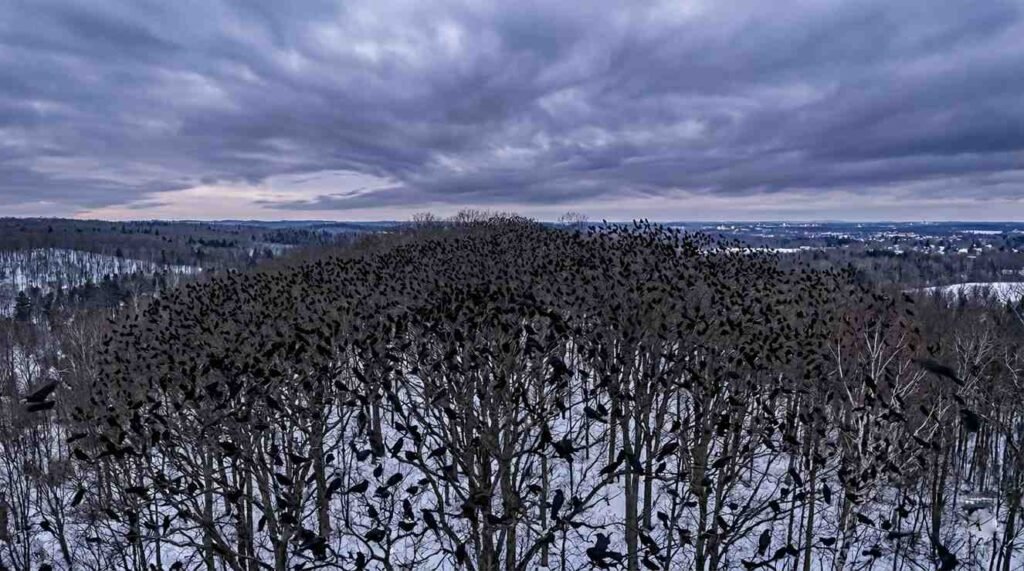
During the harsh winter months, crows abandon their territorial family units and congregate in massive communal roosts. These roosts can contain anywhere from a few hundred to over two million birds. By huddling together in large trees or urban structures, they share body heat, exchange information about food sources, and find safety in numbers from predators like Great Horned Owls.
Communication: More Than Just a “Caw”
To the untrained ear, an American crow bird just makes a harsh caw sound. However, ornithologists have identified over 20 distinct calls used by these birds. Their language is nuanced and complex.
They have specific alarm calls to warn the flock about different types of predators—the warning for a cat on the ground sounds entirely different from the warning for a hawk in the sky. Furthermore, crows have regional dialects. A crow from New York will sound slightly different from a crow in California. If a crow moves to a new region, it will actually learn and adopt the local dialect to fit in with the new flock.
Living With the American Crow Bird
Because the American crow bird is so deeply integrated into our human environments, we often have a love-hate relationship with them. In agricultural areas, large flocks can decimate cornfields, leading to significant financial losses. In suburban areas, they might scatter trash or create noise complaints.
However, many people actively invite crows into their yards. By setting out unsalted peanuts, hard-boiled eggs, or suet, you can easily attract these intelligent birds. Those who feed crows regularly often report the birds bringing them “gifts”—shiny pieces of glass, lost keys, or interesting pebbles left on porch railings as a form of corvid gratitude.
Frequently Asked Questions (FAQs)
Are American crow birds aggressive to humans?
Generally, no. American crows naturally avoid direct conflict with humans. However, during the spring nesting season, they become highly protective of their young. If you walk too close to a tree containing a nest, a crow might swoop or dive-bomb you to scare you away.
How long do American crows live?
In the wild, the average lifespan of an American crow bird is between 7 to 8 years. However, if they manage to avoid predators, disease, and cars, they can live much longer. The oldest recorded wild American crow was over 16 years old, and captive crows have been known to live nearly 30 years.
Can you keep an American crow as a pet?
In the United States, it is strictly illegal to keep an American crow bird as a pet. They are protected under the Migratory Bird Treaty Act. Only licensed wildlife rehabilitators and permitted educational facilities are allowed to hold them in captivity.