
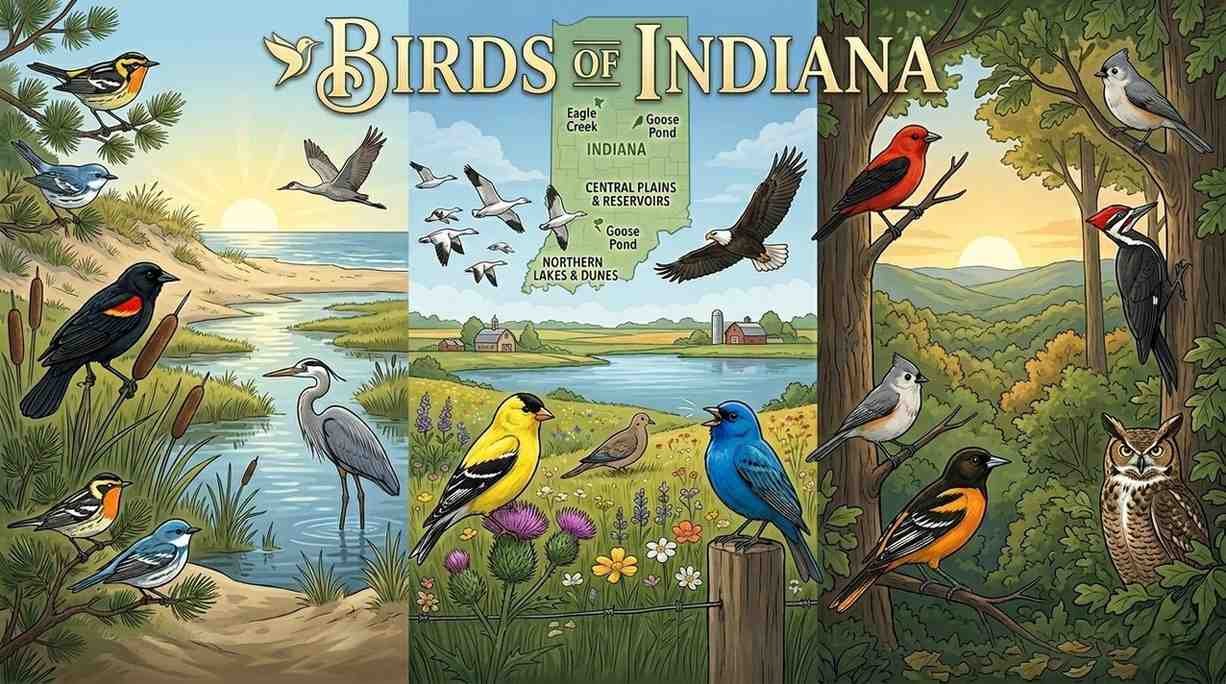
The Birds of Indiana: A Complete Guide to the Crossroads of Migration
The birds of Indiana define an ornithological landscape characterized by diversity and convergence. While often characterized by its agricultural plains, the state’s ecology is far more complex, creating a rich environment that supports nearly 420 recorded bird species. This guide explores the avian life of Indiana, highlighting key species, top birding hotspots, and the conservation…
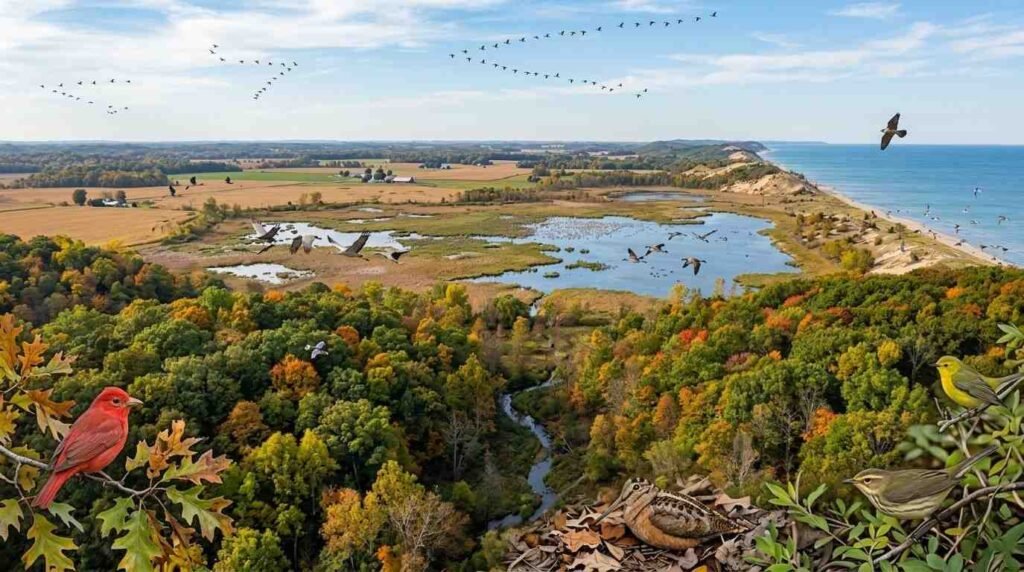
The birds of Indiana define an ornithological landscape characterized by diversity and convergence. While often characterized by its agricultural plains, the state’s ecology is far more complex, creating a rich environment that supports nearly 420 recorded bird species. This guide explores the avian life of Indiana, highlighting key species, top birding hotspots, and the conservation success stories that define the state’s natural history.
Indiana’s strength as a birding destination rests on three geographical pillars. First is its location along the Mississippi Flyway, ensuring massive seasonal influxes of waterfowl, shorebirds, and neotropical warblers during migration. Second is the Indiana Dunes region bordering Lake Michigan in the north, a critical stopover point that attracts pelagic species and rare northern visitors. Finally, the unglaciated, heavily forested hills of southern Indiana provide nesting grounds for species more typical of the deep south, such as the Worm-eating Warbler and the Summer Tanager.
When people think of Indiana, they often picture endless rows of corn and soybeans stretching to the horizon. While agriculture is a major part of the landscape, the “Hoosier State” offers a surprising diversity of habitats that make it a hidden gem for birdwatchers. From the sandy shores of Lake Michigan in the north to the rugged, forested hills of the south, Indiana is a biological crossroads.
Located squarely in the Mississippi Flyway—one of the world’s most important migration routes—Indiana serves as a critical rest stop for millions of birds traveling between Canada and the Gulf of Mexico. Whether you are a backyard enthusiast looking to identify a visitor at your feeder or a serious birder chasing rare waterfowl, Indiana offers year-round opportunities.
1. The Landscape: Why Indiana is a Bird Magnet
To understand the birds of Indiana, one must first understand its geography. The state is not a monolith; it changes drastically from top to bottom.
- The Northern Lakes and Dunes: The northwest corner borders Lake Michigan.2 This “inland sea” acts as a barrier for migrating birds, funneling them along the shoreline.3 This makes the Indiana Dunes one of the best places in the Midwest to see migrating warblers and waterfowl.
- The Central Till Plain: The central part of the state is flat, rich farmland.4 While heavily agricultural, it is dotted with reservoirs and reclaimed wetlands that attract shorebirds and grassland species.
- The Southern Hills: As you move south towards the Ohio River, the glaciers stopped, leaving behind deep valleys and dense hardwood forests. This area, including Brown County and the Hoosier National Forest, is the summer home for colorful tanagers and elusive owls.
2. The Backyard Regulars: Common Birds of Indiana
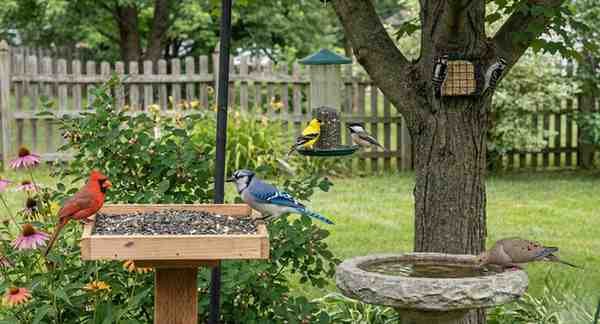
If you live in Indianapolis, Fort Wayne, or Evansville, you don’t need to travel far to see beautiful birds. The suburban and urban areas of Indiana are teeming with life.
The Northern Cardinal: The State Icon
It is impossible to discuss Indiana birds without starting with the Northern Cardinal. Designated the official state bird in 1933, the Cardinal is a year-round resident. The male’s brilliant red plumage and the female’s warm, reddish-brown tones are a staple against the white snow of an Indiana winter. They are frequent feeder visitors, especially favoring sunflower seeds.
The Blue Jay
Loud, intelligent, and strikingly blue, the Blue Jay is the alarm system of the Indiana backyard. They are known for their ability to mimic the calls of hawks, often clearing out a bird feeder by scaring smaller birds away. They play a crucial role in Indiana’s ecosystem by burying acorns, essentially planting oak trees across the state.
The American Goldfinch
Often called the “wild canary,” the American Goldfinch is a bright splash of yellow in the summer. Uniquely, they breed much later than other birds (often in late July or August) to coincide with the blooming of thistles and sunflowers, their primary food sources.
Woodpeckers
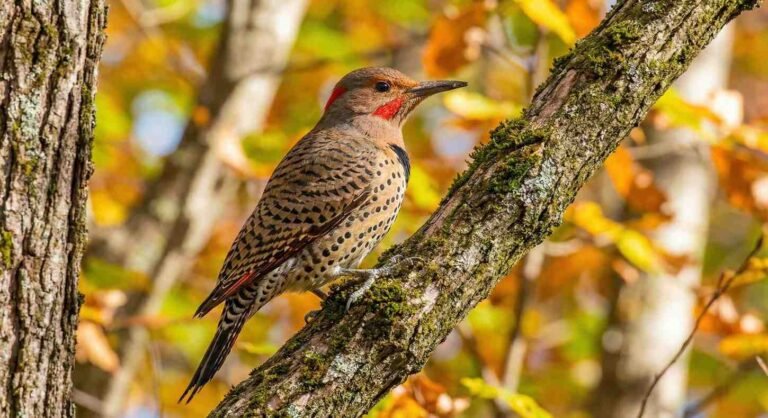
Indiana’s abundant hardwood trees support a healthy population of woodpeckers. The Red-bellied Woodpecker (often confused with the Red-headed Woodpecker) is the most common large woodpecker in suburbs. The smaller Downy Woodpecker is a frequent visitor to suet feeders.5
3. The Spectacle of the Sandhill Crane
Perhaps the most famous birding event in Indiana occurs every autumn at the Jasper-Pulaski Fish and Wildlife Area.6
The Fall Migration
From October through December, tens of thousands of Sandhill Cranes congregate in the shallow marshes of Jasper-Pulaski in northwestern Indiana. These ancient birds, standing nearly four feet tall with a crimson cap and a prehistoric, rattling call, use the area as a staging ground before flying south to Florida.
At peak migration, usually in mid-November, the population can swell to over 30,000 birds. Viewing the cranes fly in at sunset is a spiritual experience for many nature lovers and is widely considered one of the greatest wildlife spectacles in the Midwest.
4. Raptors and the Bald Eagle Comeback
Indiana has a proud history involving the Bald Eagle.7 In the mid-20th century, the eagle population in the state was decimated by habitat loss and DDT poisoning. By the 1970s, they were virtually extinct in the state.
The Reintroduction Success
In the 1980s, the Indiana Department of Natural Resources launched a reintroduction program at Lake Monroe.8 It was a massive success. Today, Bald Eagles are a common sight across the state, particularly along the Wabash and Ohio Rivers and major reservoirs like Patoka Lake.9 In winter, hundreds of eagles gather near dams where open water allows them to fish, drawing photographers from miles away.10
Hawks and Owls
- Red-tailed Hawks: You can spot these large raptors perched on telephone poles along nearly every highway in Indiana (I-65 and I-70 are prime viewing spots).
- Barred Owls: In the southern forests and swampy woodlands, the “Who-cooks-for-you?”
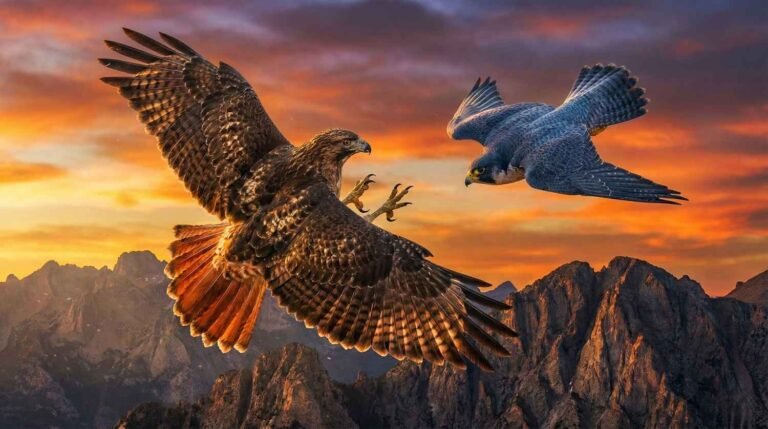
- Peregrine Falcons: These speed demons have adapted to city life and can often be seen nesting on skyscrapers in downtown Indianapolis and South Bend, where they hunt pigeons.
5. Waterfowl and Wetlands: The Goose Pond Story
While much of Indiana’s original wetlands were drained for farming in the 1800s, massive restoration efforts have brought the birds back.11
Goose Pond Fish and Wildlife Area in Greene County is the crown jewel of this effort. Once a massive farm, it was restored to wetlands in the early 2000s. It has since become one of the premier birding destinations in the United States. It hosts rare visitors like the Whooping Crane (one of the rarest birds in North America), American White Pelicans, and dozens of species of ducks and shorebirds.
6. The Seasonal Calendar: When to Watch
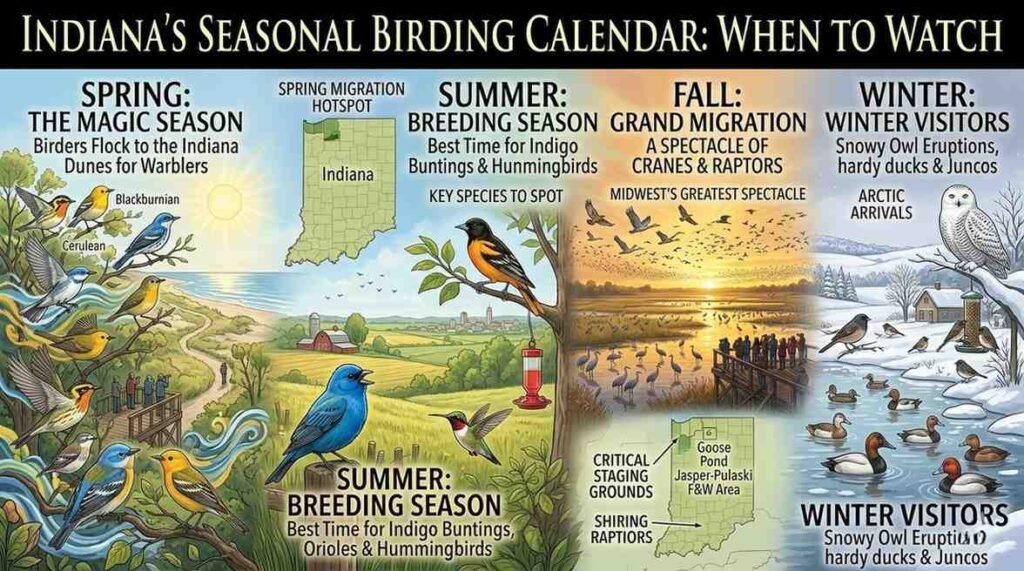
Birding in Indiana is a year-round pursuit, but the cast of characters changes with the seasons.
- Spring (March – May): This is the “Magic Season.” The Indiana Dunes come alive with Warblers. These tiny, colorful birds (often called “butterflies of the bird world”) migrate through in waves. Birders flock to the dunes to see Blackburnian, Cerulean, and Prothonotary Warblers.
- Summer (June – August): The breeding season. This is the best time to see Indigo Buntings, Baltimore Orioles, and Ruby-throated Hummingbirds.
- Fall (September – November): Migration heads south. This is the prime time for the Sandhill Crane spectacle and for watching raptors ride the thermals.
- Winter (December – February): While many birds leave, others arrive. Snowy Owls occasionally erupt into northern Indiana from the Arctic.12 Dark-eyed Juncos arrive in backyards, and reservoirs fill with hardy diving ducks.
7. Top 5 Birding Hotspots in Indiana
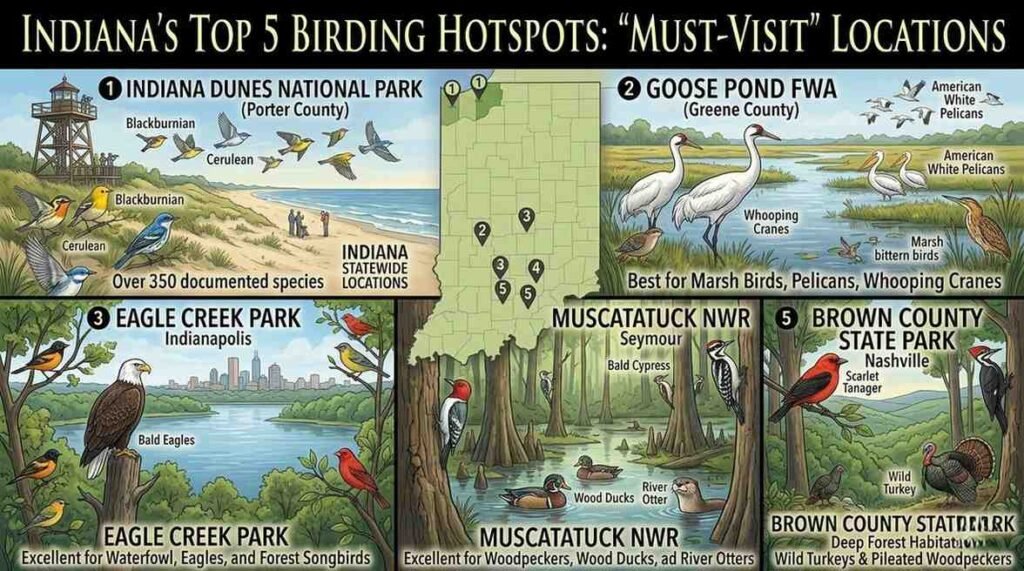
If you are planning a trip, these are the “Must-Visit” locations for any birder.
- Indiana Dunes National Park (Porter County): The diverse habitat of beach, dune, marsh, and forest attracts over 350 documented species.13 The “Longshore Tower” is famous for counting migrating birds.14
- Goose Pond FWA (Greene County): Best for marsh birds, pelicans, and rare Whooping Cranes.
- Eagle Creek Park (Indianapolis): One of the largest municipal parks in the country, it is excellent for spotting waterfowl, eagles, and forest songbirds right in the city.15
- Muscatatuck National Wildlife Refuge (Seymour): A swampy, forested refuge that is excellent for woodpeckers, wood ducks, and river otters.
- Brown County State Park (Nashville): The largest state park, offering deep forest habitat perfect for Wild Turkeys, Pileated Woodpeckers, and Scarlet Tanagers.16
8. Rare and Notable Visitors
Indiana’s location means it occasionally gets “accidental” tourists that send the birding community into a frenzy.
- Snowy Owls: Every few years, an “irruption” occurs, and these white ghosts of the north are spotted in cornfields in northern Indiana.17
- American White Pelicans: Once rare, these massive birds with 9-foot wingspans are now regular stopovers at large reservoirs.
- Whooping Cranes: An experimental population migrates through Indiana, often following ultralight aircraft in the early days of the reintroduction program. Seeing one is a highlight of a lifetime.
9. Tips for Indiana Birdwatching
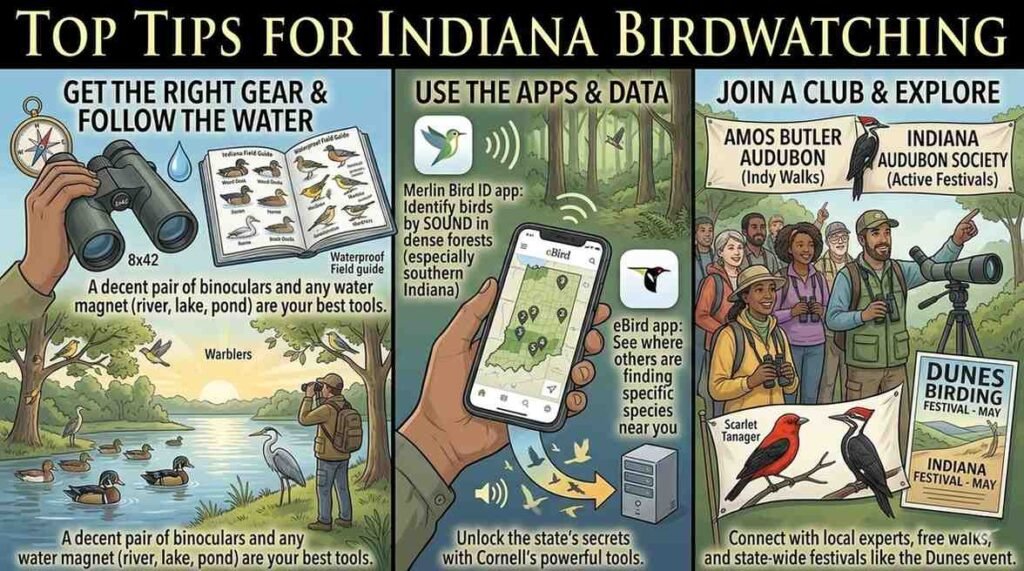
- Get the Right Gear: You don’t need expensive equipment. A decent pair of 8×42 binoculars is perfect for Indiana’s mix of open field and forest birding.
- Use the Apps: The Cornell Lab of Ornithology’s Merlin Bird ID app is fantastic for identifying birds by sound, which is crucial in the dense summer forests of southern Indiana.18 eBird will show you exactly where other birders are seeing specific species near you.
- Follow the Water: In a land-locked state, water is a magnet. Any river, lake, or retention pond is worth checking.
- Join a Club: The Amos Butler Audubon Society (based in Indy) and other local chapters lead free bird walks.19 The Indiana Audubon Society is extremely active and hosts festivals, including the Dunes Birding Festival in May.20


One Comment