The Ultimate Sparrow Guide: Identification, Feeding, and Backyard Birding
Imagine: You’re sitting on your porch with a fresh cup of coffee and suddenly the sound of a sparrow or other small bird chirping catches your attention. A flock of small, brown birds descends onto your garden, chirping, pecking, and adding to the beauty of your yard. Whether you live in a large suburban home…
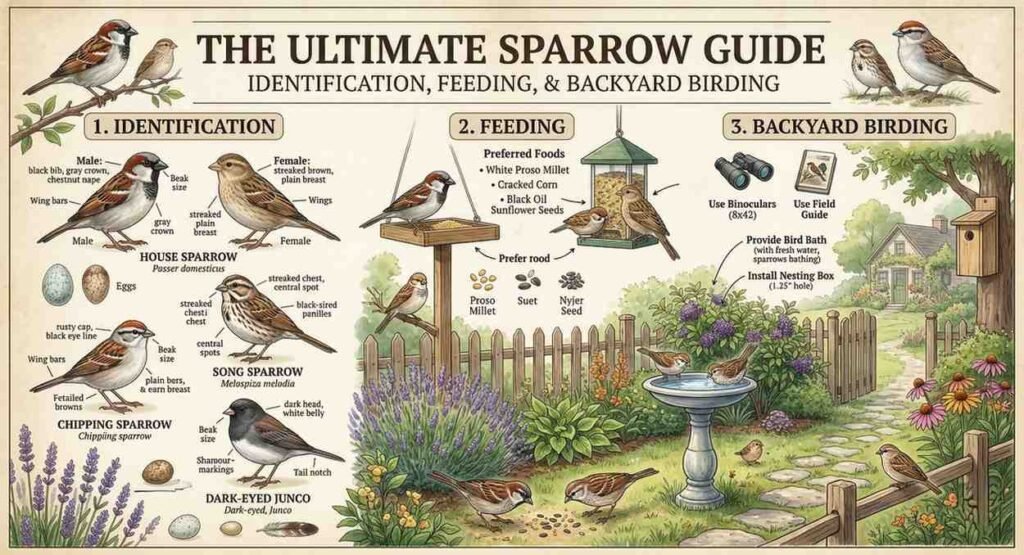
Imagine: You’re sitting on your porch with a fresh cup of coffee and suddenly the sound of a sparrow or other small bird chirping catches your attention. A flock of small, brown birds descends onto your garden, chirping, pecking, and adding to the beauty of your yard.
Whether you live in a large suburban home in the United States or a quiet country garden in the United Kingdom, you’ve probably encountered these sparrows. They’re ubiquitous, adaptable, and hardy. But backyard birders often get them wrong.
Are these sparrows beautiful songbirds, or aggressive, grain-stealing, pestering birds? The truth depends on your area and the specific species of bird. In this detailed guide, we are going to uncover all the secrets of this famous “Little Brown Bird” of the bird world.
1. Demystifying the Sparrow: What Are You Looking At?
“Before we talk about bird feeders, we need to clear up a huge misconception. When people point to a small brown bird and say, “Look, a sparrow!” they may actually be referring to one of two completely different families of birds.”
The New World Sparrows (Passerellidae)
If you live in North America, these are your native sparrows. This family includes beloved garden visitors like the Song Sparrow and the Chipping Sparrow. They are typically found foraging in brushy undergrowth, singing complex melodies. These birds are an integral, protected part of the North American ecosystem.
The Old World Sparrows (Passeridae)
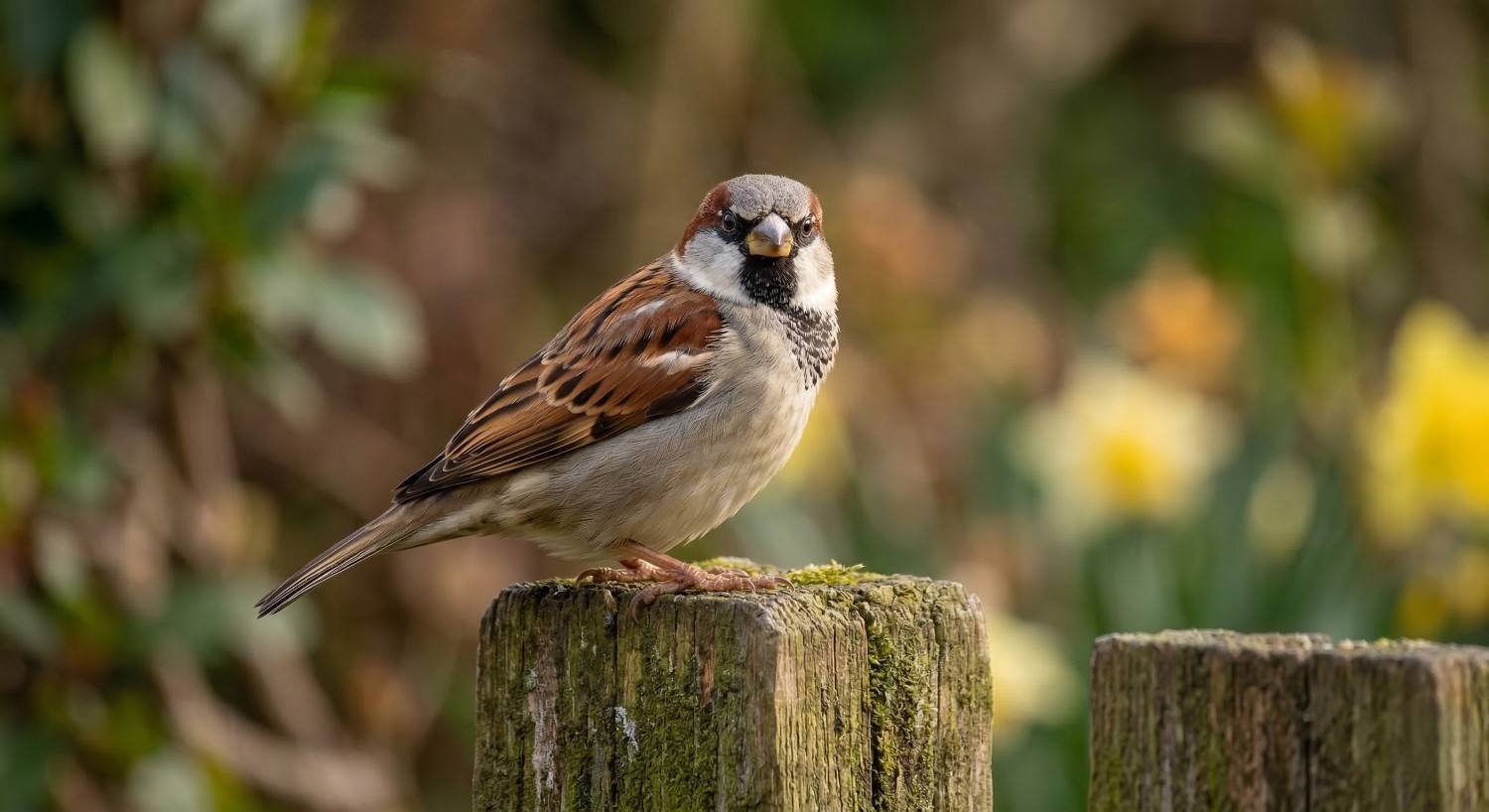
This family includes the infamous House Sparrow (Passer domesticus). Originally native to Europe and Asia, the House Sparrow is the bird you see nesting in hardware store rafters and hopping around outdoor cafes. Introduced to New York in the 1850s, it quickly spread across the continent. Because it evolved alongside humans for thousands of years, it is unparalleled in its ability to thrive in urban environments.
Knowing the difference between these two families is the foundation of responsible backyard birding.
Identification Skills: Common Sparrows of the US and UK
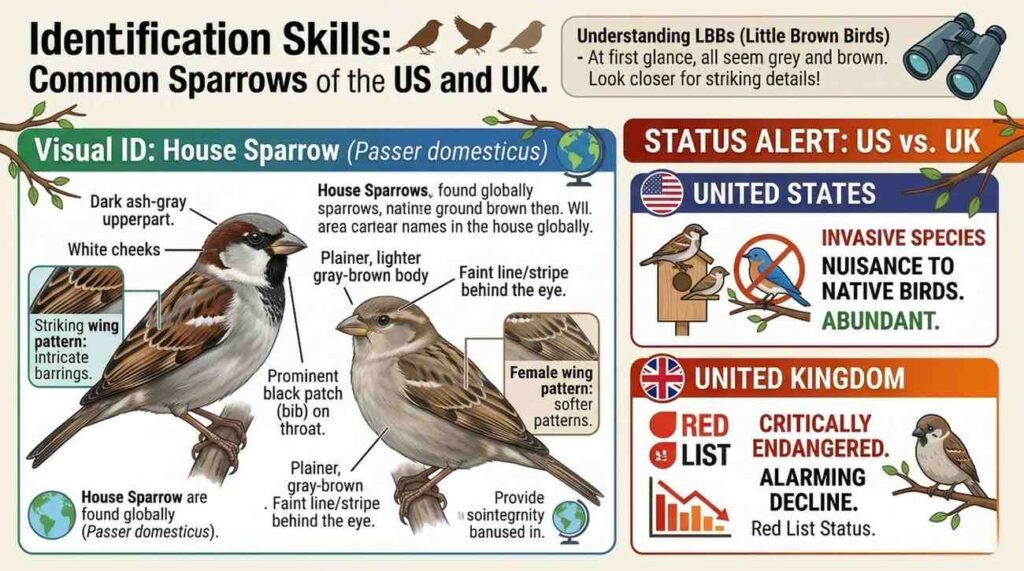
Birdwatchers affectionately call sparrows LBBs (Little Brown Birds), because at first glance they all look the same, gray and brown. But look through a pair of binoculars, and you’ll immediately notice the striking and distinct patterns on their wings. Let’s talk about the most common sparrow species.
House Sparrow (found all over the world)
Visual ID: The male sparrow has a dark ash-gray upperpart, white cheeks, and a prominent black patch (like a black handkerchief or bib) running down the throat. The female sparrow is a plainer, lighter gray-brown color, with a faint line or stripe behind the eye.
Status Alert: In the US, they are considered an invasive species that is a nuisance to native birds. In contrast, in the UK, their numbers have declined to an alarming level, leading to them being listed as critically endangered on the Red List.۔
The Song Sparrow (Native to US/Canada)
- Visual ID: These birds look heavily streaked. Their chest is covered in brown and white stripes that converge into a distinct, dark central spot right in the middle of their breast.
- Behavior: Their song is legendary, usually starting with three bright notes followed by a rapid trill.
The Chipping Sparrow (Native to US/Canada)
- Visual ID: A crisp-looking bird sporting a vibrant, rusty-red cap bordered by a bright white eyebrow and a sharp black line running through the eye.
- Habitat: They favor open woodlands, parks, and wide grassy lawns.
The Eurasian Tree Sparrow (Native to UK/Europe)
- Visual ID: Often confused with the male House Sparrow, the Tree Sparrow is smaller. It has a distinct, isolated black spot on a pure white cheek, and a rich chestnut crown. Males and females look identical.
- Habitat: They avoid heavy urbanization, preferring quiet farmland and rural hedgerows.
3. The Backyard Diner: How to Attract (and Feed) Sparrows
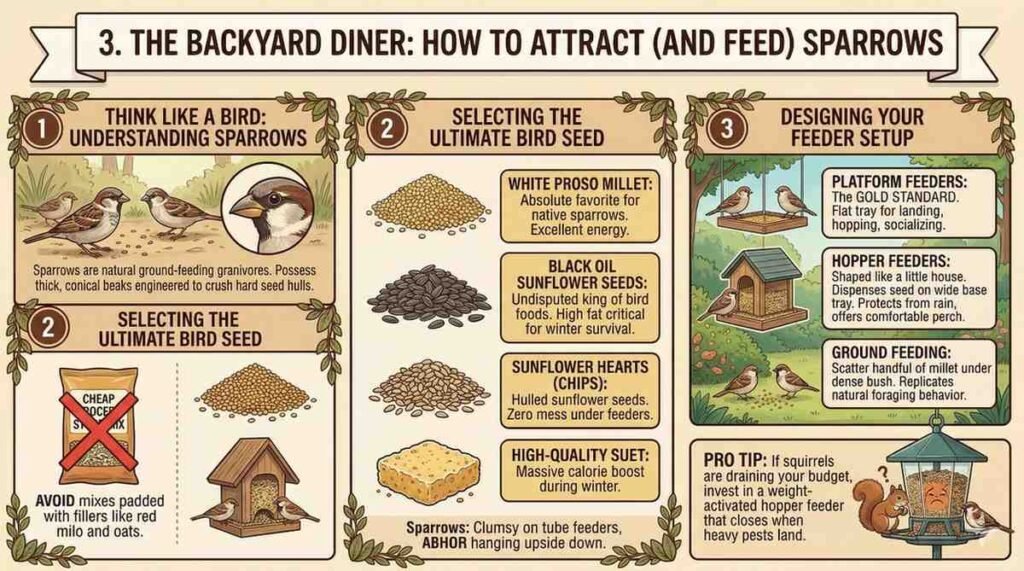
If you want to turn your backyard into an avian oasis, you have to think like a bird. Sparrows are naturally ground-feeding granivores. They possess thick, conical beaks engineered to crush hard seed hulls.
Selecting the Ultimate Bird Seed
Avoid cheap grocery store “wild bird seed” mixes padded with fillers like red milo and oats. To specifically please sparrows, stock up on:
- White Proso Millet: This is the absolute favorite for native sparrows. It provides excellent energy.
- Black Oil Sunflower Seeds: The undisputed king of bird foods. The high fat content is critical for winter survival.
- Sunflower Hearts (Chips): If you want zero mess under your feeders, buy hulled sunflower seeds.
- High-Quality Suet: During winter, suet cakes offer sparrows a massive, much-needed calorie boost.
Designing Your Feeder Setup
Because they are ground foragers, sparrows are clumsy on tube feeders and abhor hanging upside down.
- Platform Feeders: The gold standard. A flat tray gives them room to land, hop, and socialize.
- Hopper Feeders: Shaped like a little house, these dispense seed onto a wide base tray, protecting food from rain while offering a comfortable perch.
- Ground Feeding: Scattering a handful of millet under a dense bush replicates their natural foraging behavior.
Pro Tip: If squirrels are draining your budget, invest in a weight-activated hopper feeder that closes when heavy pests land on it.
4. Habitat and Nesting: Shelter for the Flock
Native sparrows shy away from perfectly manicured lawns, thriving instead in “messy” environments. Plant dense native shrubs, evergreens, and thickets to provide hiding spots from hawks. Grow seed-bearing flowers like coneflowers and leave the dried seed heads standing all winter.
When it comes to nesting, native US sparrows build open, cup-shaped nests hidden deep within shrubs. They will not use a birdhouse.
The House Sparrow, however, is a cavity nester.
- In the UK: Installing a multi-compartment “Sparrow Terrace” on your house is highly encouraged to support their declining numbers.
- In the US: House Sparrows notoriously invade bluebird boxes. If you are breeding native birds, you must monitor your boxes closely to prevent House Sparrows from taking over.
5. The Great Sparrow Debate: Pest vs. Conservation
Depending on where you live, the House Sparrow requires a different approach.
The US Dilemma: Managing the Invasion
In North America, House Sparrows violently outcompete native Eastern Bluebirds and Purple Martins. To manage them:
- Switch Seeds: Temporarily fill feeders with pure Nyjer (thistle) or Safflower seed, which House Sparrows generally dislike.
- Shorten Perches: Trim tube feeder perches down to a half-inch. Nimble finches can still cling, but House Sparrows will struggle.
The UK Crisis: Saving the Urban Brawler
The House Sparrow population in the UK has crashed by over 60% due to pesticide use and modern home construction. UK homeowners are on the conservation front lines.
- Feed Mealworms: During spring, parent sparrows desperately need high-protein insects for their chicks. Offering dried mealworms boosts survival rates.
6. Gear Up: Tools for the Dedicated Birdwatcher
Birdwatching gets you outdoors and reconnects you with nature. To appreciate sparrows, you need the right gear.
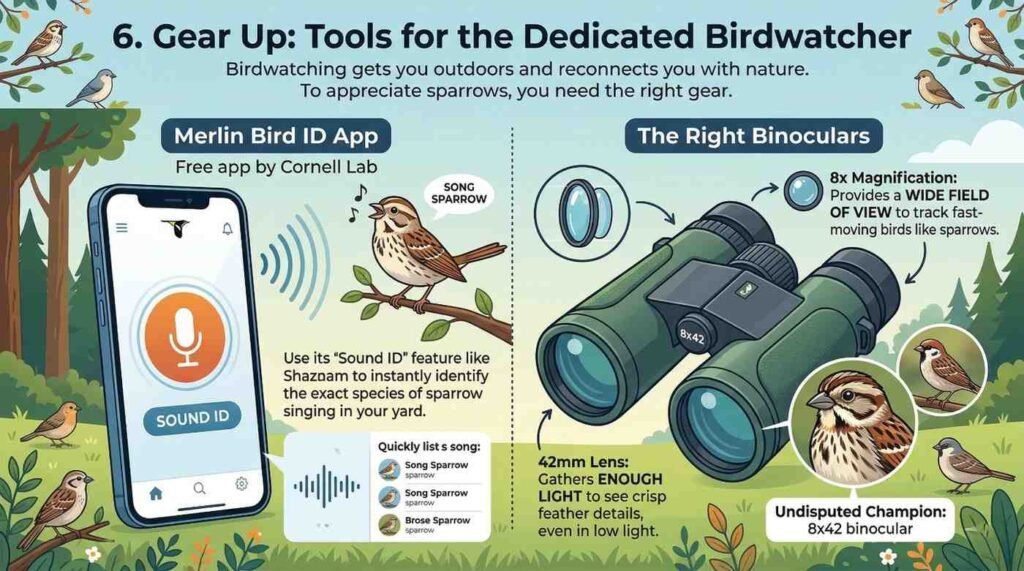
Merlin Bird ID App: This free app by Cornell Lab is magic. Use its “Sound ID” feature like Shazam to instantly identify the exact species of sparrow singing in your yard.
The Right Binoculars: The undisputed champion is the 8×42 binocular. The 8x magnification provides a wide field of view to track fast-moving birds, while the 42mm lens gathers enough light to see crisp feather details.
Frequently Asked Questions (FAQs)
Question: What is the average lifespan of a wild sparrow?
Answer: Due to harsh weather and the threat of predators, a typical wild sparrow usually lives for 3 to 5 years. However, surprisingly, the longest-lived house sparrow ever recorded lived for almost 16 years!
Question: Do sparrows migrate when the weather changes?
Answer: House sparrows stay in the same place all year round and do not migrate. However, some native species such as the Chipping Sparrow and the White-throated Sparrow are migratory sparrows. They travel thousands of miles south to escape the harsh winters.
Question: What is the difference between a Sparrow and a Finch?
Answer: Finches often have bright yellow or red feathers, and their beaks are thicker for cracking hard seeds. In contrast, sparrows are usually gray (brown, grey) in color to help them hide from predators on the ground, and they spend most of their time foraging for food in the soil.