
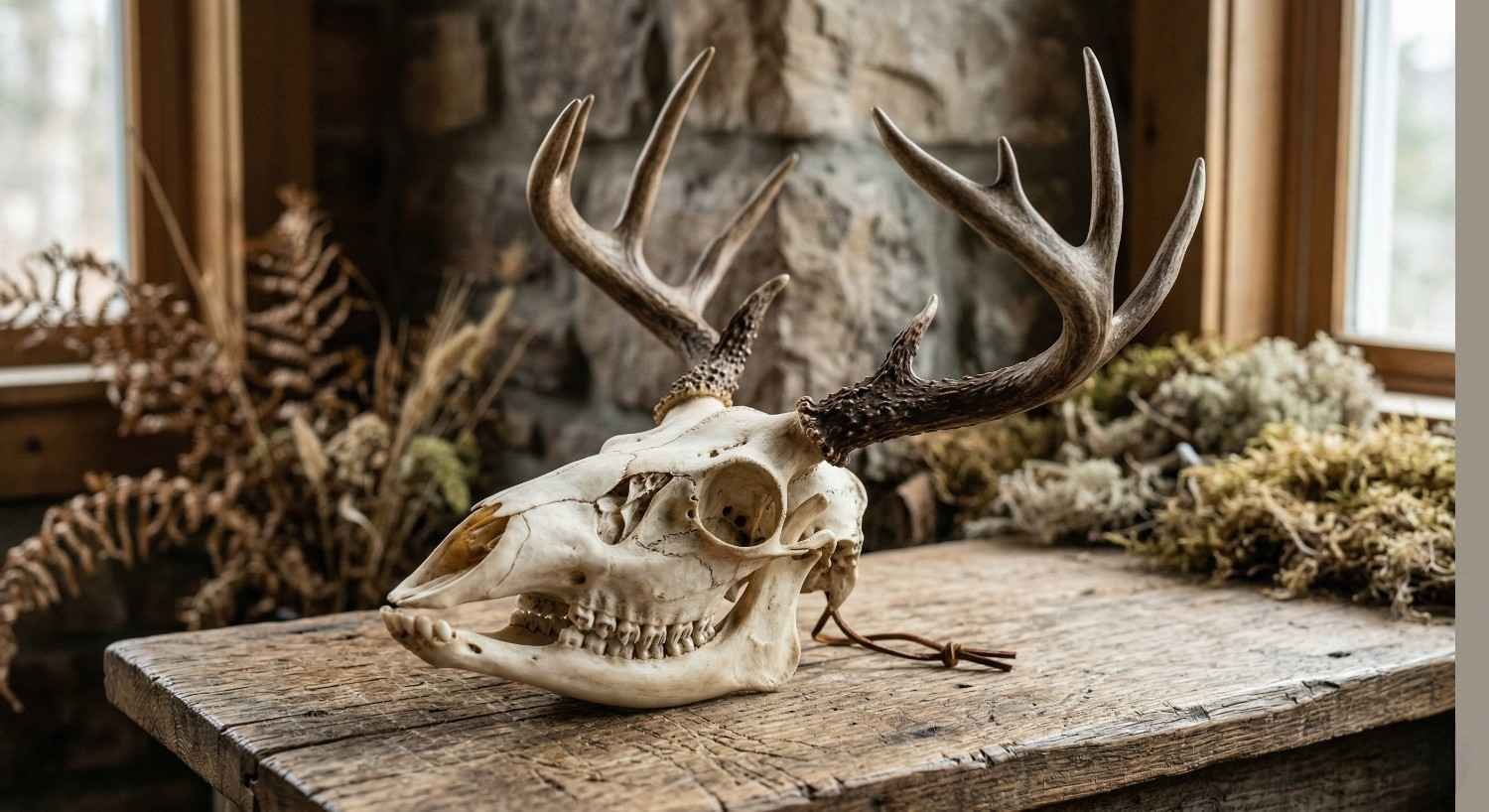
The Ultimate Guide to the Deer Skull: Cleaning, Decor, and European Mounts
Whether you’re an avid hunter looking to preserve a memento, a hiker in the woods who’s found a natural treasure, or an interior designer looking for something rustic and unique to adorn the center of your home—a deer skull has a timeless appeal. For decades, the ‘shoulder mount’ (a stuffed pelt up to the neck)…
Whether you’re an avid hunter looking to preserve a memento, a hiker in the woods who’s found a natural treasure, or an interior designer looking for something rustic and unique to adorn the center of your home—a deer skull has a timeless appeal.
For decades, the ‘shoulder mount’ (a stuffed pelt up to the neck) was considered the ultimate hunting display. However, today the “European mount” (which displays a clear, shiny white deer skull with natural antlers) has revolutionized the world of taxidermy and interior design. Not only is it visually appealing and takes up less space, it also strikes the perfect balance between rugged outdoor culture and modern minimalist style.
But the question is, how do you turn a raw skull into a work of art? What is the proper way to clean it without damaging its bones? And if you’re not a hunter, where can you legally and ethically obtain one?
Let’s delve into the fascinating world of deer skulls, discussing everything from DIY cleaning methods to professional decorating techniques.

Why Are Deer Skulls So Popular?
If you browse through high-end home decor magazines in the United States or the United Kingdom, you will frequently spot a deer skull gracing a living room wall or resting elegantly on a mantlepiece. But why the sudden surge in popularity?
1. The Aesthetic Appeal
A perfectly cleaned and whitened deer skull is a masterpiece of natural architecture. The intricate sutures of the bone plates, the delicate nasal cavities, and the rugged, sweeping texture of the antlers provide incredible visual contrast. They fit seamlessly into a variety of decor styles, including rustic cabin, modern farmhouse, bohemian chic, and even gothic or industrial interiors.
2. Cost-Effective Taxidermy
For hunters, preserving a deer skull (often called a European mount or “euro mount”) is incredibly cost-effective. While a traditional shoulder taxidermy mount can cost anywhere from $600 to over $1,000 and take a year to complete, a European mount can be done at home for the cost of a few basic household supplies and some elbow grease.
3. Connection to Nature
Many people collect animal bones as a way to honor the animal and maintain a tangible connection to the wilderness. Finding a naturally shed antler or a clean skull in the woods is considered a lucky and profound experience by many outdoorsmen and hikers.
How to Clean and Prepare a Deer Skull: The DIY European Mount
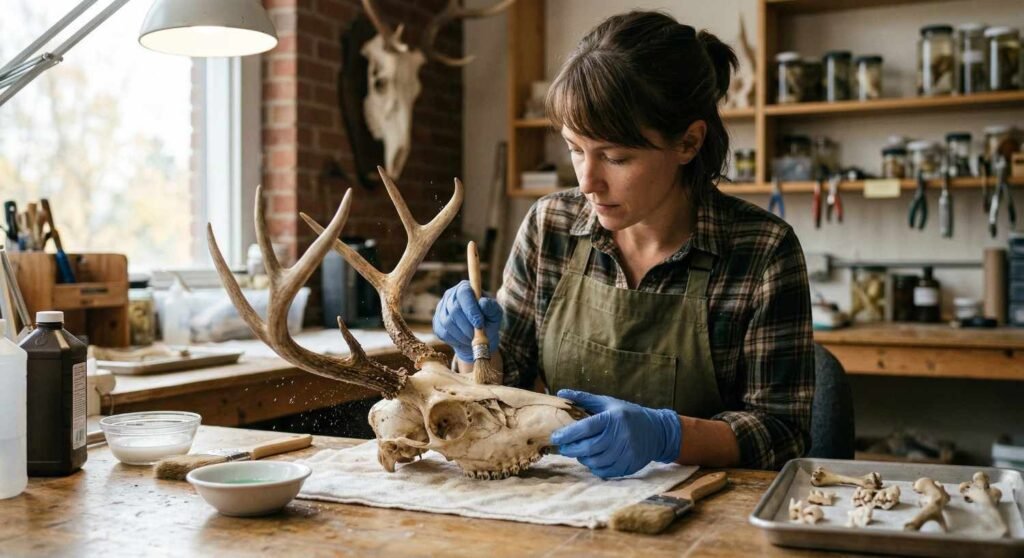
If you have acquired a raw deer skull, the cleaning process is the most crucial step. Rushing this process or using the wrong chemicals can irreversibly damage the bone. Here is a comprehensive, step-by-step guide to cleaning a deer skull safely.
Step 1: Skinning and Defleshing
Before you can begin the deep cleaning process, you must remove as much tissue, skin, and muscle from the skull as possible. Use a sharp scalpel or a small hunting knife to carefully cut away the hide. You will also need to remove the eyes, brain, and lower jaw (unless you want to keep the jaw attached for your display).
- Pro Tip: Removing the brain can be tricky. Many people use a piece of stiff wire with a small hook bent into the end to scramble and pull out the brain tissue through the back of the skull (the foramen magnum).
Step 2: Choosing Your Cleaning Method
There are a few different ways to remove the remaining tissue from the bone.
- Simmering (The Fastest Method): This is the most popular DIY method. Submerge the skull in a large pot of water (keeping the antlers out of the water to prevent discoloration) and add a squirt of grease-cutting dish soap. Bring the water to a gentle simmer—do not let it come to a rolling boil! Boiling water will cook the fat into the bone, turning it yellow, and can cause the delicate nasal bones to crack and fall apart. Simmer for a few hours, periodically pulling the skull out to scrape away softening tissue with a soft wire brush or a dull knife.
- Maceration (The Slow, Smelly Method): This involves submerging the skull in a bucket of water and letting naturally occurring bacteria eat away the flesh over several weeks or months. It is highly effective and gentle on the bone, but it produces a horrific odor. This must be done far away from your house!
- Dermestid Beetles (The Professional Method): Taxidermists use flesh-eating beetles to clean skulls. The beetles eat every microscopic piece of meat without damaging the bone. Unless you want to maintain a colony of beetles in your garage, this method is best left to the pros.
Step 3: Degreasing the Bone
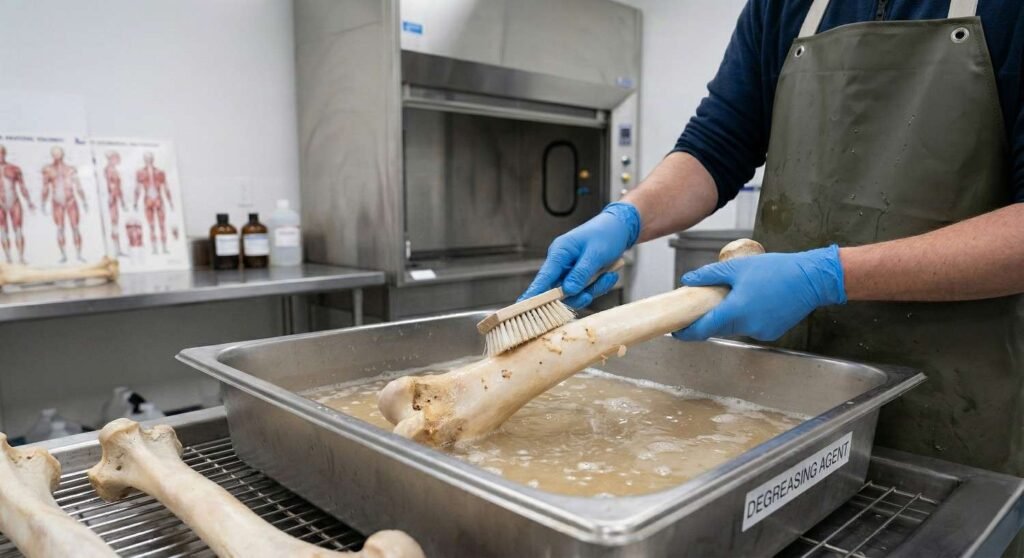
Even after the meat is gone, animal bones hold a lot of natural grease. If you don’t remove this grease, your deer skull will eventually turn yellow and emit a foul smell. Submerge the cleaned skull in a bucket of warm water mixed with a heavy-duty degreasing dish soap (like Dawn). Leave it for a few weeks, changing the water whenever it gets cloudy.
The Whitening Process: Getting That Perfect Museum White
Here is the golden rule of skull cleaning: Never, ever use bleach on a deer skull. Chlorine bleach is highly corrosive to bone. It will break down the structural integrity of the skull, causing it to become chalky, flaky, and eventually crumble into dust.
To achieve that beautiful, museum-quality white finish, you must use hydrogen peroxide.
- Gather Your Supplies: Purchase high-volume hydrogen peroxide. You can buy liquid peroxide (usually 12% or 40-volume) from a beauty supply store, or you can use basic 3% peroxide from the pharmacy (though it will take longer). You will also need a product called “Basic White” powder, which is a hair-lightening bleach powder.
- Mix a Paste: Mix the liquid hydrogen peroxide with the Basic White powder until it forms a thick paste, similar to the consistency of pancake batter.
- Apply to the Skull: Using a paintbrush, paint this mixture generously all over the bare bone of the deer skull. Be extremely careful not to get this paste on the antlers! If you do, it will bleach the natural brown color right out of them. Wrap the base of the antlers in plastic wrap and electrical tape to protect them.
- Wrap and Wait: Wrap the paste-covered skull in a plastic trash bag or plastic wrap to keep the mixture from drying out. Let it sit for 24 hours.
- Rinse and Dry: Rinse the paste off thoroughly with a hose. Set the skull out in the bright sunlight to dry. The UV rays from the sun will activate the remaining peroxide, turning the skull a brilliant, pure white.
[Image: Painting whitening paste onto a clean deer skull bone.]
Creative Ways to Display Your Deer Skull
Once your deer skull is pristine and white, it is time to display it. The versatility of a European mount means you have endless options to match your home’s aesthetic.
1. The Classic Wall Plaque
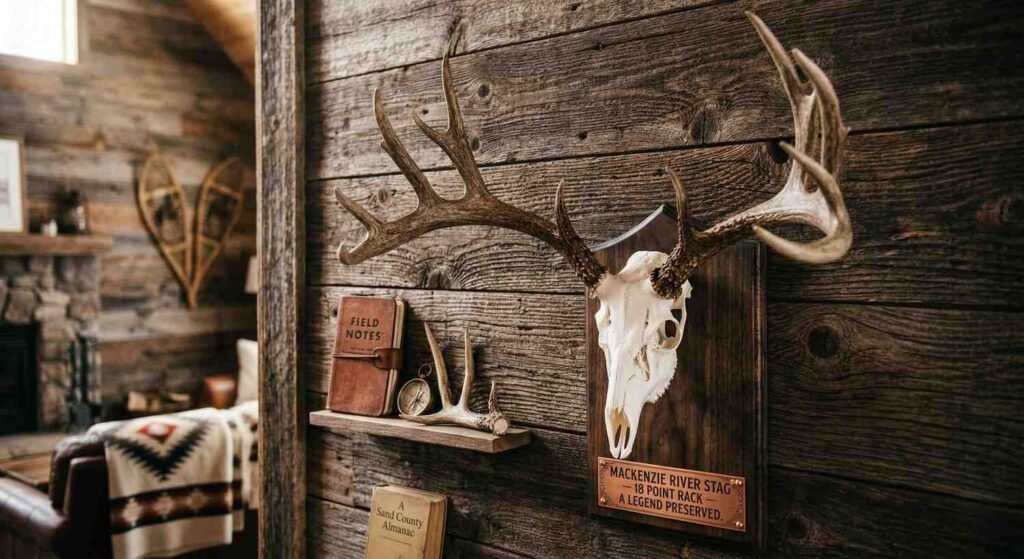
The most traditional way to display a deer skull is mounting it on a wooden plaque. You can use reclaimed barn wood for a rustic feel, or a sleek piece of dark walnut or mahogany for a more refined, traditional look. You can attach the skull using specialized metal skull brackets that slide into the brain cavity, allowing the skull to hang securely without drilling holes into the visible bone.
2. Tabletop and Pedestal Displays
If you don’t want to put holes in your walls, a deer skull looks fantastic resting on a flat surface. You can place it on a bookshelf, use it as a centerpiece on a dining room table alongside some greenery and candles, or mount it on a custom metal tabletop pedestal for a museum-like presentation.
3. Artistic Modifications
For the more creatively inclined, a blank white deer skull is the perfect canvas.
- Carving: Highly skilled artisans use Dremel tools to carve intricate geometric or floral lace patterns directly into the bone.
- Painting: You can paint the skull black, metallic gold, or bronze for an industrial look, or paint intricate turquoise mandala designs for a southwestern boho vibe.
- Beading and Crystals: Some artists attach crushed amethyst, quartz crystals, or intricate beadwork to the skull, turning it into a spectacular piece of fantasy-inspired art.
Ethical Sourcing and Legal Considerations
If you love the look of a deer skull but are not a hunter, you might be wondering where to get one. It is incredibly important to source your bones ethically and legally.
United States and UK Laws
In both the US and the UK, laws regarding the possession and sale of wildlife parts can be strict.
- In the US, you can generally pick up naturally shed antlers without an issue. However, picking up a full skull (called a “deadhead”) often requires a salvage tag or permission from your state’s Department of Fish and Wildlife to prove you did not poach the animal.
- In the UK, you can collect naturally found skulls, but it is illegal to sell them if the animal was killed illegally. Always ensure you are abiding by local wildlife regulations.
Where to Buy
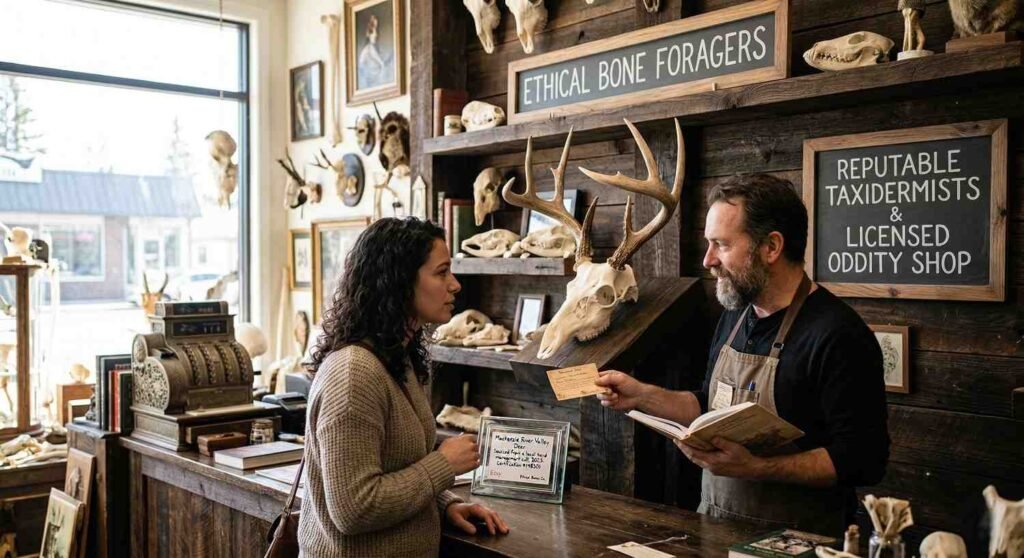
If you want to buy a ready-made European mount, look for reputable taxidermists, licensed oddity shops, or ethical bone foragers on platforms like Etsy. A reputable seller should always be able to tell you exactly where and how the deer skull was sourced.
Conclusion
The deer skull is far more than just a relic of the hunting woods; it is a stunning piece of natural history and a highly versatile element of modern interior design. Whether you decide to roll up your sleeves and clean a European mount yourself, or you choose to purchase an intricately carved artistic piece, a well-preserved skull is guaranteed to be a magnificent conversation starter in your home for decades to come.





One Comment