
The Ultimate Guide to Valais Blacknose Sheep: Care, Cost, and Characteristics
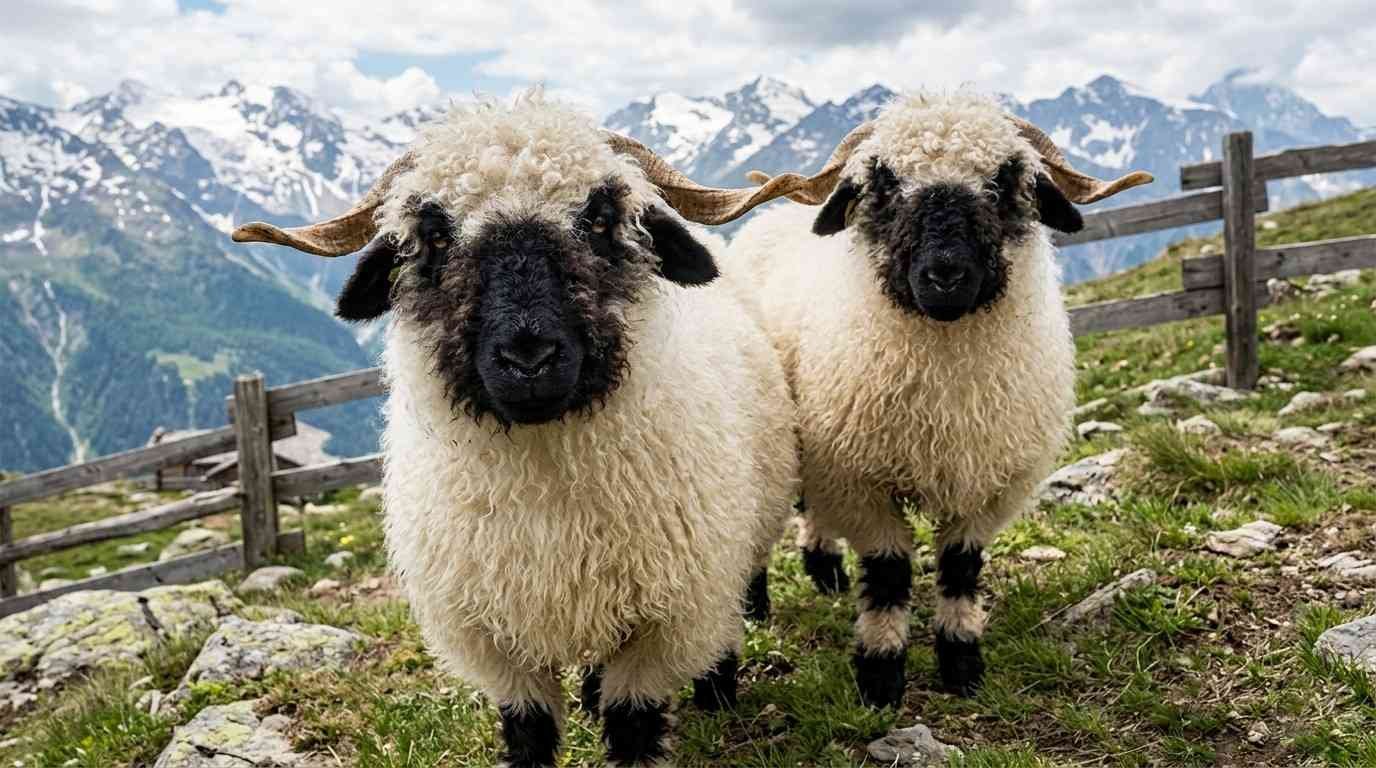
TheValais Blacknose Sheep is all over social media these days due to its immense beauty, and if you have ever seen a farm animal that looks like a dog with a black face and wavy horns, then it is definitely this breed. Due to their innocence and charm, they are called the “most beautiful sheep…
TheValais Blacknose Sheep is all over social media these days due to its immense beauty, and if you have ever seen a farm animal that looks like a dog with a black face and wavy horns, then it is definitely this breed. Due to their innocence and charm, they are called the “most beautiful sheep in the world”, and this unique recognition has created a stir in the world of herding.
Beyond mere external beauty, these animals are proving to be a very profitable investment in the agricultural sector, especially in the US, UK and other countries where they are in high demand. Whether you are an experienced farmer looking to diversify your herd, or an entrepreneur from a rural area planning to enter the livestock market, it is very important for you to know about this breed.
In this comprehensive guide we will provide all the information you need about Valais Black Nose sheep, including their breed standards, distinctive characteristics, pasture management, daily care and the economic benefits associated with raising them.
What is a Valais Blacknose Sheep?
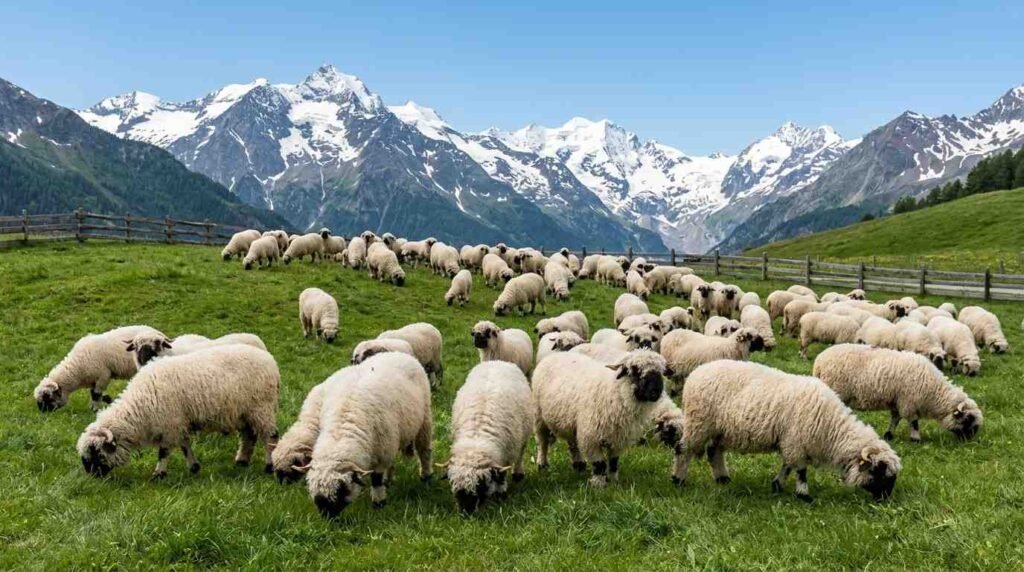
Native to the cold and harsh mountain ranges of the Valais region of the Swiss Alps, the Valais Black Nose is a historic and heritage breed of sheep, endowed with immense endurance to withstand the harshest conditions. Historically, Swiss farmers relied on them for a dual purpose: their coarse wool (which is considered excellent for carpets and felt) and their meat.
Raised at such high altitudes and in the harshest climates, these sheep are exceptionally hardy and strong. They spend their summers grazing on the high, steep and rocky slopes of the Alps, while being driven down to the sheltered valleys during the harsh winter months.
Today, while their traditional use and importance in Switzerland still remain, their global popularity has completely changed. Today, throughout the United States and the United Kingdom, they are bred primarily for their excellent genetics, excellent showmanship, and extremely friendly temperament. These traits have made them highly prized and sought after as pasture pets and high-quality breeding stock worldwide.
The Striking Characteristics of the Valais Blacknose
What sets this breed apart from your standard commercial flock? It all comes down to their unmistakable appearance and dog-like personalities.
Unique Appearance and Strict Breed Standards
For any Willis Black Nose sheep to be officially recognized as purebred, they must meet the strictest standards set by Swiss registries and adopted by international organizations.
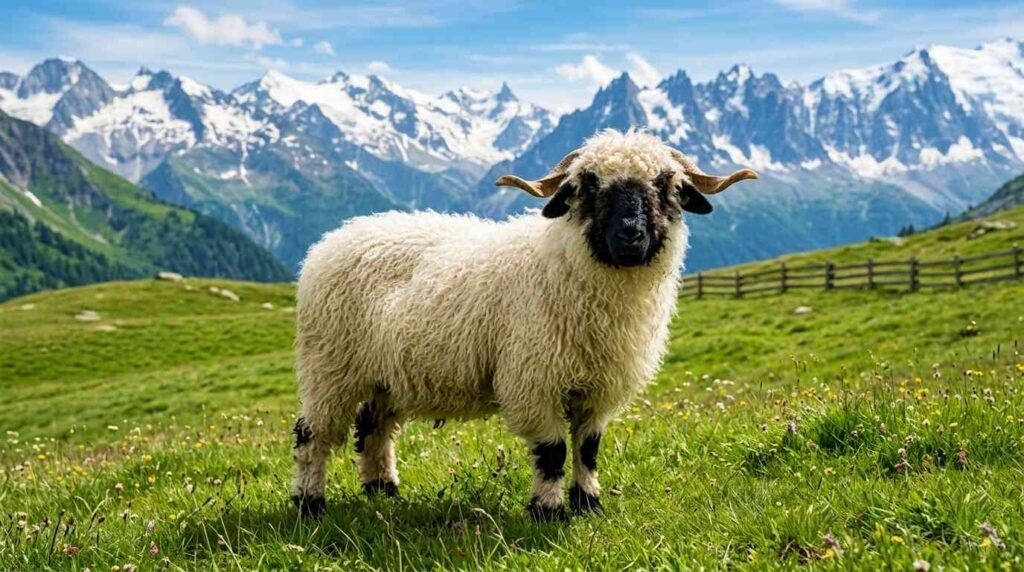
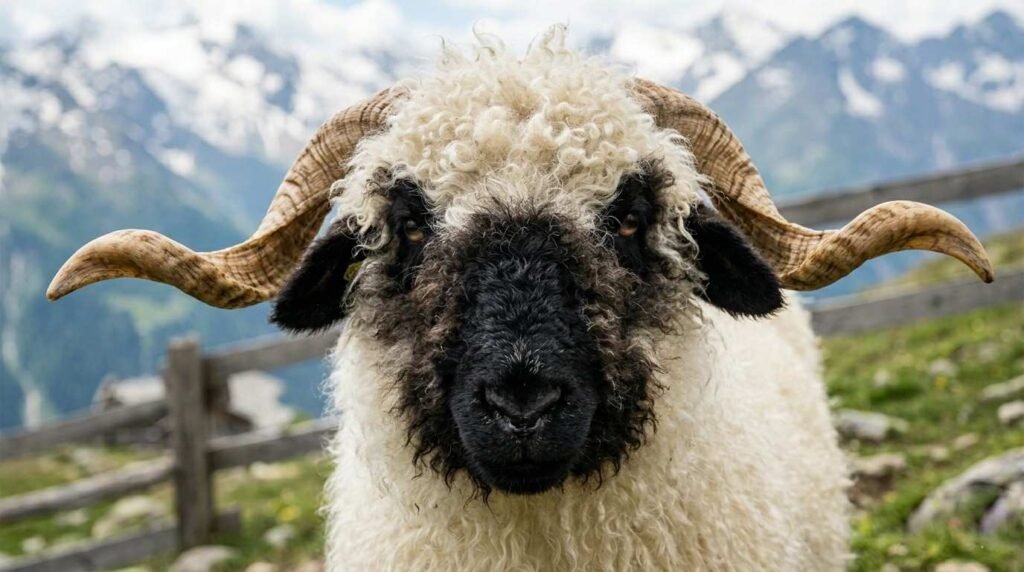
- The Markings: The black markings on their bodies are their most distinctive feature. Their noses must be completely black, and this blackness extends to the middle of the forehead, perfectly matching the black circles around the eyes. Their ears are completely black, and they have prominent black “boots” (sock-like markings) on all four legs, while black spots are also found on the knees and hindquarters.
- The Tail Spot: It is a very interesting fact that the presence of a particular black spot on the lower part of the tail of female sheep (Ewes) is considered a favorite. But on the contrary, if this mark is found on the tail of a male ram, it is considered a serious defect of the breed and this defect can even disqualify it from the show rings.
- The Fleece: Their wool is completely uniform white, surprisingly dense and hairy. This wool grows evenly over their entire body, including their legs and head. Their wool grows at an amazing rate, which can grow up to about 12 inches long every year, which is why regular shearing is very necessary on a strict schedule.
- The Horns: Unlike many breeds that only have horns on the males, both males and females of the Willis Black Nose breed have very impressive and spiraling horns on their heads that protrude outward from the head.
- Size and Build: This is a large-framed and very strong-bodied breed. A full-grown female typically weighs between 150 and 200 pounds, while an adult male can reach a surprisingly large figure of 175 to 260 pounds.
Temperament: The “World’s Cutest Sheep”
While their looks draw people in, it is their temperament that seals the deal. Valais blacknose sheep are famous for being incredibly docile, curious, and affectionate. Unlike more skittish commercial breeds, a well-socialized valais will happily approach humans for chest scratches and treats. They do not bite, kick, or spit, making them fantastic additions to family farms, agritourism businesses, and petting zoos.
Why the Valais Blacknose is a High-Value Investment
For agricultural entrepreneurs in high CPC countries like the US and UK, the valais blacknose sheep represents a lucrative, albeit high-entry, investment.
Import Restrictions and Premium Pricing
The basic reason for their exorbitant price is the simple principle of supply and demand, made even more complicated by strict agricultural and import laws. For many years, Switzerland had a complete ban on the export of these live sheep. Although some live flocks eventually managed to reach the UK, where there is now a healthy and thriving population of around 2,000 purebred sheep, the US has faced even stricter USDA regulations on live animal imports to prevent the spread of disease.
As a result, American breeders have been forced to resort to “breed-up” programs. This complex process involves importing expensive, frozen, pure semen and embryos from the UK or New Zealand, which are then artificially inseminated into local foundation ewes (such as Scottish Blackface). The resulting offspring are called F1 (50% Willis). These F1 ewes are then crossed again with pure semen to produce F2 (75%) offspring, and this cycle continues until they reach the F5 or F6 cross, which is considered a purebred.
Because of this extremely expensive and time-consuming process, their prices skyrocket. An F1 wether can cost anywhere from a few hundred to a thousand dollars, but in today’s market, purebred breeding ewes and rams can easily sell for $10,000 to $25,000 or more.
Sustainable Farming and Eco-Friendly Grazing
Beyond their initial price tag, these sheep offer excellent sustainable farming benefits. Their natural grazing habits enhance pasture health, minimize overgrazing, and help regenerate soil. They are highly efficient foragers. When placed on quality grass, they require less intensive feed management than more delicate breeds, keeping long-term overhead costs manageable for the savvy farmer.
Valais Blacknose Sheep Diet: The Importance of High-Quality Grass
To keep a valais blacknose sheep healthy, you must prioritize their diet, which begins and ends with excellent pasture management. As ruminants, their digestive systems are designed to process roughage continuously.
Pasture Management for Optimal Health
The optimal growth of the Wallis Blacknose sheep depends primarily on a diet consisting of fresh grass, clovers and pasture herbs. Since they are native to the Alps, they are natural foragers. They are very fond of grazing on a variety of plants, and sometimes prefer to eat hedgerows and protected pasture herbs rather than regular grass.
- Stocking Density: A healthy and lush pasture can usually support 6 to 10 sheep per acre with ease. However, this depends entirely on your local climate, soil fertility and the specific types of grass you grow.
- Rotational Grazing: To maintain the best health of both your grass and your sheep, adopt the method of rotational grazing. Rotating the herd across different paddocks allows the grass to regenerate and recover, which helps maintain soil fertility. This strategy also significantly reduces the risk of soil parasites, keeping your herd healthier.
- Best Grass Varieties: A mix of ryegrass, orchardgrass, and white clover provides sheep with a great, balanced source of fiber and protein. Make sure your pasture is completely free of poisonous plants, as these curious sheep will nibble on just about anything.
Winter Feeding and Supplements
In areas where winters are severe and grass growth is stunted or buried under a thick layer of snow, you may need to supplement your sheep’s diet.
- High-Quality Hay: When fresh hay is scarce, animals should have clean, dry, and dust-free hay available at all times. Alfalfa can be used with caution and in small amounts for pregnant ewes, but for general maintenance and health, quality hay is the best choice.
- Concentrates: Although pure pasture hay is sufficient during the spring and summer, pregnant ewes, rapidly growing lambs, and breeding rams may require additional concentrates or coarse mixes. Generally, 0.5 to 0.75 kg of solid food per day is more than enough for them.
- Minerals and Water: Quality vitamins and mineral licks specially formulated for sheep should be available to them at all times. Always remember one very important thing: mineral licks used for sheep should be completely free of copper, as copper is highly toxic to them. In addition, an uninterrupted supply of fresh and clean water throughout the year is a basic requirement that cannot be compromised on.
Comprehensive Care Guide for Valais Blacknose Sheep
Owning a rare breed requires a commitment to meticulous animal husbandry. They are hardy, but their unique features require specific maintenance.
Housing, Space, and Shelter Requirements
While they love to roam, valais blacknose sheep are sensitive to extreme heat. Their thick, fast-growing fleece means they can overheat quickly in hot, humid summers typical of many US states and parts of Australia.
- Shade: Your pasture must have ample natural shade from trees or sturdy, man-made run-in sheds.
- Ventilation: If housed in a barn overnight or during severe storms, the barn must be well-ventilated to prevent respiratory issues.
- Fencing: Sturdy woven wire fencing is recommended to keep predators out and the sheep safely inside.
Shearing and Wool Management
You cannot skip shearing with this breed. Because their fleece grows incredibly fast, valais blacknose sheep must be sheared twice a year. In the UK, this is typically done in February and again in August or September.
Failing to shear them leads to severe consequences. The sheep can suffer from fatal heatstroke, become immobilized by the sheer weight of a wet fleece, or fall victim to “flystrike”—a horrific condition where flies lay eggs in damp, dirty wool, and the resulting maggots attack the sheep’s skin.
Health Checks and Hoof Care
The alpine environment where this breed originated is dry and rocky, which naturally files down sheep hooves. However, the pastures in the US and UK are often soft, lush, and damp.
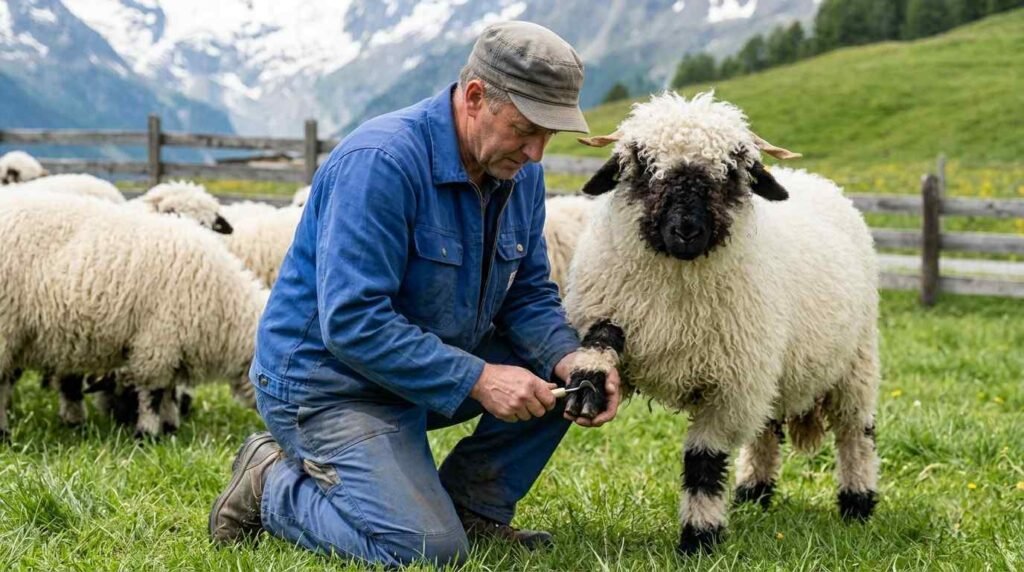
- Hoof Trimming: Their hooves will grow continuously and must be checked and trimmed every 6 to 8 weeks.
- Foot Rot and Scald: Damp grass can lead to hoof scald (a bacterial skin infection between the toes) and foot rot. Keeping them on dry ground as much as possible and treating early signs of limping with antibacterial hoof sprays is crucial.
- Vaccinations and Worming: Work with a local livestock veterinarian to establish a routine vaccination schedule (such as the CDT vaccine) and a targeted deworming program based on fecal egg counts to prevent parasite resistance.
Breeding and Lambing: What to Expect
If you are investing in them for breeding stock, you will be very happy to know that Valais Blacknose sheep are highly fertile and usually prove to be excellent mothers for their young.
One of their great qualities is that unlike other sheep that only give birth during certain seasons, Valais Blacknoses can go through a breeding cycle and give birth almost all year round. A healthy ewe gives birth to an average of 1.6 lambs per year, and often gives birth to twins. They are also known for their easy lambing, which usually does not require any external or human assistance. However, a responsible owner must supervise this important birth process.
Since these sheep can produce lambs all year round, good and careful flock management is very important. Rams should be kept completely separate from females unless you intend to breed regularly, to avoid unintended pregnancies during harsh winter weather or at any other inconvenient time. The kids are usually weaned from their mother’s milk at around 3 to 4 months of age, which largely depends on their healthy weight and the high-quality pasture grass available to them
Questions (SEO FAQ)
How much does a valais blacknose sheep cost?
Depending on their genetic percentage and location, prices range from $800 for crossbred wethers to over $20,000 for purebred, show-quality ewes and rams in the US.
What do valais blacknose sheep eat?
They primarily eat a diet of high-quality pasture grass, clovers, and herbs. In winter or during periods of poor grass growth, they must be fed premium hay and sheep-specific mineral supplements.
Are they good pets?
Yes, they make exceptional pasture pets. They are incredibly docile, love human interaction, and are often compared to large, fluffy dogs.
How often do you shear a valais blacknose?
Due to their rapid wool growth, they must be sheared twice a year to prevent overheating, discomfort, and dangerous conditions like flystrike.

One Comment