
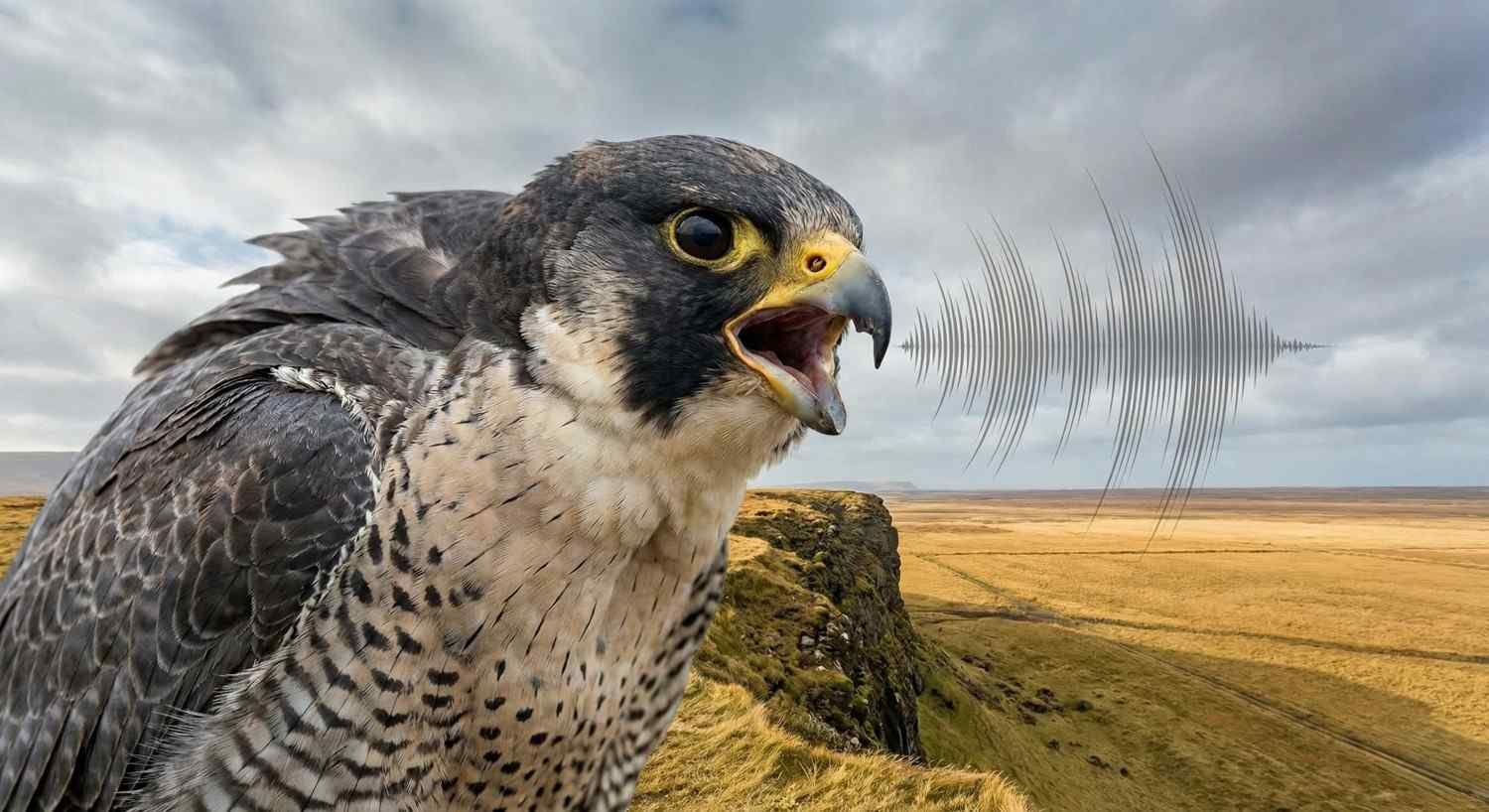
Unlocking The Mystery Of The Falcon Cry
If you’ve ever stood on the edge of a mountain cliff or walked through a dense open field and heard a sharp, piercing sound from the sky, you’ve probably witnessed a falcon cry. For birdwatchers, falconers, and nature lovers, identifying the falcon cry is as thrilling as seeing the bird itself. But what does a…
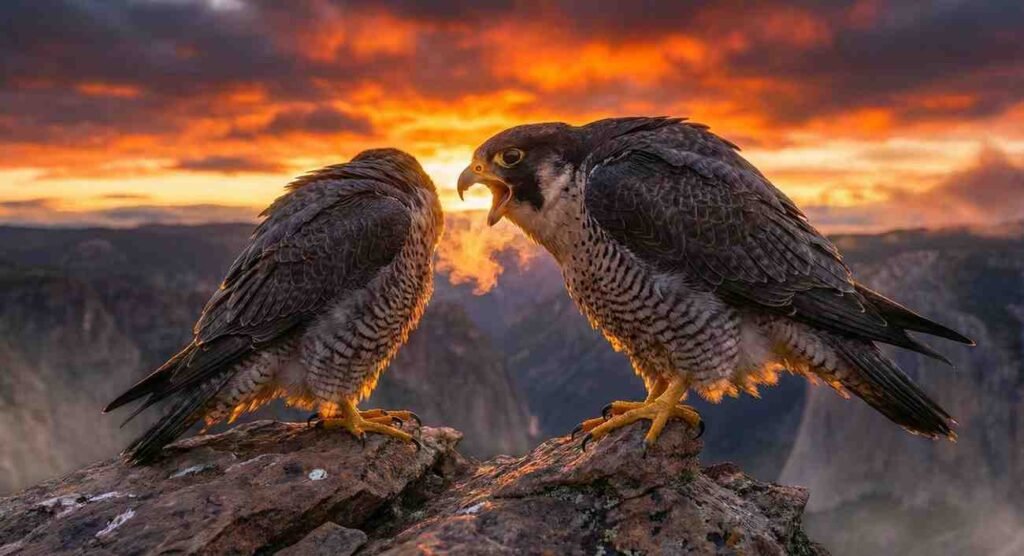
If you’ve ever stood on the edge of a mountain cliff or walked through a dense open field and heard a sharp, piercing sound from the sky, you’ve probably witnessed a falcon cry. For birdwatchers, falconers, and nature lovers, identifying the falcon cry is as thrilling as seeing the bird itself. But what does a falcon cry really mean? Is it a warning? A call to a mate? Or a sign of trouble?
Imagine standing on the edge of a windy cliff or walking through a golden field, and a sharp, intermittent cry comes from the clouds. It’s a sound that immediately grabs attention—a natural signal from one of nature’s most skilled hunters. For birders and falconers, recognizing this distinctive call is as heart-pounding as seeing a bird’s shadow against the sunlight.
But a falcon’s cry is more than just a noise; it’s a sophisticated means of survival. Unlike the common cries portrayed in the media, the falcon’s true language is much more nuanced and meaningful. In this guide, we’ll understand this language of the skies, examine the different types of calls, learn how to identify them by species, and what these calls actually signal in the wild.
The Biology of Sound: Why Do Falcons Cry?
Falcons are not songbirds. You won’t hear them chirping a melodious tune at sunrise. In contrast, hawks—members of the Falconidae family—use their voices strictly for practical purposes and communication. A hawk’s cry is a survival tool.
Unlike parrots or corvids, hawks do not imitate sounds. Their “dialect” is innate, meaning they are born with the ability to make specific sounds. However, context is key. A cry that may sound aggressive to the human ear may actually be a humble plea for food, while a gentle chirp may be a warning to a mate.
Understanding why hawks chirp depends on three basic biological motivations:
- Territorial Defense: To warn intruders (including humans and other birds of prey) to retreat.
- Courtship and Bonding: To communicate with a mate during the nesting season.
- Food Solicitation: The act of a hawk’s young (eyasses) or female hawk asking for food from a male.
Decoding the Sounds: 4 Common Falcon Vocalizations
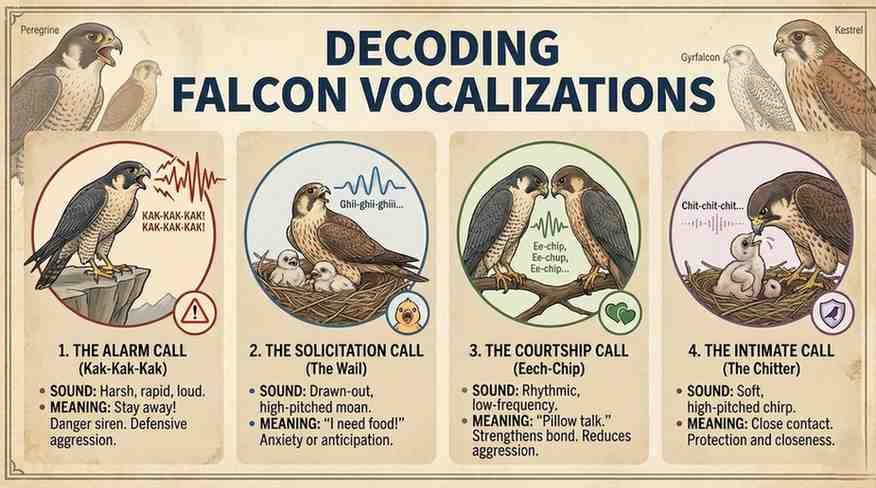
To truly understand a hawk’s cry, we need to break it down into specific sounds. Although there are slight differences between species such as the peregrine, gyrfalcon, and kestrel, they all generally share four different types of calls.
1. The “Kak-Kak-Kak” (The Alarm Call)
This is the most famous and commonly heard call of a hawk. It is harsh, sharp, and aggressive.
- What it sounds like: A rapid, intermittent ‘cack-cack-cack’ or ‘cack-cack-cack’ call. It is loud and repeated.
- What it means: It is a signal to stay away You will hear this call if you get too close to a hawk’s nest or if a predator enters their airspace. In the world of hawk calls, it is a siren of danger. It indicates intense agitation and defensive aggression.
2. The “Wail” (The Solicitation Call)
This “wail” is often mistaken by new birders as a sound of pain, but it is actually a request.
- What it sounds like: A drawn-out, high-pitched scream or moan. It can sound like “ghiii-ghiii-ghiii.”
- What it means: This call signals a need. In the wild, a female hawk sitting on a nest makes this call to the male to let him know that she is hungry and needs to bring him prey. Similarly, older chicks make this call when they see their parents returning with food. This sound expresses anxiety or intense anticipation.
3. The “Eech-Chip” (The Courtship Call)
It’s a very quiet, more private sound that’s hard to hear under normal circumstances, unless you’re watching a pair with a camera in the nest.
- What it sounds like: A rhythmic, low-frequency ‘ee-chip’ or ‘ee-chup’ sound.
- What it means: It’s the hawks’ “pillow talk.” Male and female hawks use this sound during courtship rituals, such as when they bow their heads to each other on a perch or exchange food. The sound reduces aggression and strengthens the pair bond.
4. The “Chitter” (The Intimate Call)
This “chitter” is the softest of all the sounds.
- What it sounds like: A high-pitched, low-pitched chirp, almost like a cricket or small songbird.
- What it means: This sound is used during very close contact, such as during mating or when the female is feeding very young chicks. It is a sign of protection and closeness.
Species Specifics: Identifying the Bird by the Cry
Not all falcon make exactly the same calls. The size of the bird often determines the pitch of its call. Larger falcon tend to have deeper, deeper throaty calls, while smaller hawks tend to have more subtle, higher-pitched calls.
The Peregrine Falcon Cry
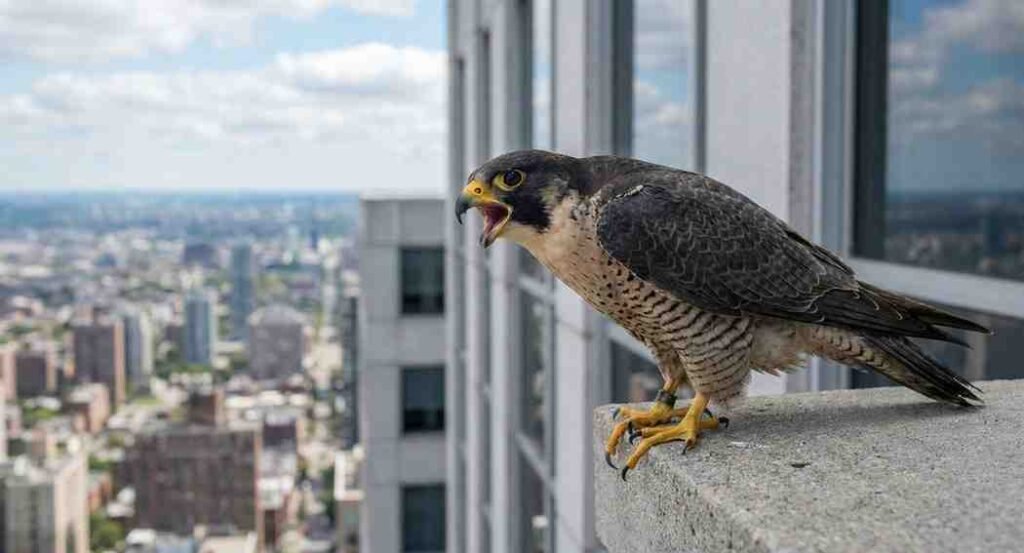
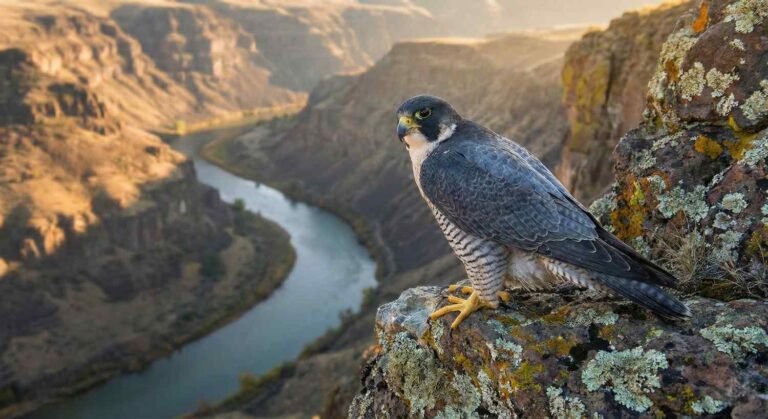
The Peregrine is the most common hawk and is the species most often encountered in urban environments. Its alarm call is a very harsh, high-pitched, ‘ack-ack-ack’ call. It is a very harsh and aggressive sound. If you are in a city and hear a loud, ear-splitting laugh coming from a skyscraper, you are most likely hearing a Peregrine defending its territory.
The American Kestrel Cry
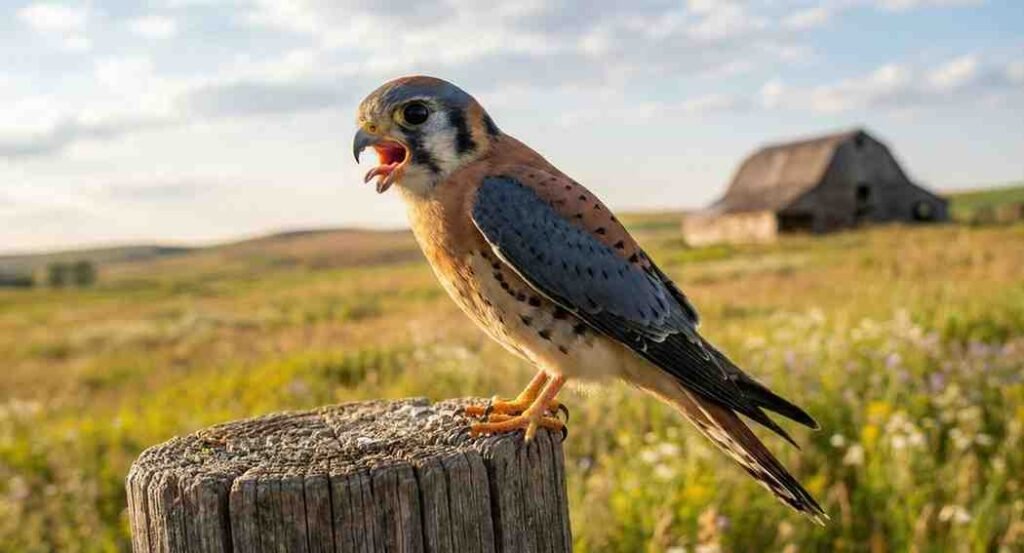
The kestrel is the smallest bird in North America, and its call is notably thin and high-pitched. It is often described as a ‘killy-killy-killy’ sound. It is much higher pitched and “thin” than the call of the peregrine. It sounds more like an excited chirp than a threatening scream.
The Gyrfalcon Cry
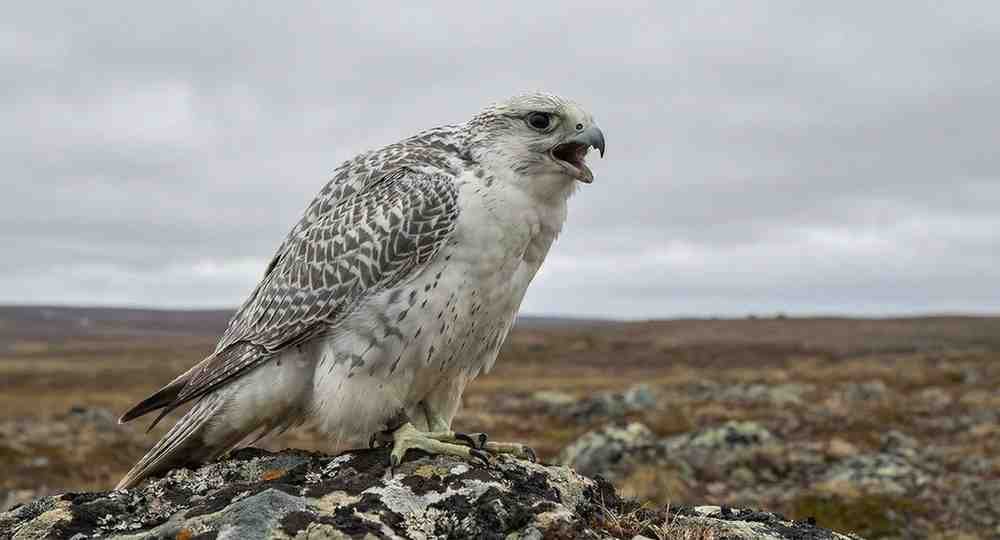
As the largest of the falcon species, the gyrfalcon’s voice is also befitting its size. Its calls are heavier, slower, and more throaty than those of the peregrine. Its alarm call is a harsh, hoarse ‘kra-a-a-a’, more like the call of a raven than the cry of a common bird of prey.
The “Screaming Eagle” Myth
It’s important to address a common misconception here. When you see a hawk or eagle in a movie, the sound effect used in the background is almost always the cry of a “Red-tailed Hawk” (a long, low, “ke…e…er” sound). Real hawks never make that sound. If you’re birdwatching and you hear that famous “movie cry,” look for a heavy-bodied hawk, not a lean, agile one.
When to Listen: The Best Times to Hear a Falcon
If you hope to record or hear these sounds in the wild, timing is everything. Hawks are silent hunters; they don’t make a sound when stalking their prey because the element of surprise is their greatest weapon.
You are most likely to hear a hawk’s cry during the following times:
- Breeding season: This is the noisiest time of year. Mating calls, territorial disputes, and food exchanges create a lot of acoustic activity around the rock or nesting site.
- Fleeing season: When the chicks are learning to fly (fledging), the air is filled with the sounds of young birds calling for food and the instructions (or warnings) given by parents to their clumsy offspring.
- Territorial disputes: If a raven or hawk flies too close to a falcon’s perch, the silence is suddenly broken by a sharp ‘cack-cack-cack’ call of danger.
The Symbolism of the Falcon’s Cry

Beyond biology, the cry of a falcon has had profound meanings in human culture for centuries. In literature and mythology, the falcon symbolizes focus, speed, and rising above the ordinary mundane.
- In literature: The cry of a falcon is often used as a metaphor for a harsh and piercing truth or a call to action. It cuts through silence just as the bird cuts through the air.
- In spirituality: Many cultures view the falcon as a messenger or herald. For some, hearing a falcon cry is a signal to pay attention and “wake up,” so that you can see your surroundings with the keen eye of a bird of prey.
- In pop culture: The term Falcon Cry is often used in video games and media, where it is usually a war cry or a symbol of power.



QCman88… hmm, I think I saw this recommended in a forum. Is it worth it? Give it a quick look: qcman88
Vertyowdiwjodko kofkosfjwgojfsjf oijwfwsfjowehgewjiofwj jewfkwkfdoeguhrfkadwknfew ijedkaoaswnfeugjfkadcajsfn falconrynews.com